1. Navigating the Complexity of Global Automotive Spare Parts Logistics
The global automotive supply chain is undergoing a structural paradigm shift. In modern vehicle manufacturing and aftermarket distribution, Automotive Spare Parts Logistics represents one of the most operationally demanding logistics sectors in the world. As automotive original equipment manufacturers (OEMs) and Tier-1 component suppliers transition toward Just-in-Time (JIT) and Just-in-Sequence (JIS) production models, the margin for supply chain friction has shrunk to zero.
A single delayed shipping container or stranded air cargo pallet containing critical Electronic Control Units (ECUs), transmission modules, or engine fasteners can trigger an immediate factory line shutdown—costing vehicle manufacturers upwards of $50,000 per minute in downtime. Simultaneously, global aftermarket buyers face expanding SKU counts, erratic demand fluctuations, shifting trade policies, and stringent regulatory oversight from federal agencies such as the U.S. Department of Transportation (DOT), Environmental Protection Agency (EPA), and U.S. Customs and Border Protection (CBP).
To successfully orchestrate automotive component freight across international borders, global procurement teams require more than basic freight forwarding. They demand end-to-end supply chain visibility, predictive transit risk management, bonded warehousing infrastructure, and specialized dangerous goods handling for electric vehicle (EV) powertrains. Positioned at the operational nexus of Los Angeles International Airport (LAX) and the twin seaports of Los Angeles and Long Beach, LA 24-7 Forwarder delivers tailored, time-critical logistics frameworks designed to keep vehicle assembly lines moving and aftermarket networks fully stocked.
Information Gain Insight: Modern automotive logistics strategies must balance lean JIT manufacturing with strategic buffer stock management. Leveraging bonded warehousing facilities near major Pacific Rim trade corridors allows importers to defer import tariffs under HTS Chapter 87 while maintaining guaranteed 2-hour dispatch capabilities for emergency replacement parts.
2. Recommended Automotive Freight Solutions for Global Buyers
Managing automotive spare parts logistics requires specialized transportation modalities tailored to component velocity, value density, and operational urgency. Based on extensive intent data mined from global automotive purchasing departments, we recommend six core logistics services designed for high-performance automotive supply chains:
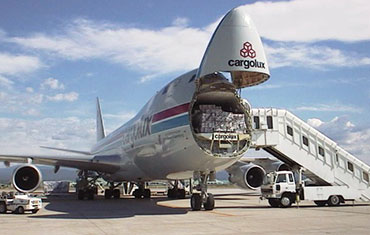
A. Time-Critical NFO Air Freight & Emergency Charters
When assembly line stoppage is imminent, standard air freight is insufficient. Our Next-Flight-Out (NFO) and dedicated Air Charter services provide guaranteed expedited uplift from Asian, European, and Latin American manufacturing hubs directly to Los Angeles (LAX). Featuring priority tarmac handling, immediate customs clearance, and dedicated hot-shot trucking, this solution delivers an industry-leading Service Level Agreement (SLA) for emergency AOG and line-stop auto components.
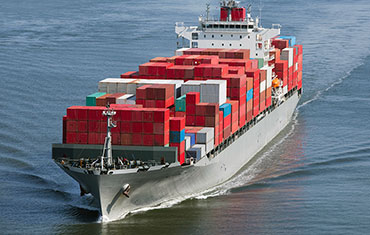
B. Optimized Ocean LCL & FCL Consolidation
For routine aftermarket replenishment and high-density structural components, ocean freight delivers maximum cost efficiency. We engineer dedicated Less-than-Container Load (LCL) consolidation programs and Full Container Load (FCL) fast-boat services operating out of Shanghai, Ningbo, Busan, and Yokohama to the Port of Los Angeles. Our buyer's consolidation services combine shipments from multiple Tier-2 suppliers into single ocean containers, drastically reducing port handling fees and drayage costs.
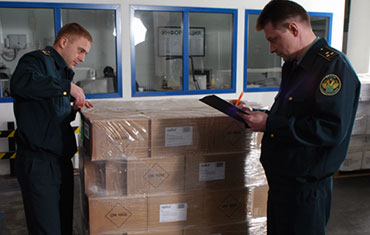
C. Specialized Customs Brokerage & HTS Compliance
Automotive parts are subject to complex tariff structures, Section 301 duties, and strict DOT/EPA regulations. Our in-house licensed US Customs Brokers manage pre-arrival Importer Security Filings (ISF), precise 10-digit HTS tariff classification under Chapter 87, USMCA origin qualification verification, and EPA Form 3520-1 filings. We streamline clearance at US ports of entry to eliminate demurrage and storage penalties.

D. Bonded Warehousing, Kitting & Cross-Docking
Located minutes from LAX and the Port of Los Angeles, our 24/7 secure warehousing facilities offer specialized auto parts storage, barcode scan validation, sub-assembly kitting, and cross-docking services. Operating as a Customs Bonded Warehouse and Foreign Trade Zone (FTZ) partner, we enable automotive importers to defer, reduce, or eliminate import tariffs until parts enter US commerce or are re-exported globally.
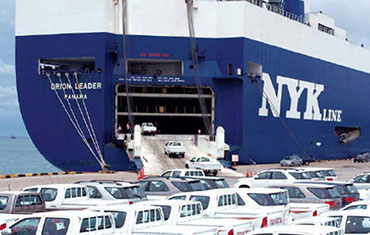
E. Prototype, Engine & Heavy Powertrain Shipping
High-value prototype components, crate engines, industrial transmissions, and pre-production test vehicles require specialized enclosure and shock-mitigation logistics. We provide fully enclosed RoRo (Roll-on/Roll-off), air-ride padded flat-bed transport, and custom heavy-duty wood crating compliant with ISPM-15 international phytosanitary standards to preserve engineering integrity during transit.

F. Cross-Border Aftermarket E-Commerce Logistics
The global direct-to-consumer (D2C) automotive aftermarket is exploding. We empower auto parts brands, digital marketplaces, and distributors with integrated cross-border e-commerce fulfillment. From real-time API inventory synchronization to last-mile parcel carrier injection and return core processing, our platform scales aftermarket order delivery across North America and overseas markets.
3. Strategic Procurement Trends Shaping Automotive Logistics (2025–2030)
Automotive supply chain executives must architect their procurement models to navigate macro-economic shifts, technological disruptions, and evolving trade governance. Over the next five years, four dominant trends will define automotive spare parts logistics:
1. Nearshoring & USMCA Supply Chain Regionalization
Automotive OEMs are aggressively re-shoring and nearshoring production from Asia to North America. The USMCA's stringent Regional Value Content (RVC) requirements (requiring up to 75% North American content for passenger vehicles) have catalyzed massive freight flows along the Mexico-US border corridor, increasing the demand for seamless cross-border drayage and dual-origin bonded warehousing in Southern California.
2. Electrification & Class 9 Battery Logistics
The rapid shift toward Electric Vehicles (EVs) is transforming spare parts inventories. High-voltage Lithium-ion battery packs, traction motors, and power electronics require hazardous material transport certification (UN3480/UN3481), specialized thermal-controlled shipping containers, state-of-charge (SoC) management, and compliance with stringent DOT Class 9 Dangerous Goods mandates.
3. Circular Economy & Core Return Logistics
Sustainability mandates and raw material scarcity are accelerating remanufacturing initiatives. Leading automotive brands are establishing closed-loop reverse logistics networks to retrieve used cores—such as alternators, brake calipers, turbochargers, and battery modules—from dealerships and repair shops back to central processing facilities for remanufacturing.
Quantitative Comparison: Traditional vs. Next-Gen Automotive Logistics
The table below highlights the key operational differences between legacy automotive freight forwarding and modern, tech-enabled automotive supply chain management executed by LA 24-7 Forwarder:
| Logistics Performance Metrics | Legacy Logistics Approach | LA 24-7 Advanced Auto Freight Model | Strategic Business Benefit |
| Line-Stop Emergency Response | Standard 12–24 Hour Booking SLA | Instant NFO Dispatch (< 2 Hours) | Prevents Millions in Factory Downtime |
| Customs Tariff Optimization | Manual Post-Import Clearance | Automated FTZ / Bonded Duty Deferral | Preserves Cash Flow & Lowers Tariff Expense |
| Inventory & Tracking Visibility | Milestone Static Updates | Real-Time GPS / Telematics & IoT Sensors | Provides Precise ETA & Shock/Temp Alerts |
| EV Battery Handling | Outsourced 3rd Party Hazmat | In-House Class 9 Certified Specialists | Ensures 100% IATA/IMO Regulatory Compliance |
| Customs Duty Recovery | Neglected Duty Drawback | Automated Import/Export Duty Drawback | Recovers Up to 99% of Eligible Paid Tariffs |
4. Technological Innovations & Industry Development Trends
The integration of predictive artificial intelligence, internet-of-things (IoT) tracking, and automated fulfillment infrastructure is redefining modern automotive component logistics:
- AI-Driven Demand Sensing & Inventory Positioning: Advanced machine learning algorithms analyze historical vehicle failure rates, seasonal repair trends, and regional vehicle-in-operation (VIO) data to pre-position high-velocity spare parts in regional distribution hubs prior to spikes in demand.
- IoT-Enabled Digital Twin Telematics: Sensitive automotive components—such as microchips, glass assemblies, and calibrated sensors—are increasingly tracked using multi-sensor IoT devices. These sensors monitor real-time location, ambient temperature, relative humidity, tilt angles, and G-force impacts throughout transit, triggering automated alerts if environmental thresholds are breached.
- Micro-Fulfillment & Automated Cross-Docking: Urban auto repair centers and dealerships demand same-day component delivery. Implementing automated micro-fulfillment facilities near metropolitan hubs ensures that fast-moving SKUs (brakes, filters, wiper blades) can be picked, packed, and dispatched within minutes of order receipt.
- Decarbonized Multimodal Transportation: Global OEMs are prioritizing Scope 3 emissions reductions across their logistics providers. Utilizing fuel-efficient ocean vessels, electric drayage trucks at the Port of Los Angeles, and optimized multimodal rail routings significantly reduces the carbon footprint per ton-mile of automotive parts moved.
5. Automotive Spare Parts Procurement FAQ
Below are detailed responses to the most critical operational and regulatory questions submitted by global automotive buyers, logistics managers, and supply chain directors:
How does LA 24-7 Forwarder prevent costly assembly line shutdowns in automotive manufacturing?
+ Assembly line shutdowns occur when critical Tier-1 or Tier-2 components fail to arrive within strict JIT windows. LA 24-7 Forwarder mitigates this risk through a multi-tiered emergency response framework:
- 24/7 Operational Command Center: Our dedicated automotive desk operates continuously, eliminating time-zone delays when coordinating with global manufacturing plants in Tokyo, Stuttgart, Seoul, or Shanghai.
- Next-Flight-Out (NFO) & On-Board Courier (OBC): For extreme emergencies, we dispatch dedicated hand-carry couriers who travel on the immediate next commercial flight with the component in hand, bypassing standard cargo check-in delays.
- Air Charter Escalation: When cargo volume exceeds passenger luggage constraints, we arrange full or partial cargo aircraft charters landing at LAX, Ontario (ONT), or regional automotive cargo hubs with pre-cleared customs status.
- Hot-Shot Drayage & Expedited Trucking: Upon landing, cargo is transferred directly from the tarmac to team-driven, air-ride expedited vans for non-stop transit to your plant floor.
What customs clearance protocols apply to imported automotive spare parts under HTS Chapter 87?
+ Importing automotive parts into the United States involves navigating complex regulatory enforcement by U.S. Customs and Border Protection (CBP), the Department of Transportation (DOT), and the Environmental Protection Agency (EPA):
- HTS Classification Accuracy: Chapter 87 of the Harmonized Tariff Schedule covers motor vehicles and their components. Accurate 10-digit HTS classification is essential to avoid duty overpayment or misclassification penalties.
- DOT / NHTSA Compliance: Safety-critical components—including tires, brake hoses, lighting assemblies, seatbelts, and safety glass—must comply with Federal Motor Vehicle Safety Standards (FMVSS) and require DOT Form HS-7 certification upon entry.
- EPA Emissions Controls: Engine assemblies, catalytic converters, fuel injection systems, and exhaust components must demonstrate EPA emissions compliance via EPA Form 3520-1.
- Section 301 Tariff Mitigation: Many automotive components originating from China carry additional Section 301 ad valorem tariffs (ranging from 7.5% to 25%+). We utilize Bonded Warehousing, Foreign Trade Zones (FTZs), and Duty Drawback mechanisms to minimize cash outflow.
How do you handle dangerous goods logistics for EV lithium-ion batteries and powertrain modules?
+ Electric Vehicle (EV) batteries are classified as Class 9 Miscellaneous Dangerous Goods (UN3480 for standalone batteries and UN3481 when contained in or packed with equipment). LA 24-7 Forwarder manages EV battery transport through strict adherence to global safety codes:
- Certified Hazardous Packaging: We ensure all battery shipments utilize UN-tested and certified rigid packaging designed to withstand extreme pressure, thermal shocks, and vibration during international transit.
- State-of-Charge (SoC) Compliance: Air transport regulations mandate that standalone lithium-ion batteries (UN3480) must be shipped at a State of Charge not exceeding 30% of their rated capacity unless approved by the state of origin and operator.
- Thermal Monitoring & Hazmat Documentation: Shipments are equipped with temperature telemetry sensors and accompanied by fully compliant Dangerous Goods Declarations (DGD) executed by IATA-certified hazmat specialists.
- Multimodal Route Security: Ground movement adheres to strict DOT hazmat hazmat permits, utilizing vehicles equipped with fire suppression capabilities and driver teams trained in battery incident management.
What reverse logistics solutions exist for automotive core returns and warranty claims?
+ Core returns are vital to the financial and environmental sustainability of the automotive aftermarket. LA 24-7 Forwarder engineers structured reverse logistics systems that streamline core collection and processing:
- Dealer & Distributor Consolidation: We establish regional collection points across North America where repair facilities and dealerships drop off used cores (such as engines, transmissions, remanufacturable electronics, and turbochargers).
- Automated Inspection & Sorting: Arriving cores undergo initial barcode scanning, visual damage inspection, and categorization based on OEM core eligibility guidelines before ocean or truck shipping.
- Duty Drawback Recovery: When rejected warranty components or unused spare parts are re-exported out of the United States, our trade compliance team files for Duty Drawback, recovering up to 99% of the original import duties paid.
- Closed-Loop Container Management: We utilize reusable, collapsible plastic containers and specialized rack systems to transport cores back to remanufacturing plants, eliminating single-use packaging waste.
6. Why Global Automotive Brands Partner with LA 24-7 Forwarder
With over two decades of international freight forwarding excellence in Los Angeles, LA 24-7 Forwarder has built an unmatched reputation for precision, compliance, and reliability in automotive supply chain execution. Our competitive superiority is anchored in five foundational pillars:

24/7 Dedicated Automotive Desk
Automotive supply chains never sleep. Our specialized automotive logistics coordinators operate around the clock, providing instantaneous quotes, emergency flight bookings, and active tracking updates across all global time zones.
Strategic Gateway Location (LAX & Port of LA/LB)
Headquartered minutes from LAX and the Port of Los Angeles—the premier container port complex in the Western Hemisphere—we offer unmatched access to express ocean vessel lanes and direct trans-Pacific air flights.
In-House Licensed Customs Brokers
We do not outsource compliance. Our licensed US Customs Brokers manage entry filings, PGA clears (DOT, EPA, FDA), and HTS classifications directly, ensuring seamless customs clearance without costly port delays.
End-to-End Visibility & Upfront Pricing
We provide full freight visibility from supplier pickup to factory door delivery. Our transparent pricing structure eliminates unexpected destination charges, detention penalties, or hidden fuel surcharges.
7. Verified Endorsements & Global Industry Certifications
Our commitment to supply chain operational standards is validated by our long-standing industry relationships and certifications:
"When a critical stamping die shipment was delayed in Asia, LA 24-7 Forwarder arranged an emergency air charter into Los Angeles within hours. They saved our assembly plant from a catastrophic 3-day line shut down."

Jeff Abrams
Tier-1 Automotive Supplier
"LA 24-7 Forwarder manages our entire aftermarket parts LCL ocean import program from Japan to North America. Their bonded warehouse setup near the Port of LA cut our tariff carrying costs significantly."

Tim Marshall
Aftermarket Auto Parts Distributor
"Their expertise in handling EV battery shipments under Class 9 Dangerous Goods regulations is top tier. Every shipment is fully compliant, perfectly documented, and delivered without hassle."

Gina Farrell
Electric Vehicle OEM
Optimize Your Automotive Spare Parts Supply Chain Today
Whether you require immediate NFO air expediting for line-stop emergency components, ocean LCL parts consolidation, or specialized customs brokerage in Los Angeles, our automotive logistics experts are standing by 24/7.