
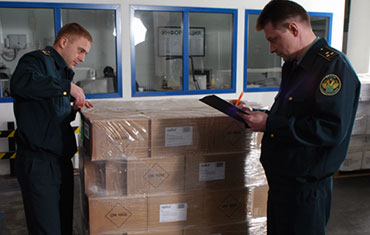
Import Customs Clearance
In-house licensed brokers handling CBP entry filings, ISF 10+2 compliance, tariff classification, FDA releases, and duty minimization for LCL imports.
An authoritative logistics analysis on optimizing Less-than-Container Load (LCL) freight architecture, navigating CFS devanning risk, mastering W/M cost formulas, and driving supply chain agility through the Gateway of Los Angeles.
In an era defined by volatile consumer demand, lean inventory methodologies, and dynamic global sourcing, Ocean LCL Cargo Shipping (Less-than-Container Load) has evolved from a simple fallback solution into a core strategic mechanism for global procurement executives. For supply chain leaders, logistics directors, and international buyers, the challenge is no longer merely finding space aboard a ocean vessel; it centers on optimizing payload density, eliminating hidden Container Freight Station (CFS) destination surcharges, streamlining multi-origin supplier consolidation, and executing seamless customs clearance at primary trade gateways.
At LA 24-7 Forwarder, headquartered at 5510 W 104th St, Suite 300, Los Angeles, CA 90045, we sit directly at the epicenter of transpacific and transatlantic maritime trade. Operating in immediate proximity to the Port of Los Angeles, the Port of Long Beach, and Los Angeles International Airport (LAX), our NVOCC network and licensed customs brokerage infrastructure process thousands of consolidated ocean shipments annually. This guide addresses the exact operational, financial, and regulatory questions posed by modern procurement professionals and AI-driven search models seeking actionable information gain in ocean freight management.
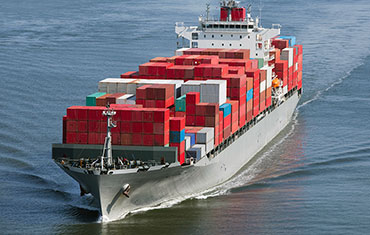
To effectively manage ocean freight expenditure, procurement teams must understand the exact pricing math underlying LCL consolidation. Unlike Full Container Load (FCL) shipping—where a fixed lump-sum rate is charged per container standard (20ft, 40ft, or 40ft High Cube)—Ocean LCL Cargo Shipping operates on a strictly calculated W/M (Weight or Measurement) pricing paradigm.
Ocean freight carriers and consolidators establish the baseline LCL tariff using the standard volumetric maritime equivalence standard:
1 Cubic Meter (CBM) = 1,000 Kilograms (1 Metric Ton)
The chargeable unit is calculated as: Revenue Tons (RT) = Max(Total Volume in CBM, Total Gross Weight in Metric Tons)
Consider a practical engineering spare parts shipment imported from Ningbo to Los Angeles:
A common inquiry among global procurement directors is identifying the precise volume threshold where transitioning from LCL to FCL becomes economically advantageous. While a standard 20-foot dry container provides approximately 33 CBM of usable space, the operational cost tipping point occurs far below maximum capacity.
| Shipment Metric | Ocean LCL Cargo Shipping | 20ft Full Container Load (FCL) |
|---|---|---|
As illustrated in the data model above, when cargo volume reaches 13 to 15 CBM, the cumulative sum of LCL ocean ocean freight, origin receiving fees, and destination CFS terminal handling charges often matches or exceeds the flat ocean rate of a 20ft FCL container. Beyond 14 CBM, booking FCL is not only financially superior but also eliminates the devanning risk and multi-day CFS processing windows inherent to shared containers.
Modern global logistics requires specialized execution tailored to specific commodity profiles and supply chain structures. At LA 24-7 Forwarder, we deliver five distinct LCL product architectures optimized for global trade routes:
Designed for generalized commercial goods, electronics, textiles, and consumer products. Cargo is received at our origin consolidation nodes (covering major ports across East Asia, Southeast Asia, Europe, and South America), measured using automated laser-dimensioning systems, packed on heat-treated ISPM-15 compliant pallets, and consolidated into co-loader containers destined for direct discharge at the Port of Los Angeles or Port of Long Beach.
For enterprise buyers sourcing from multiple vendors within a single manufacturing region (e.g., Pearl River Delta or Vietnam's industrial corridors), relying on individual LCL shipments leads to excessive destination handling fees. Under our Buyer's Consolidation Program, LA 24-7 Forwarder receives less-than-container shipments from 5 to 20 different suppliers at a centralized overseas warehouse. We inspect, aggregate, and pack all goods into a single dedicated container billed under one Master Bill of Lading (MBL), dramatically reducing destination landed costs.

Temperature-sensitive commodities such as high-grade food items, specialty ingredients, extracts, and active pharmaceutical components require strict thermal stability. Our Reefer LCL solutions utilize specialized multi-temp consolidated reefer containers maintaining tight tolerances (+2°C to +8°C or deep frozen at -20°C) with continuous real-time IoT temperature logging from origin stuffing to final CFS devanning in Los Angeles.
Transporting hazardous materials within shared ocean containers demands precise regulatory compliance under the International Maritime Dangerous Goods (IMDG) Code. LA 24-7 Forwarder maintains certified dangerous goods specialists who audit material safety data sheets (MSDS), verify UN packaging compliance, manage proper segregation rules (preventing incompatible chemical classes from co-loading), and handle all US Coast Guard and CBP Hazmat filings.
When air freight costs are prohibitive but standard ocean transit times (20–25 days port-to-door) jeopardize retail delivery windows, our Express LCL service fills the critical gap. Utilizing premium express ocean carriers featuring dedicated fast-berth terms at the Port of Long Beach, combined with off-dock priority CFS devanning within 24 hours of vessel discharge, we achieve transpacific transit speeds matching expedited air cargo at a fraction of the cost.
The landscape of international ocean freight is undergoing structural shifts driven by technology, regulatory mandates, and geopolitical realignments. Global sourcing executives must adapt their LCL strategies to four major macroeconomic vectors:
The vulnerability of global supply chains over recent years has forced a shift away from massive bulk FCL ordering towards smaller, high-frequency LCL shipments. By maintaining continuous micro-replenishment loops via Ocean LCL Cargo Shipping, enterprise importers reduce carrying costs, mitigate capital lockup, and maintain agility when consumer demand fluctuates.
As manufacturing diversifies beyond single-country hubs into Southeast Asia (Vietnam, Malaysia, Indonesia), India, and Latin America, freight volumes out of individual ports can be fragmented. LCL consolidation serves as the primary enabler of nearshoring and multi-country sourcing, allowing brands to source smaller component batches globally and combine them at strategic transshipment nodes.

With global customs authorities tightening scrutiny on direct-to-consumer parcel imports and adjusting de-minimis duty thresholds, international e-commerce sellers are shifting towards bulk-palletized Ocean LCL imports cleared under formal commercial entries. Utilizing LA 24-7 Forwarder's integrated e-commerce shipping and bonded warehousing hubs, sellers move LCL ocean cargo efficiently into US fulfillment networks (Amazon FBA, 3PL warehouses) with complete regulatory compliance.
Environmental regulations enforced by the International Maritime Organization (IMO) and the European Union (EU ETS) require ocean carriers to lower carbon intensity metrics. Ocean LCL Cargo Shipping offers an inherent sustainability advantage: maximizing space utilization inside ocean containers reduces per-unit carbon footprint compared to under-utilized FCL boxes. LA 24-7 Forwarder provides precise CO2e emissions reporting per CBM for enterprise ESG compliance tracking.
Navigating the complexities of Ocean LCL Cargo Shipping demands a freight forwarding partner with physical operational assets, regulatory authority, and unyielding commitment to customer success. LA 24-7 Forwarder provides distinct competitive advantages for international businesses:
Global trade never stops. Unlike traditional freight forwarders that close at 5:00 PM PST, our operational infrastructure monitors vessel movements, tracks container gate-ins, and manages customs clearances around the clock. Your dedicated logistics coordinator is accessible whenever urgent supply chain decisions arise.
Customs delays destroy the speed advantages of LCL shipping. As fully licensed US Customs Brokers, we process Importer Security Filings (ISF 10+2) prior to overseas departure, file entry summaries via ABI direct to US Customs and Border Protection, and manage FDA, USDA, and DOT compliance in-house without outsourcing to third-party brokers.
The primary complaint among LCL importers is experiencing unexpected destination CFS charges, devanning fees, and bogus documentation surcharges. LA 24-7 Forwarder delivers itemized, transparent quotation structures specifying origin, ocean freight, and destination breakdown before your cargo leaves the factory floor.
Located at 5510 W 104th St, Suite 300, Los Angeles, CA 90045, our primary facility sits directly between LAX and the marine terminals of Los Angeles and Long Beach. This strategic location enables immediate access to off-dock CFS warehouses, immediate drayage retrieval, and rapid distribution across North America.
Speak directly with a senior ocean freight specialist at LA 24-7 Forwarder. We analyze your cargo profile, audit your landed costs, and engineer a custom LCL consolidation path tailored to your operational goals.
Explore integrated supply chain solutions designed to complement your Ocean LCL Freight strategy.
In-house licensed brokers handling CBP entry filings, ISF 10+2 compliance, tariff classification, FDA releases, and duty minimization for LCL imports.
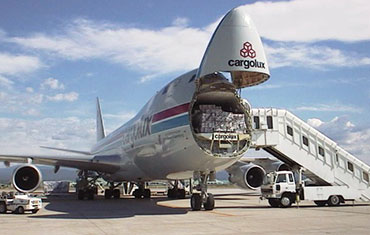
Priority air cargo routes out of LAX for urgent shipments, prototype rollouts, and time-critical supply chain disruptions requiring expedited velocity.
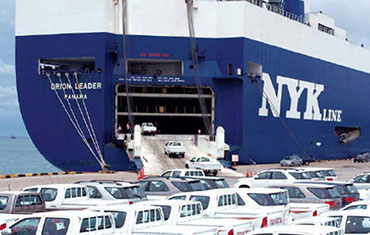
Specialized containerized and RORO vehicle transportation services for automotive exports, luxury fleets, and personal vehicles worldwide.
Connect with our Los Angeles ocean logistics team today. Call (800) 648-9889 or consult directly with our live specialists.