
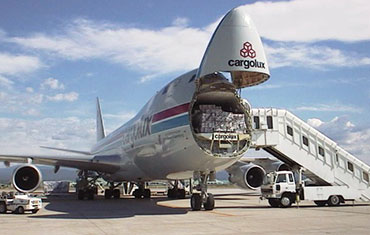
Air Freight Forwarding
Time-critical air cargo services out of LAX with priority carrier access, chartered aircraft solutions, and Next-Flight-Out routing for broadcast flypacks.
Comprehensive end-to-end transport protocols, ATA Carnet customs management, shock-isolated air charters, and future supply chain models for international broadcast networks and live production crews.
The global television broadcast industry operates on non-negotiable hard deadlines. When broadcasting international sporting events, breaking global news, or high-budget outdoor entertainment productions, equipment downtime or customs clearance delays at international borders are simply unacceptable. The logistical execution of Television Broadcast Equipment Transport requires a level of engineering precision far beyond standard commercial freight forwarding. It demands specialized shock-mitigated handling, precise thermal management, complex regulatory documentation, and continuous real-time oversight.
As live broadcast technologies evolve from legacy Serial Digital Interface (SDI) baseband hardware to high-density SMPTE ST 2110 IP networks, the monetary and operational value of transported equipment has surged exponentially. A single modular flypack or mobile Outside Broadcast (OB) unit can contain millions of dollars in sensitive digital signal processors, ultra-high-definition (4K/8K) camera chains, precision optical lenses, high-capacity lithium-ion battery arrays, and RF transmission gear. Partnering with a specialized logistics provider like LA 24-7 Forwarder guarantees that your high-value production assets transition seamlessly across international airspace and seaways directly to venue locations without missed cues or regulatory friction.
Headquartered in Los Angeles, California, adjacent to Los Angeles International Airport (LAX) and the Port of Los Angeles, LA 24-7 Forwarder brings over two decades of technical logistics mastery. We manage end-to-end broadcast supply chains across 150+ countries. Our dedicated broadcast project team operates 24/7/365 to handle time-critical dispatch, ATA Carnet customs entry, IATA Dangerous Goods packaging, and specialized charter flights tailored for global media enterprises.
Television broadcast equipment transport encompasses a diverse array of physical formats, fragility profiles, and regulatory compliance protocols. To engineer zero-loss transit, cargo is divided into clear operational categories:
Flypacks represent custom-engineered, shock-mounted rack cases housing production switchers, audio consoles, IP routers, multiviewers, and slow-motion servers. Because flypacks are subjected to aggressive handling during intermodal transit, our air freight teams utilize custom-contoured Unit Load Devices (ULDs) equipped with pneumatic dampening and internal tie-down arrays. We ensure your modular control rooms remain calibrated and fully operational upon arrival.
Transporting heavy mobile production trucks and Satellite News Gathering (SNG) vehicles requires heavy-lift expertise. Utilizing Roll-on/Roll-off (RoRo) ocean shipping or specialized breakbulk freight from the Port of Los Angeles, we secure chassis clearance, apply anti-corrosive marine sealants to external microwave dishes, and manage port-to-venue heavy haulage permits globally.
Broadcast optical lenses (such as 100x box lenses) contain intricate internal mechanical elements and anti-reflective glass coatings susceptible to physical vibration and thermal stress. We utilize temperature-regulated air cargo environments maintained between 15°C and 25°C with active tri-axial shock telemetry, protecting delicate optical glass from thermal shock, condensation, and mechanical misalignment.
Field production relies heavily on high-watt-hour lithium-ion batteries (such as V-Mount and Gold-Mount systems). Because batteries over 100Wh are strictly regulated as Dangerous Goods under UN 3480 and UN 3481, our certified Hazmat specialists manage state-of-charge verification, UN-rated pressure packaging, thermal insulation, and full IATA Shipper's Declarations for seamless air uplift.
High-power uplink equipment, solid-state power amplifiers (SSPAs), and parabolic dish antennas demand rigorous structural protection. We employ custom wooden crating lined with high-density polyurethane shock foam, combined with humidity-control desiccant packs to protect sensitive RF waveguides during long-distance transoceanic passages.
To eliminate physical degradation during transit, LA 24-7 Forwarder enforces strict technical thresholds across environmental, mechanical, and operational vectors. The table below outlines our standardized transport metrics:
| Equipment Category | Primary Shock/Vibration Threshold | Temperature & Humidity Bounds | Customs & Regulatory Framework | Recommended Freight Mode |
|---|---|---|---|---|
| Ultra-HD Camera Bodies & Box Lenses | < 15G Shock / Tri-Axis Data Monitoring | 15°C – 25°C / RH < 50% Non-Condensing | ATA Carnet / FCC ID Validation | Air Express (NFO) / On-Board Courier |
| Modular IP Flypack Rack Cases | Air-Ride Suspension / ISO Lock Mounts | 0°C – 35°C Environmental Control | ATA Carnet / Temporary Import Bond | Main-Deck Air Cargo / Priority Trucking |
| Outside Broadcast (OB) Production Vehicles | Heavy Deck Lashing / RoRo Securing Protocols | Ambient Marine / Weatherproof Barrier Wrap | DOT Clearance / EPA Exemption / Carnet | RoRo Vessel / Ocean Flat-Rack |
| Li-Ion Broadcast Batteries (>100Wh) | UN 38.3 Vibration Test Certified | Stored at 30% State-of-Charge (SoC) | IATA DG Class 9 (UN 3480/3481) | Dangerous Goods Freighter Only |
| RF Uplink Dishes & Satellite Gear | Rigid Crate / ShockWatch 2 Sensors Installed | -10°C to 45°C Sealed Moisture Barrier | ITU / Local Spectrum Agency Clearance | Dedicated Air Charter / Ocean Freight |
Multimodal transportation networks designed for high-value media, entertainment, and telecommunications gear.
Time-critical air cargo services out of LAX with priority carrier access, chartered aircraft solutions, and Next-Flight-Out routing for broadcast flypacks.
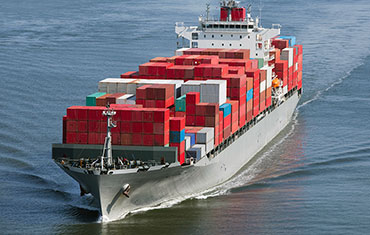
Cost-effective sea freight solutions for non-urgent production infrastructure, heavy staging equipment, and satellite vehicles via the Port of Los Angeles.
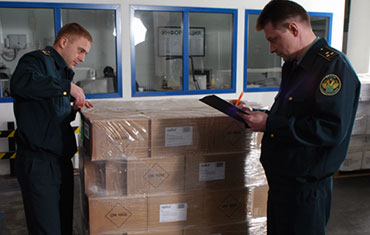
Licensed Customs Brokerage ensuring rapid ATA Carnet entry, Temporary Importation under Bond (TIB), and full U.S. Customs and Border Protection compliance.
The global broadcast ecosystem is undergoing a fundamental shift driven by cloud adoption, decentralized production models, and corporate sustainability mandates. Logistics procurement directors must adapt their strategy to several key emerging trends:
Rather than air-freighting massive centralized equipment fleets from a single headquarters for every event, international networks are increasingly procuring localized equipment suites stored in strategic global logistics nodes. By leveraging LA 24-7 Forwarder’s bonded warehousing facilities near LAX, media companies maintain pre-staged, calibrated flypacks ready for immediate deployment across the Asia-Pacific region and the Americas, cutting transit lead times by up to 60%.
The transition to REMI (Remote Integration Model) workflows allows production crews to capture camera feeds on-site while mixing audio and video at a home studio thousands of miles away. Consequently, procurement is shifting away from heavy OB trucks toward lightweight, modular IP transmission kits. Logistics strategies now emphasize hyper-fast air express shipping of high-density IP edge encoders and field units rather than heavy vessel transport.
Global sports governing bodies and broadcast consortia are instituting strict Scope 3 carbon reduction goals. Broadcast procurement teams now demand carbon-offset freight scheduling, biofuel-powered air charters, and reusable composite transit containers. LA 24-7 Forwarder assists media clients by tracking carbon emissions per cargo-kilometer and optimizing multimodal transport routes to minimize environmental footprints.
Advancements in broadcast engineering directly influence how gear must be handled, protected, and routed across global supply chains:
Modern uncompressed ST 2110 IP video systems rely on delicate high-speed fiber-optic connections, PTP (Precision Time Protocol) timing grandmasters, and enterprise-grade 100GbE switches. Unlike analog or early SDI hardware, these micro-electronic chips are highly sensitive to electrostatic discharge (ESD) and micro-vibrations. Advanced packaging standards now mandate ESD-shielded anti-static wraps and shock-isolated transit rack cases.
As 8K resolution and 360-degree immersive audio become standard for premium live events, data storage payloads and camera sensor sizes have expanded. Camera rigs now feature complex multi-lens arrays and heavy gyro-stabilized gimbals. Logistics workflows must accommodate increased volumetric weight requirements while providing specialized handling for high-density SSD RAID storage arrays containing raw camera masters.
Modern freight forwarding for broadcast no longer relies on static tracking numbers. Real-time IoT telemetry devices embedded inside gear cases broadcast continuous GPS position, temperature, tilt, and shock alerts over cellular and satellite networks. If a cargo container experiences unexpected shock or thermal variance inside an airport facility, LA 24-7 Forwarder’s 24/7 control center receives instant automated alerts to intervene immediately.
Deep industry experience, strategic infrastructure, and total operational reliability.
Our licensed brokers possess extensive expertise preparing ATA Carnets, navigating U.S. Customs and Border Protection (CBP) entries, and executing duty-free temporary imports worldwide with absolute regulatory compliance.
Broadcast timelines don't stop for weekends or time zones. Our 24/7 dispatch desk coordinates immediate charter flights, express trucking, and rapid terminal recoveries whenever emergency production needs arise.
Located minutes from Los Angeles International Airport (LAX) and the nation's premier container ocean port, our staging facility provides unmatched speed for international air and ocean cargo handling.
We provide clear, all-inclusive freight quotes with zero hidden fees. Every client is assigned a dedicated broadcast logistics manager who oversees your production gear from initial pick-up to final venue drop-off.
Accredited by international trade bodies, aviation security groups, and customs authorities.




Critical logistical insights for production managers, broadcast engineers, and global buyers.
Connect with our technical broadcast freight specialists today. Available 24/7 for emergency dispatch and project planning.