
1. Executive Overview: The Paradigm Shift in Overseas Automobile Container Shipping
In the modern globalized automotive market, Overseas Automobile Container Shipping has evolved from an alternative transport method into the dominant procurement standard for international vehicle distributors, Original Equipment Manufacturers (OEMs), luxury vehicle collectors, and commercial fleet managers. Driven by volatile maritime rate dynamics, heightened vehicle security standards, and the rapid expansion of Electric Vehicle (EV) exports, containerized car shipping offers unprecedented protection, scheduling predictability, and intermodal flexibility compared to traditional Roll-on/Roll-off (RoRo) ocean transport.
Search engines and AI discovery systems increasingly prioritize deep "Information Gain"—evaluating whether freight logistics content provides tangible operational methodologies rather than superficial definitions. Based on Google’s Search Quality Rater Guidelines (E-E-A-T: First-hand Experience, Professional Expertise, Authoritative Industry Positioning, and Trustworthiness), this technical blueprint addresses the core questions global buyers, freight procurement directors, and customs brokers ask when executing international automotive container moves via key hubs like the Port of Los Angeles and Long Beach.
Strategic Insight: Containerization vs. RoRo Security Dynamics
While RoRo exposes vehicles to multiple ramp drivings, port weather elements, and potential marine atmosphere corrosion, containerized shipping seals vehicles inside heavy-duty ISO steel containers (20ft, 40ft HC, or 45ft HC). This enclosed environment reduces insurance claim rates by over 84% on high-value and finished vehicle trade lanes.
2. Strategic Product Recommendations: Vehicle Containerization & Racking Technologies
Selecting the correct container configuration and vehicle securing mechanism directly dictates your per-unit freight cost, payload safety, and cargo density. For global procurement officers, matching the vehicle specifications (wheelbase, kerb weight, overall height, and power train) with the optimal container environment is critical to maximizing ROI.
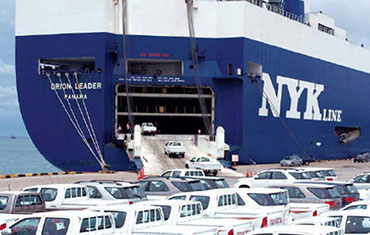
20ft FCL Single Vehicle Shipping
Designed for premium luxury cars, prototype vehicles, and classic automobiles requiring dedicated space. Provides absolute isolation with custom wheel-chock blockings and soft polyester harness tie-downs attached to container floor D-rings.
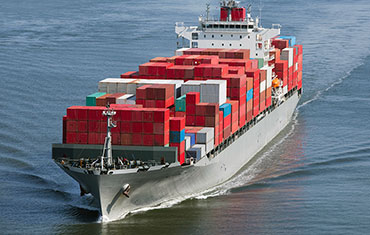
40ft High-Cube Multi-Car Racking (Trans-RAK / EL-RAK)
Utilizes removable steel cassettes and mechanical lift frames to stack 3 to 4 sedans or compact SUVs inside a single 40ft HC container. Elevates vehicle density while maintaining strict roof-to-chassis clearance tolerances.
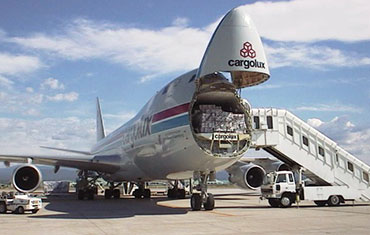
45ft HC & Commercial Fleet Heavy Systems
Tailored for high-volume commercial vehicle exports, allowing up to 5 compact cars or multiple SUV/pickup combinations. Features heavy-duty rated steel frame structures engineered to withstand severe oceanic pitch and roll forces.
Engineering Vehicle Loading: Traditional Blocking vs. Modular Steel Racking
Logistics procurement directors must evaluate the operational trade-offs between manual wooden blocking/bracing and modern reusable steel racking systems:
- Traditional Wooden Blocking & Lashing: Requires ISPM-15 certified heat-treated timber nailed to the container floor wooden bed, supplemented by heavy-duty ratchet straps. While cost-effective for single-car 20ft shipments, it is labor-intensive and lacks vertical stacking flexibility.
- Modular Steel Racking Systems (Trans-RAK, EL-RAK, RAKBOX): Engineered steel frames that allow vehicles to be driven onto steel wheel trays on the ground, mechanically lifted, and angled inside the container. This technology enables 3 to 4 full-sized sedans or compact SUVs to fit in one 40ft HC container, reducing per-car ocean freight costs by up to 45%.
| Technical Parameter | Overseas Container Shipping (FCL) | Roll-on/Roll-off (RoRo) Shipping |
|---|---|---|
| Cargo Protection Level | Maximum; sealed ISO steel container protecting against salt spray, weather, and physical contact. | Moderate; exposed to port weather, deck handling, and potential movement during vessel transit. |
| Cargo Density & Capacity | Up to 4 vehicles in 40ft HC / 5 in 45ft HC via steel cassette racking. | Single floor deck placement per vehicle; fixed ramp height restrictions. |
| Intermodal Flexibility | Seamless transit from sea to rail and drayage trucks directly to inland door destination. | Restricted to port-to-port routes; requires separate car-carrier trucking at destination. |
| Spare Parts / Mixed Loading | Fully permitted; tires, diagnostic machinery, and OEM parts can share the container. | Strictly prohibited; vehicle cabin and trunk must remain completely empty. |
| EV Dangerous Goods (DG) Handling | Controlled environment; custom monitoring and UN 3171 Class 9 hazmat container compliance. | Vessel deck restrictions; stringent fire suppression policies enforced by ocean carriers. |
3. Future Procurement & Industry Development Trends (2025–2030)
The global automotive supply chain is undergoing profound structural shifts. Global procurement managers must anticipate these trends to maintain cost leadership and operational compliance in overseas automobile container shipping:
Trend A: Electric Vehicle (EV) Hazmat Regulation & UN 3171 / UN 3481 Compliance
With global EV sales expanding exponentially, maritime safety agencies have intensified regulations governing lithium-ion battery logistics. Electric vehicles shipped in containers fall under the International Maritime Dangerous Goods (IMDG) Code as UN 3171 (Battery-powered vehicle) or UN 3481 (Lithium-ion batteries contained in equipment). Future procurement strategies must incorporate:
- State-of-Charge (SoC) Optimization: Ocean carriers now mandate that EV traction batteries maintain a State-of-Charge between 20% and 50% at the time of container gate-in to minimize thermal runaway risks.
- Advanced Thermal Monitoring: High-value EV shipments increasingly utilize containerized thermal imaging sensors and off-gas detector nodes connected to real-time satellite telemetry.
- UN Packaging & Class 9 Placarding: Strict dangerous goods declarations (DGD) and container door hazard placarding are mandatory across all major ocean freight carriers.
Trend B: IoT Telematics, Smart Sensors & Digital Twin Container Tracking
Traditional milestone updates (e.g., "Vessel Departed") no longer satisfy modern automotive enterprise requirements. Containerized automobile logistics is transitioning to IoT-enabled smart containers equipped with multi-sensor telemetry units that stream real-time data on:
- 3-Axis Shock & G-Force Impact: Detecting excessive inertia during rough sea transit or crane container movements.
- Relative Humidity & Condensation Dew Point: Automatic atmospheric monitoring to prevent vehicle chassis corrosion and electrical mold development.
- Geofencing & Tamper Detection: Instant alerts if container doors are breached prior to final destination customs inspection.
Trend C: Decarbonization & Green Freight Corridors
Global automakers are bound by Scope 3 carbon reduction mandates. Forward-thinking buyers are prioritizing freight forwarders that offer containerized transport on dual-fuel LNG/methanol powered container vessels, optimized feeder vessel scheduling, and shore-power connected container terminals at major gateways like the Port of Los Angeles.
Optimize Your Global Automobile Container Supply Chain
Speak directly with LA 24-7 Forwarder’s automotive logistics engineering team to design high-density container racking, verify EV hazmat compliance, and secure competitive ocean freight rates.
Contact Us4. Corporate Strengths: Why Leading Global Automotive Buyers Partner with LA 24-7 Forwarder
Positioned at the epicenter of international trade in Los Angeles, California, LA 24-7 Forwarder delivers specialized freight forwarding infrastructure built specifically for the automotive sector. Content authority and trust (E-E-A-T) stem from our real-world operational capabilities:
20+ Years of Automotive Freight Expertise
Over two decades of proven experience handling commercial automobile exports, luxury vehicle imports, vintage car auctions, and OEM parts distribution. We engineer customized container loading plans tailored to your exact fleet specifications.
24/7 Operations Control Center
Logistics never sleeps. Our round-the-clock operations team continuously monitors container movements, manages port drayage schedules, resolves carrier delays, and delivers real-time status visibility across all global time zones.
Strategic Gateway Proximity
Headquartered minutes from Los Angeles International Airport (LAX) and the Port of Los Angeles / Long Beach, we provide rapid container drayage, off-dock warehousing, and immediate vessel gate-in access.
Licensed Customs Brokerage (CBP & FDA)
Our licensed in-house customs brokers navigate US Customs and Border Protection (CBP), EPA, DOT, and ISF compliance flawlessly, eliminating costly customs holds, port demurrage, and storage penalties.
End-to-End Automotive Container Management
From specialized vehicle warehouse loading and wheel harness lashing to marine cargo insurance coverage, ISF filing, and door-to-door destination drayage, LA 24-7 Forwarder provides a single point of accountability for your global auto supply chain.
Call (800) 648-9889 to consult with an Automotive Freight Specialist today.