
1. Executive Logistics Blueprint: Navigating Mining Equipment Project Cargo Demands
The global mining industry operates in some of the most remote, geographically challenging environments on Earth—from the high-altitude Andes in South America to the Western Australian Outback and the sub-zero terrain of Northern Canada. Transporting mining equipment project cargo requires far more than standard freight forwarding; it demands specialized marine engineering, precise axle-load distribution calculations, custom charterparty agreements, and meticulous multi-jurisdictional regulatory clearing.
Mining assets—such as ultra-class hydraulic excavators, Semi-Autogenous Grinding (SAG) mills, primary gyratory crushers, continuous miners, and massive surface haul fleets—regularly push the absolute boundaries of transport infrastructure. A single payload unit can exceed 300 metric tons in weight and 12 meters in width, presenting severe Out-of-Gauge (OOG) and heavy-lift challenges across road, rail, sea, and port interface nodes.
At LA 24-7 Forwarder, headquartered strategically near the Port of Los Angeles and LAX, our dedicated Heavy-Lift & Project Cargo Logistics Division engineers bespoke transport solutions. We transform complex logistical risks into predictable, sequence-matched deliveries that keep multi-billion-dollar Mining, Procurement, Engineering, and Construction (EPC) projects strictly on schedule.
In mega-scale mining projects, a delayed delivery of a primary crusher mantle or mill drive ring can halt mine commissioning, generating liquidated damages exceeding $250,000 per day. Transport planning must incorporate zero-tolerance scheduling, pre-cleared route permits, and real-time structural monitoring throughout transit.
2. Heavy Mining Machinery Categorization & Recommended Transport Solutions
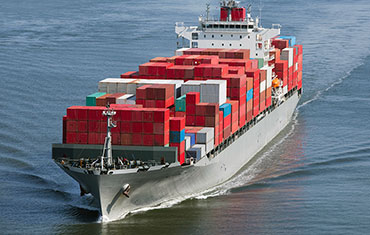
Optimizing transit costs and safety requires selecting the correct shipping mode—whether Roll-on/Roll-off (RoRo), specialized Breakbulk (Vessel Chartering), Heavy-Lift LoLo (Lift-on/Lift-off), or engineered Flat-Rack/Open-Top containerization. Below is our engineered technical breakdown for primary mining asset classes:
1. Surface Haul Fleets & Mobile Earthmoving Equipment
Machinery: CAT 797F / Komatsu 980E Haul Trucks, Wheel Loaders, Articulated Dump Trucks, Crawler Dozers.
Primary Challenge: Massive total weight (up to 260t bare weight), extreme tire widths, and high center of gravity during transit.
Recommended Solution: Hybrid RoRo shipping or partial knock-down (CKD) onto 40ft/45ft High-Cube Flat Racks with certified perimeter lashings. For assembled super-heavy chassis, specialized breakbulk liner services utilizing ship-board heavy cranes are deployed.

2. Ore Processing Mills & Primary Crushers
Machinery: SAG Mills, Ball Mills, Gyratory Crushers, High-Pressure Grinding Rolls (HPGR), Vibrating Screens.
Primary Challenge: Concentrated point loads, monolithic gear rim structures exceeding 10m diameters, and delicate mechanical tolerances sensitive to deck vibration.
Recommended Solution: Full or Partial Vessel Chartering (MPV - Multi-Purpose Heavy Lift Vessels). Dynamic load-spreading timber bedding, engineered saddle fabrications, and IMO CSS Code Annex 13 compliant chain lashing arrays.
3. Underground Extraction & Tunneling Systems
Machinery: Tunnel Boring Machines (TBMs), Continuous Miners, Underground LHD Loaders, Shuttle Cars.
Primary Challenge: High density, long cylindrical components, and strict site-access delivery windows.
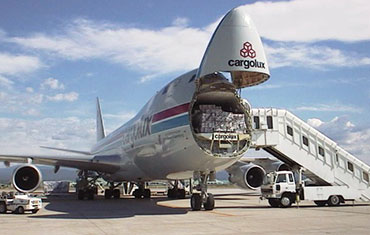
Recommended Solution: Segmented out-of-gauge transport. Heavy structural sub-assemblies routed via sea-freight Flat Racks, coupled with priority charter air freight (via LAX) for critical cutter-heads, hydraulic pumps, and control modules.
4. Modular Mining Infrastructure & Processing Plants
Machinery: Modular Substation Skids, Overland Conveyor Drives, Flotation Cells, Leach Tanks.
Primary Challenge: High volumetric footprint, complex sequence-dependent delivery schedules at remote mine sites.
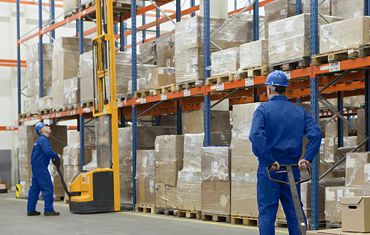
Recommended Solution: Staged staging logistics. Pre-assembly warehousing near origin ports (such as Los Angeles), barcoded inventory tracking, barge feeder transport, and multi-axle SPMT staging.
Technical Matrix: Equipment vs. Transport Mode Suitability
| Mining Machinery Category | Typical Unit Weight | Max Dimensions (L×W×H) | Optimal Ocean Transport Mode | Key Engineering Requirement |
|---|---|---|---|---|
| Hydraulic Mining Shovel / Excavator | 150 – 550 MT | 14m × 7m × 6.5m | Breakbulk / Heavy Lift Vessel | Counterweight removal; boom disassembly; SPMT loading. |
| Ultra-Class Surface Haul Truck | 180 – 260 MT | 15m × 9m × 7.5m | RoRo / Flat Rack (KDK) | Axle height reduction; chassis stripping; deck lashing. |
| SAG / Ball Mill Shell Segments | 80 – 220 MT per shell piece | 12m × 6m × 6m | Breakbulk Vessel Charter | Custom radius saddles; load-spreading beam analysis. |
| Primary Gyratory Crusher Mainframe | 100 – 300 MT | 8m × 6m × 7m | Heavy Lift LoLo Vessel | Direct tandem hook lifts; sea-fastening pad welding. |
| Continuous Underground Miner | 45 – 110 MT | 11m × 3.5m × 3m | OOG Flat-Rack / RoRo | Track shoe padding; anti-corrosion marine wrapping. |
3. Global Procurement Trends in Mining Equipment Project Cargo (2025–2035)
The global mining sector is undergoing an unprecedented structural transition driven by decarbonization mandates, critical mineral demand (lithium, cobalt, copper, nickel), and digital supply chain integration. Procurement executives and logistics planners must adjust their project execution strategies to reflect several emerging global trends:
A. Decarbonization & Electrification of Mining Machinery Fleets
Global mining conglomerates (including BHP, Rio Tinto, Vale, and Freeport-McMoRan) are committed to net-zero operational emissions. Consequently, procurement is rapidly shifting from diesel-mechanical equipment to Battery Electric Vehicles (BEVs), hydrogen fuel-cell haulers, and trolley-assist infrastructure. From a logistics standpoint, this introduces high-density Lithium-ion battery packs classified under Dangerous Goods (Class 9 Hazmat, UN 3480 / UN 3481).
Transporting electrified project cargo requires certified Hazmat sea-stowage, specialized thermal monitoring during ocean transport, strict state-by-state battery transport permits, and trained emergency response oversight across the entire land bridge.
B. Shift Toward Prefabricated & Skid-Mounted Modular Modules
To reduce expensive site-labor costs and mitigate remote environmental risks, mining EPCs are migrating toward off-site modular fabrication. Complete processing plants, power houses, and chemical dosing systems are built as fully integrated, skid-mounted super-modules before export.
This trend drastically increases unit sizes, shifting cargo profiles from standard containerized freight to massive Out-of-Gauge (OOG) and Breakbulk consignments. Procurement strategies now mandate early involvement of third-party logistics (3PL) project engineers during the initial Front-End Engineering Design (FEED) phase to ensure module dimensions do not exceed road clearances or port crane capacities.
C. Digital Twin Integration & Real-Time Telematics
Modern mining equipment procurement contracts increasingly require end-to-end digital visibility. Global buyers demand real-time telematics tracking not just for location, but for multi-axis G-force impact logging, ambient humidity, temperature, and tilt angles during ocean transit. Advanced digital twin modeling allows project logistics managers to simulate vessel motion dynamics and over-the-road bridge stress prior to physical loading.
4. Key Technological & Regulatory Trends Reshaping Project Cargo Shipping
To keep pace with evolving procurement demands, the global heavy-lift shipping industry is undergoing rapid technical and regulatory transformations:
- Expansion of Specialized Heavy-Lift Vessel Fleet Capabilities: Modern Multi-Purpose Heavy-Lift Vessels (MPVs) now feature combined crane lifting capacities exceeding 1,400 to 3,000 metric tons. Dynamic positioning systems (DP2) allow precise offshore discharge or direct loading at remote mining port jetties without shore-based cranes.
- Advanced Multi-Axle SPMT Engineering: Self-Propelled Modular Transporters (SPMTs) equipped with computer-controlled hydraulic suspension allow granular load distribution across dozens of axle lines. This technology enables the movement of 1,000+ metric ton mining modules over public roads and dock structures without exceeding localized weight limits.
- Tightened Environmental & Biosecurity Compliance: Regulatory bodies—such as the U.S. Department of Agriculture (USDA) and the Australian Department of Agriculture, Fisheries and Forestry (DAFF)—have instituted stringent biosecurity scrubbing protocols. Imported heavy mining equipment used in earthmoving must undergo complete high-pressure steam cleaning, disassembly inspection, and quarantine clearance to eliminate soil contamination and invasive species.
- Decarbonized Marine Transit Options: Green shipping corridors are emerging across major mining export routes. Ocean carriers are deploying LNG, methanol, and wind-assisted propulsion heavy-lift vessels, enabling mining companies to quantify Scope 3 emission reductions across their procurement supply chain.
5. Why Global Mining Shippers Choose LA 24-7 Forwarder
Decades of project cargo engineering. Strategic port access. 24/7 dedicated control tower.
6. Frequently Asked Questions (FAQ) — Mining Equipment Project Cargo Logistics
Below are detailed, expert-vetted answers to common technical and procurement questions asked by logistics managers, EPC planners, and global procurement teams:
Q1: What is the technical difference between Breakbulk, RoRo, and Out-of-Gauge (OOG) shipping for mining equipment?
Choosing the correct vessel and equipment type is vital for cost optimization and structural safety during ocean transit:
- Breakbulk (LoLo - Lift-on/Lift-off): Used for super-heavy, non-wheel-mounted, or oversized machinery components (e.g., SAG mill shells, crusher frames, transformer units) that exceed container dimensions. Cargo is lifted individually using shipboard heavy cranes or shore cranes and stowed on timber dunnage in the ship's hold or on deck under custom lashing plans.
- Roll-on/Roll-off (RoRo): Ideal for self-propelled, wheeled, or tracked mining machinery (e.g., haul trucks, wheel loaders, motor graders, articulated dumpers). Equipment is driven directly into the weather-protected lower decks of a specialized RoRo vessel. Non-wheeled machinery can also be loaded via heavy-duty roll trailers (mafi trailers) up to 120+ metric tons.
- Out-of-Gauge (OOG) Containerized Cargo: Utilizes standard container liner networks with open-top or flat-rack containers when cargo dimensions exceed standard container height or width, but total weights remain within liner lift thresholds (typically under 45–50 metric tons per container).
Q2: How are route clearance surveys conducted for super-heavy over-the-road mining machinery transport?
A route clearance survey is a rigorous civil engineering process conducted prior to moving heavy-haul payloads over land:
- Physical Clearance Mapping: Surveyors utilize 3D LiDAR laser scanning and physical survey vehicles equipped with height poles to verify overhead bridge clearances, high-voltage power lines, traffic signals, and signage across the entire transit corridor.
- Structural Bridge & Culvert Analysis: Civil engineers calculate localized bridge deck load capacities, comparing vehicle axle spacing and axle weights against state DOT or municipal structural thresholds. If required, temporary bridge jump spans or timber mats are engineered to distribute loads.
- Swept Path & Radius Simulation: Specialized CAD software (such as AutoTURN) simulates the turning radii of long multi-axle hydraulic trailers (SPMTs or steerable dollies) at tight intersections, roundabouts, and mountain passes.
- Permitting & Agency Coordination: Securing single-trip super-load permits requires coordinating state departments of transportation, highway patrols for police escorts, municipal utility crews for wire-lifts, and railroad companies for grade-crossing approvals.
Q3: What customs regulations and biosecurity standards apply to importing used mining equipment into North America?
Importing heavy mining machinery into the U.S. involves multi-agency compliance managed by licensed Customs Brokers:
- U.S. Customs and Border Protection (CBP): Formal customs entries require precise Harmonized Tariff Schedule (HTS) classification, valuation declaration, and Importer Security Filing (ISF 10+2) submitted at least 24 hours prior to ocean vessel loading at the port of origin.
- EPA Non-Road Engine Rules: Diesel engines embedded in excavators, tractors, and crushers must comply with U.S. EPA Tier emission standards. Non-compliant machinery must be imported under specific exemptions, retrofitted, or declared as re-export/offshore use only.
- USDA Biosecurity & Quarantine Scrubbing: The U.S. Department of Agriculture (USDA-APHIS) mandates that used earthmoving equipment be 100% free of foreign soil, plant seeds, and biological contamination. Equipment must undergo rigorous high-pressure hot-water washdowns at origin ports and obtain biosecurity cleanliness certificates prior to discharge in North America.
Q4: How does LA 24-7 Forwarder calculate lashing, securing, and motion dynamic requirements for ocean voyages?
Our naval architects and marine surveyors adhere strictly to the International Maritime Organization (IMO) Cargo Stowing and Securing (CSS) Code Annex 13. We calculate dynamic forces—including pitch, roll, heave, sway, yaw, and surge—based on the vessel’s acceleration parameters, draft, and anticipated sea conditions.
We specify certified steel chain lashings, turnbuckles, wire ropes, and custom stopper cleats welded directly to the vessel's tanktop or hatch cover steel structure. Timber load-spreading dunnage (hardwood or pitch pine) is calculated to prevent localized crushing of deck plating.
Q5: Can LA 24-7 Forwarder handle emergency air chartering for critical mining spare parts (AOG / Site Stopped)?
Yes. When a mine site experiences an unscheduled shutdown due to component failure (e.g., cracked excavator hydraulic main valve or damaged turbine shaft), our 24/7 Air Freight Division operates full and partial air charter services out of Los Angeles International Airport (LAX) and regional cargo hubs worldwide. We manage hot-shot ground pickup, tarmac direct loading, express customs pre-clearance, and helicopter final-mile transport directly to mine sites.
Streamline Your Mining Project Cargo Logistics
Partner with LA 24-7 Forwarder for technical precision, engineered heavy-lift transit, and seamless global customs execution. Contact our Los Angeles Project Cargo Division today to download our technical capabilities catalog or request a comprehensive feasibility study.