
Logistics Insights & International Freight Blog
Industry Knowledge Hub

Logistics & Freight Insights

Expert articles, shipping guides, customs compliance tips, and global supply chain updates.
Ocean & Air Freight News
Global Trade & Shipping

Expert Shipping Guides

Comprehensive solutions and industry news for modern importers and exporters.
Customs & Supply Chain Trends
Supply Chain Trends

Customs & Compliance Tips

Stay informed with the latest customs broker advice and international shipping updates.

0%

China’s perishable food market depends on fast, controlled, and traceable transportation. Perishable Goods Cold Chain Logistics connects farms, processors, warehouses, retailers, and consumers. Its purpose is simple: keep products safe and fresh from harvest to delivery. The practice becomes complex across China’s long distances and varied climates. Fresh berries may require temperatures near 0–4°C. Frozen seafood usually needs storage at –18°C or below. Dairy products often need stable chilled conditions. Small temperature changes can damage quality before anyone notices.

China’s strongest cold chain networks combine refrigerated trucks, automated warehouses, insulated packaging, and digital monitoring. Sensors can record temperature, humidity, door openings, and delivery times. This data helps managers identify delays and reduce avoidable waste. Major ports and cities offer advanced facilities, while rural collection points may still face limited equipment. That gap matters. A perfect warehouse cannot repair poor handling at the farm gate. Reliable operators therefore need trained staff, documented procedures, calibrated sensors, and verified transport partners. Food safety systems such as HACCP and ISO 22000 can support consistent control, but certification alone is not enough. Real performance depends on daily discipline. Even strong networks experience weak links. This article examines China’s best Perishable Goods Cold Chain Logistics practices, practical technologies, operating challenges, and areas requiring honest improvement.
What Is China Best Perishable Goods Cold Chain Logistics?

Definition and Scope of Perishable Goods Cold Chain Logistics in China

What Is China’s Perishable Goods Cold Chain Logistics?

Definition and Scope of Perishable Goods Cold Chain Logistics in China

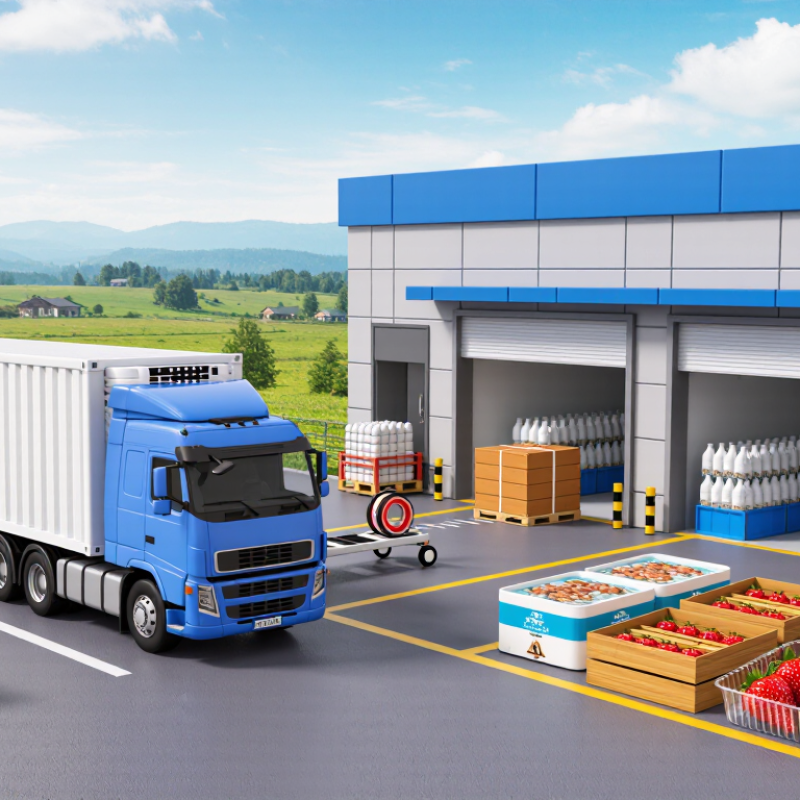
China’s perishable goods cold chain logistics maintains product quality through controlled temperatures. It connects farms, fisheries, processing sites, warehouses, transport routes, markets, and consumers. The system covers fresh vegetables, fruit, meat, seafood, dairy products, flowers, and temperature-sensitive healthcare materials. Each product needs suitable handling conditions. Frozen food often requires temperatures near minus 18°C, while fresh produce may need chilled storage above freezing.

The scope includes pre-cooling, sorting, packaging, refrigerated storage, line-haul transport, local delivery, and retail display. For example, workers may cool leafy vegetables soon after harvest and record the container temperature before loading. GPS tracking, data loggers, insulated doors, and trained operators support traceability. Still, technology alone is insufficient. A sensor can report a stable reading while poor airflow damages cartons near a closed wall.

China’s cold chain also serves rural collection centers and rapidly growing urban markets. Seasonal demand creates pressure on vehicles, loading docks, and temporary storage rooms. Experienced operators check door-opening time, stacking height, condensation, and product appearance. These small details matter. The chain is not flawless. Traffic delays, uneven infrastructure, and limited cold storage can interrupt control. Some temperature records may look complete but lack useful context. Better practice requires regular calibration, clear handover procedures, and honest review when products arrive below expected quality.

Key Infrastructure and Technologies Used in China’s Cold Chain

China’s perishable goods cold chain depends on connected infrastructure from farms to city kitchens. Production areas use forced-air or hydro-cooling systems to remove field heat quickly. Temperature is unforgiving. Even a short delay can reduce freshness and increase waste.

Large refrigerated warehouses now combine insulated rooms, automated handling, and separate temperature zones. Fresh vegetables may require different conditions from frozen seafood or dairy products. Refrigerated trucks use GPS, digital temperature sensors, and door-opening alerts during transport. These tools create useful records for quality checks. However, sensor data is only reliable when devices are calibrated and workers respond promptly.

Regional distribution centers support movement between inland markets, coastal ports, and urban neighborhoods. Some facilities use RFID labels, cloud platforms, and electronic traceability records to follow each shipment. Pre-cooling stations near farms remain especially important because transport cannot repair poor harvesting practices. In busy cities, smaller refrigerated vans and shared cold rooms help control final-mile temperatures. This stage is often the weakest link. A vehicle may be compliant, yet goods can warm during unloading or temporary street storage. Better training, clearer handover procedures, and regular equipment maintenance would improve practical reliability. The technology is advancing, but disciplined daily operations still decide whether freshness survives.

What Is China Best Perishable Goods Cold Chain Logistics? - Key Infrastructure and Technologies Used in China’s Cold Chain

No. Infrastructure or Technology Dimension Key Data / Operating Benchmark Primary Application in China’s Perishable-Goods Cold Chain Operational Value Relevant Standard, Plan, or Technical Basis
1 Frozen storage and transport Target product temperature: generally ≤ −18°C for frozen foods; temperature should remain stable throughout storage, loading, transport, and delivery. Frozen meat, seafood, frozen vegetables, frozen prepared foods, and ice cream products. Limits microbial growth, preserves texture, and reduces thawing and refreezing risks. GB 31605-2020; product-specific food safety and quality requirements.
2 Chilled storage and transport Typical operating range: approximately 0°C to 4°C for many chilled meat, dairy, and prepared-food categories; exact limits depend on the product standard. Chilled meat, dairy products, fresh-cut foods, prepared meals, and short-shelf-life foods. Maintains freshness without freezing products that are sensitive to ice formation. GB 31605-2020 and applicable product-specific national food-safety standards.
3 Fresh produce temperature management Common handling range: approximately 0°C to 10°C, but the optimum temperature and relative humidity vary substantially by crop. Leafy vegetables, berries, citrus, apples, tropical fruit, mushrooms, and other horticultural products. Reduces respiration, moisture loss, chilling injury, and premature ripening. Commodity-specific post-harvest handling guidance and national agricultural cold-chain policies.
4 Pre-cooling facilities Field heat is removed as soon as possible after harvest using forced-air, hydrocooling, vacuum cooling, or ice cooling; the required set point is crop-specific. Fresh vegetables, fruit, flowers, berries, and other products harvested at elevated field temperatures. Extends shelf life and reduces the refrigeration load during long-distance transport. Post-harvest technology practice; supported by China’s agricultural-product cold-chain development programs.
5 Multi-temperature cold warehouses Separate chilled, frozen, ambient, ripening, quarantine, and dispatch zones are used where product compatibility requires different conditions. Large distribution centers, wholesale markets, food-processing hubs, and regional agricultural logistics parks. Prevents cross-contamination and allows different product categories to be handled in one facility. GB 50072-2021, Cold Store Design Standard; GB 31605-2020.
6 Refrigerated road transport Vehicles use insulated bodies, refrigeration units, calibrated temperature sensors, door management, and pre-cooling before loading. Primary mode for intercity distribution and the flexible movement of meat, seafood, dairy, fruit, vegetables, and prepared foods. Provides door-to-door connectivity between farms, processors, warehouses, retailers, restaurants, and consumers. National road-transport safety and food cold-chain operating requirements.
7 Refrigerated containers and intermodal transport Temperature-controlled containers support sea, rail, road, and port transfers while minimizing cargo handling between transport modes. Imported seafood, meat, fruit, dairy ingredients, and long-distance domestic distribution. Improves long-haul efficiency and reduces temperature exposure during transfers. Containerized logistics practice and China’s multimodal transport development framework.
8 Last-mile refrigerated delivery Uses small refrigerated vehicles, insulated boxes, phase-change materials, or validated passive packaging for short delivery cycles. Community retail, supermarkets, restaurants, institutional catering, fresh-food e-commerce, and household delivery. Protects temperature-sensitive products during frequent stops and short urban routes. Urban distribution practice; operating conditions should be validated for route length, ambient temperature, and product type.
9 IoT temperature and humidity monitoring Sensors record temperature, humidity, location, door opening, power status, and refrigeration-unit alarms; data are transmitted to a centralized platform. Cold rooms, loading docks, vehicles, containers, transfer points, and delivery packages. Provides continuous visibility, early warning, electronic records, and evidence for corrective action. GB 31605-2020; digital cold-chain monitoring practice.
10 Traceability and data integration Typical records include product batch, origin, processing time, storage temperature, vehicle identity, handover time, destination, and exception events. Food safety supervision, recall management, supplier evaluation, and cross-regional distribution. Improves accountability and makes it easier to identify the location and cause of a quality incident. Food Safety Law of the People’s Republic of China; GB 31605-2020.
11 Warehouse management systems Core functions include FEFO allocation, batch control, barcode or RFID identification, dock scheduling, inventory visibility, and exception management. Cold storage facilities, distribution centers, processing plants, and wholesale markets. Reduces dwell time, improves inventory rotation, and limits product expiration and unnecessary door opening. Modern warehouse-management practice; FEFO means “first expired, first out.”
12 Modified-atmosphere and controlled-atmosphere storage Oxygen, carbon dioxide, nitrogen, temperature, and humidity are adjusted according to the respiration characteristics of the product. Apples, pears, kiwifruit, berries, vegetables, and selected fresh-cut products. Slows respiration and ripening and can extend marketable storage life when correctly validated. Commodity-specific post-harvest storage technology; conditions must be validated to avoid anaerobic damage.
13 Ripening and ethylene management Ripening rooms control temperature, humidity, ventilation, and ethylene concentration for products that require controlled maturation. Bananas, kiwifruit, avocados, mangoes, tomatoes, and other climacteric fruit. Improves consistency of color, firmness, flavor, and delivery timing. Post-harvest fruit-ripening engineering practice.
14 Food safety and sanitation controls Required controls cover hygienic facility design, cleaning and disinfection, pest prevention, personnel hygiene, separation of incompatible products, and temperature records. All cold-chain facilities, vehicles, loading areas, processing areas, and distribution points. Reduces contamination, food-safety hazards, and quality deterioration. GB 31605-2020, Hygienic Specification for Food Cold Chain Logistics.
15 Energy-efficient refrigeration Key measures include high-efficiency compressors, variable-speed drives, optimized insulation, LED lighting, heat recovery, natural refrigerants where suitable, and intelligent defrosting. Cold stores, processing facilities, refrigerated vehicles, and distribution centers. Reduces electricity consumption, operating cost, refrigerant leakage risk, and carbon emissions. GB 50072-2021 and national energy-efficiency and green-logistics initiatives.
16 National cold-chain network planning China’s policy framework emphasizes national backbone cold-chain logistics bases, regional distribution hubs, production-area facilities, and coordinated urban networks. Fresh agricultural products, meat, seafood, dairy, frozen foods, and emergency food-supply systems. Improves regional connectivity, reduces logistics gaps, and supports stable food distribution across provinces. China’s 14th Five-Year Plan for Cold-Chain Logistics Development, issued in 2021.
Data note: Temperature values shown as “typical” ranges are operational benchmarks rather than universal limits. The legally applicable requirement should always follow the relevant product category, national food-safety standard, packaging specification, and validated logistics process.

Major Perishable Goods Served by China’s Cold Chain Network

What Is China Best Perishable Goods Cold Chain Logistics?

China’s cold chain network serves several high-value perishable goods. Fresh fruit and vegetables move from farms to urban markets through refrigerated trucks, sorting centers, and temperature-controlled warehouses. Meat and aquatic products require stricter handling, especially during long-distance transport. Dairy products, chilled meals, eggs, and flowers also depend on stable temperatures and rapid delivery.

The China Federation of Logistics Purchasing estimated China’s cold chain logistics market at about RMB 517.3 billion in 2023. Its industry reports identify agricultural products, meat, seafood, and dairy as core cargo categories. Fresh produce remains especially demanding because leafy vegetables can lose quality within hours after harvest. A warm loading dock can quietly damage an otherwise controlled shipment.

China’s network also supports frozen food, ready-to-cook products, bakery ingredients, and medical-grade perishables. Different products need different temperature ranges. Frozen meat may require storage near -18°C, while chilled milk often needs approximately 0–4°C. The Global Cold Chain Alliance has repeatedly emphasized monitoring, warehouse design, and last-mile control as major reliability factors. Data loggers help, but they do not repair poor handling. This remains an industry weakness. Temperature records can look complete while product quality still declines during brief transfer delays.

How to Evaluate the Best Cold Chain Logistics Providers in China

What Makes China’s Best Perishable-Goods Cold Chain Logistics?

China’s perishable-goods market needs more than refrigerated trucks. The best provider controls temperature, timing, documentation, and recovery. The China Federation of Logistics Purchasing reported a cold-chain logistics market of roughly RMB 517 billion in 2023. That scale makes supplier selection more complex. A large network does not always mean reliable execution.

A practical evaluation starts with temperature evidence. Request calibrated sensor records for each route, warehouse, and transfer point. Check whether alerts reach a named operator within minutes. Review loading procedures, vehicle insulation, backup power, and delivery windows.

Ask for recent performance data, including on-time delivery, temperature excursions, product damage, and claims resolution. Cold air is not proof. The records matter.

Food safety controls should match the cargo. Review hygiene audits, traceability procedures, staff training, and emergency plans. ISO 22000 or HACCP-based systems can support confidence, but certificates need independent verification.

The FAO’s State of Food and Agriculture 2019 estimated that 14% of food is lost between harvest and retail globally. Better cold-chain discipline can reduce waste, though it cannot eliminate every failure.

Providers should also explain capacity during holidays, port congestion, and extreme heat. A low quoted price may hide weak last-mile control. Our evaluation may still miss hidden subcontracting, so contract audits and test shipments remain necessary.

Challenges and Future Development of China’s Cold Chain Logistics

China’s perishable goods cold chain logistics is expanding with food consumption, urban delivery, and longer supply routes. Yet growth has exposed serious weaknesses. Fresh vegetables may leave a farm at dawn, but a delayed loading truck can wait for hours beside an open dock. Every warm transfer reduces shelf life.

Temperature control remains the central challenge. Rural roads, uneven warehouse standards, power interruptions, and limited refrigerated vehicles can create hidden temperature excursions. Sensors help, but data is useless when workers ignore alarms or calibrate equipment poorly. Traceability also varies between regions. A shipment may have excellent digital records at a distribution center, then lose visibility during local delivery. Small operators often face high energy and maintenance costs.

Future development should connect infrastructure, training, and practical supervision. More shared cold rooms near production areas could reduce unnecessary travel. Solar-assisted refrigeration and efficient insulation may lower operating costs, especially in remote districts. Digital platforms can link temperature sensors, transport schedules, and inspection records, but automation should not replace human judgment. Machines miss damaged packaging and leaking containers. Standards also need clearer enforcement across farms, warehouses, transporters, and retailers.

The industry still has room to improve.

A stronger cold chain will require reliable electricity, skilled workers, and transparent data. It should also measure waste, energy use, and delivery delays, not only temperature. Some proposed systems appear impressive on paper but remain difficult to afford. That gap deserves more honest testing before nationwide adoption.

China’s Perishable Goods Cold Chain Logistics: Market Development and Future Outlook

Estimated cold-chain logistics market revenue in China, 2019–2027

China’s cold-chain logistics market has expanded with rising demand for fresh food, meat, seafood, dairy products and pharmaceuticals. The projected growth after 2023 reflects continued investment in refrigerated transport, cold storage, digital traceability and lower-temperature distribution networks, while regional infrastructure gaps and high operating costs remain important challenges.

Unit: RMB billion. 2019–2023 are historical industry estimates; 2024–2027 are projections compiled from public cold-chain logistics industry reports and annual logistics development data published by China’s logistics research institutions.

FAQS

What is perishable-goods cold chain logistics in China?

It keeps temperature-sensitive products within suitable conditions during storage and transportation. The chain connects farms, warehouses, vehicles, markets, and consumers. Timing matters too.

Which products usually require cold chain handling?

Common products include vegetables, fruit, meat, seafood, dairy products, flowers, and temperature-sensitive healthcare materials. Each product needs different temperature conditions. Freshness is not uniform.

What services are included in the cold chain?

Services include pre-cooling, sorting, packaging, refrigerated storage, long-distance transport, local delivery, and retail display. Workers may cool leafy vegetables after harvest. They should also record temperatures before loading.

What temperature conditions are commonly used?

Frozen food often needs temperatures near minus 18°C. Fresh produce may require chilled conditions above freezing. Exact settings depend on the product, packaging, and travel time.

How can a cold chain provider be evaluated?

Request calibrated sensor records for routes, warehouses, and transfer points. Check vehicle insulation, loading methods, backup power, and delivery windows. Ask about delays, damage, temperature excursions, and claims.

Are temperature sensors enough to protect products?

No. A sensor may show stable air temperature while poor airflow damages cartons near a wall. Workers must inspect stacking, condensation, packaging, and product appearance. Data needs context.

What problems can interrupt China’s cold chain?

Traffic delays, open loading docks, power interruptions, weak rural roads, and limited storage can reduce product quality. Local deliveries may lose digital visibility. Small operators also face high energy costs.

How may the cold chain improve in the future?

Shared cold rooms near farms could shorten travel and reduce unnecessary warming. Better insulation and solar-assisted refrigeration may lower operating costs. Automation helps, but people must still inspect damaged packaging. Some impressive systems remain too expensive. Testing should be more honest.

Conclusion

China’s Perishable Goods Cold Chain Logistics system is a temperature-controlled network designed to preserve the safety, quality, and freshness of products from production and processing to storage, transportation, distribution, and final delivery. It serves a wide range of goods, including fresh fruits and vegetables, meat, seafood, dairy products, frozen foods, and other temperature-sensitive agricultural products. Its development depends on refrigerated warehouses, insulated vehicles, cold storage facilities, monitoring platforms, automated sorting equipment, and digital temperature-control technologies.

When evaluating cold chain logistics providers in China, businesses should consider temperature stability, transportation coverage, storage capacity, delivery efficiency, traceability, handling standards, emergency response, and overall service reliability. The industry still faces challenges such as uneven infrastructure, high operating costs, energy consumption, seasonal demand, and complex distribution routes. In the future, stronger digital management, improved rural connectivity, energy-efficient equipment, standardized operations, and better coordination across the supply chain will support more efficient and sustainable cold chain development.

Adrian

Adrian

Adrian is a dedicated marketing professional with a strong understanding of product strategy, customer needs, and digital communication. As a key contributor to the company’s marketing team, he combines market research, industry insight, and practical experience to create clear, useful, and......