
Expert articles, shipping guides, customs compliance tips, and global supply chain updates.
Comprehensive solutions and industry news for modern importers and exporters.
Stay informed with the latest customs broker advice and international shipping updates.
China Top Pharmaceutical Temperature Controlled Shipping requires more than refrigerated trucks and insulated cartons. It demands disciplined control across airports, warehouses, customs zones, and final delivery points. Pharmaceutical Temperature Controlled Shipping protects medicines whose quality can change after brief temperature abuse.
In China, a shipment may face summer heat in Shenzhen, winter cold in Harbin, or delays at a busy airport. Each lane needs a documented risk assessment. Qualified packaging, calibrated data loggers, and trained handling teams create practical protection. They also create evidence. That evidence matters when a temperature alarm appears at 5:40 a.m.
Dr. Peter H. L. K. Lam, a pharmaceutical cold-chain specialist, has stated, “Temperature control is a patient-safety responsibility, not merely a transport requirement.” This principle should guide every handover. A reliable provider records product limits, packaging performance, route conditions, and contingency actions before dispatch. GDP-aligned procedures strengthen consistency, although compliance alone cannot solve every operational weakness.
Small details often decide the outcome. A loading door left open can erase hours of preparation. A missing logger download can weaken an otherwise successful delivery. Not every temperature excursion means product loss, but every excursion deserves qualified investigation. That judgment requires stability data and pharmaceutical expertise, not guesswork.
China’s temperature-controlled network continues to improve. Yet gaps remain. Rural delivery, peak-season capacity, and communication between partners can still create uncertainty. Strong shipping programs acknowledge these imperfections openly. They test backup plans, review performance data, and refine routes after real deliveries. This article examines the controls, technologies, and professional practices behind dependable Pharmaceutical Temperature Controlled Shipping in China.
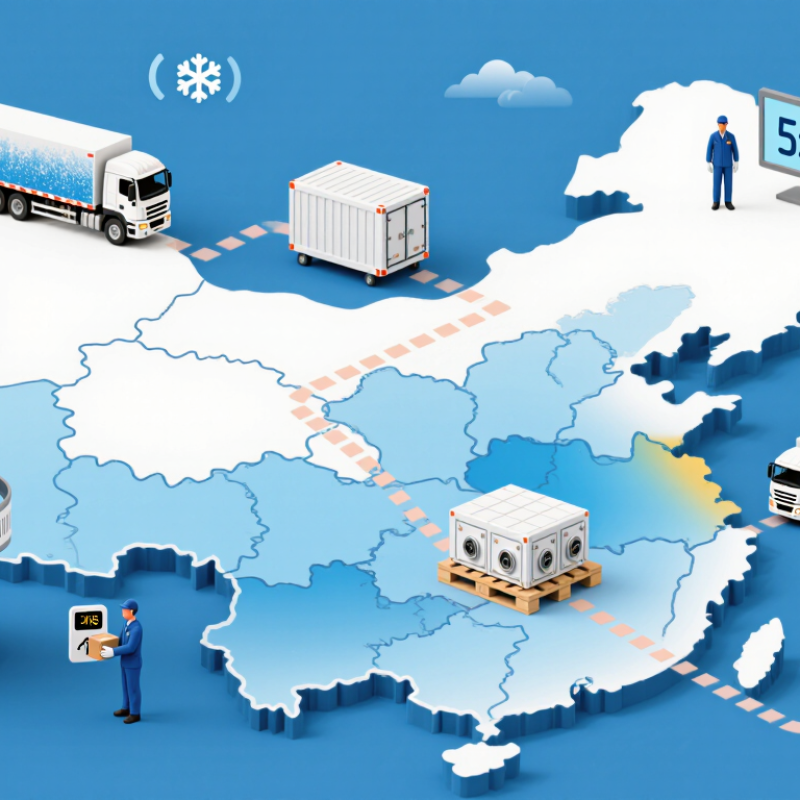
China Top Pharmaceutical Temperature Controlled Shipping
Pharmaceutical shipments need different thermal profiles, not one universal solution. The 2–8°C range supports many refrigerated medicines and biologics. IATA Temperature Control Regulations 2024 identifies CRT cargo as +2 to +8°C. Packaging should maintain this range during airport transfers, customs delays, and warehouse staging. WHO Technical Report Series No. 961 recommends temperature mapping, calibrated instruments, and documented monitoring. A single probe is rarely enough. Load patterns matter.
The ≤−20°C profile suits frozen products requiring stronger thermal protection. Dry ice or validated mechanical systems may support this range, but replenishment planning remains essential. The −80°C profile demands ultra-low-temperature equipment, specialized packaging, and short exposure times. Opening a container for inspection can create a serious thermal shock. WHO guidance has reported that up to 50% of vaccines may be wasted globally, with temperature control among the major causes (WHO Vaccine Management Handbook). The figure concerns vaccines, not every pharmaceutical shipment. That distinction matters.
For China shipping lanes, operators should qualify each route, including origin storage, domestic trucking, airport handling, and final delivery. Use calibrated data loggers near the warmest and coldest points. Keep alarm records. Review them honestly. No lane is flawless. A perfect validation file cannot replace trained handlers, backup power, or a realistic delay plan. Temperature excursions also require product-specific stability assessment, not automatic rejection.
| Temperature profile | Typical pharmaceutical applications | Common transport system | Packaging and coolant considerations | Monitoring requirements | Main shipping risks |
|---|---|---|---|---|---|
|
2–8°C Refrigerated |
Many vaccines, biologic medicines, insulin products, refrigerated injectables, blood-derived products, and temperature-sensitive active pharmaceutical ingredients. | Qualified passive insulated shipper, refrigerated vehicle, temperature-controlled air-freight handling, or active container for larger consignments. | Phase-change material commonly selected near the required range. Product must be protected from direct contact with frozen coolant to prevent freezing. Thermal qualification should cover the planned route and duration. | Use a calibrated temperature data logger or suitable electronic monitor. Record shipment start and end times, logger identification, and any temperature excursion. | Freezing caused by cold packs, exposure to ambient heat, airport or customs delays, incorrect pack-out, and inadequate conditioning of coolants. |
|
≤−20°C Frozen |
Products whose approved storage instructions require frozen conditions, including certain vaccines, biological materials, laboratory reagents, and selected pharmaceutical intermediates. | Frozen passive shipper with conditioned frozen packs, dry-ice shipper where permitted, refrigerated vehicle, or validated active temperature-controlled container. | Packaging must maintain the approved minimum temperature for the complete expected transit period. Frozen packs may provide approximately −20°C conditions, while dry ice is much colder and requires product separation and ventilation controls. | Continuous monitoring is strongly recommended. The logger should be suitable for sub-zero operation and positioned near the product load without obstructing the pack-out. | Thawing during delays, insufficient coolant mass, temperature gradients inside the shipper, dry-ice misuse, and condensation or moisture damage after thawing. |
|
Approximately −80°C Ultra-low temperature |
Certain cell and gene therapy materials, selected viral vectors, research-grade biological specimens, and other products with an approved ultra-low-temperature requirement. | Dry-ice shipper, validated active ultra-low-temperature container, or dedicated ultra-low-temperature storage and replenishment network. | Solid carbon dioxide, commonly called dry ice, sublimates at approximately −78.5°C at standard atmospheric pressure. The shipper must be designed for dry ice, with sufficient replenishment planning and product protection from direct contact. | Use a validated ultra-low-temperature data logger or equivalent monitoring system. Dry-ice quantity, replenishment events, shipment duration, and package-opening records should be documented. | Dry-ice sublimation, missed replenishment, customs or airport delays, package vent blockage, carbon-dioxide accumulation in enclosed spaces, and airline dangerous-goods restrictions. |
| Cross-profile shipping controls | |||||
| Product documentation | Confirm the manufacturer-approved storage range, allowable excursion limits, shelf-life conditions, packaging orientation, light protection, and any restrictions on freezing, shaking, or repeated temperature cycling. | ||||
| Route qualification | Qualify the complete door-to-door route, including origin handling, domestic transport, airport transfer, customs clearance, destination handling, weekends, public holidays, seasonal weather, and realistic delay scenarios. | ||||
| Packaging qualification | Use documented thermal-performance data or qualification studies for the selected payload, coolant configuration, ambient profile, and planned duration. A packaging design should not be selected solely from its nominal temperature label. | ||||
| Data and excursion review | Review temperature records against the product-specific stability data. A temperature excursion should be quarantined and assessed by the responsible quality unit before release, rather than automatically accepted or rejected. | ||||
| Dry-ice handling | Dry ice is regulated as a dangerous good for air transport in many jurisdictions. Packaging, labeling, documentation, ventilation, permitted net quantity, and carrier acceptance must be checked before dispatch. | ||||
Note: The applicable temperature range is determined by the approved product label and stability data. The profiles above are general logistics categories and do not replace product-specific handling instructions or validated shipping procedures.
Many refrigerated medicines require 2°C to 8°C. Always follow the product’s approved instructions.
Companies should qualify storage areas, vehicles, containers, and monitoring devices. Packaging alone is not enough.
Place the logger near the most vulnerable product. Avoid placing it beside coolant or near the container door.
Packaging may be qualified for 24 to 120 hours. The design should match customs delays, weekends, and missed connections.
Records should show payload weight, coolant position, air space, and expected transit time. Small details matter.
Send scanned documents before arrival. Check seals, carton counts, logger status, and storage temperatures during handover.
Keep clearance times, handover records, delivery signatures, and the complete temperature graph. Evidence should cover every transfer.
No. Incorrect repacking, a hot loading dock, or a battery failure can still cause temperature uncertainty.
Staff should assess the deviation promptly and document the decision. Corrective action may be needed.
Use regular audits, refresher training, and realistic emergency drills. Some records remain incomplete during busy periods. That weakness deserves attention.
Pharmaceutical Temperature Controlled Shipping in China requires precise control across every stage of the supply chain. Products must be assigned to the correct temperature profile, including 2–8°C, ≤−20°C, or ultra-low conditions near −80°C, with handling procedures aligned with applicable GDP, GSP, WHO, and IATA requirements. Validated packaging should be selected according to shipment duration, payload size, and thermal performance, with tested protection periods ranging from 24 to 120 hours.
Reliable cold-chain operations depend on calibrated data loggers, regular monitoring at intervals such as 15 minutes, and immediate alerts when temperatures approach or exceed approved limits. The shipping workflow should also include accurate customs documentation, coordinated airport handover, secure storage, and verified final delivery. For 2–8°C shipments, documented delivery evidence and temperature records help confirm product integrity, support traceability, and enable timely corrective action when an excursion occurs.