
Expert articles, shipping guides, customs compliance tips, and global supply chain updates.
Comprehensive solutions and industry news for modern importers and exporters.
Stay informed with the latest customs broker advice and international shipping updates.
China’s retail FMCG warehousing distribution sector supports supermarkets, convenience stores, e-commerce platforms, and local retailers. It moves products such as beverages, packaged foods, personal care items, and household essentials. The best-performing companies usually combine dense warehouse networks with reliable transport coverage. They also manage short shelf lives, changing demand, and strict inventory requirements.
This introduction examines China’s leading Retail FMCG Warehousing Distribution companies through practical business indicators. These include warehouse locations, cold-chain capability, order accuracy, delivery frequency, technology adoption, and service coverage. A strong provider should not only store products. It should receive pallets efficiently, control batch information, reduce picking errors, and deliver mixed orders on time. In a busy distribution center, barcode scanners, temperature monitors, and clearly marked loading bays often reveal more than promotional claims.
There is no single ranking that fits every retailer. A national supermarket may value broad regional coverage, while a neighborhood chain may need faster city-level replenishment. Public data can also remain incomplete or uneven. That matters. Company scale does not always equal operational quality. This overview therefore considers available corporate information, industry experience, logistics practices, and measurable service factors. It also recognizes areas requiring further verification, including actual fulfillment rates, customer retention, and warehouse-level performance. The companies discussed should be evaluated against product categories, delivery routes, order volumes, and compliance needs. Practical results matter most. A polished presentation is not enough.
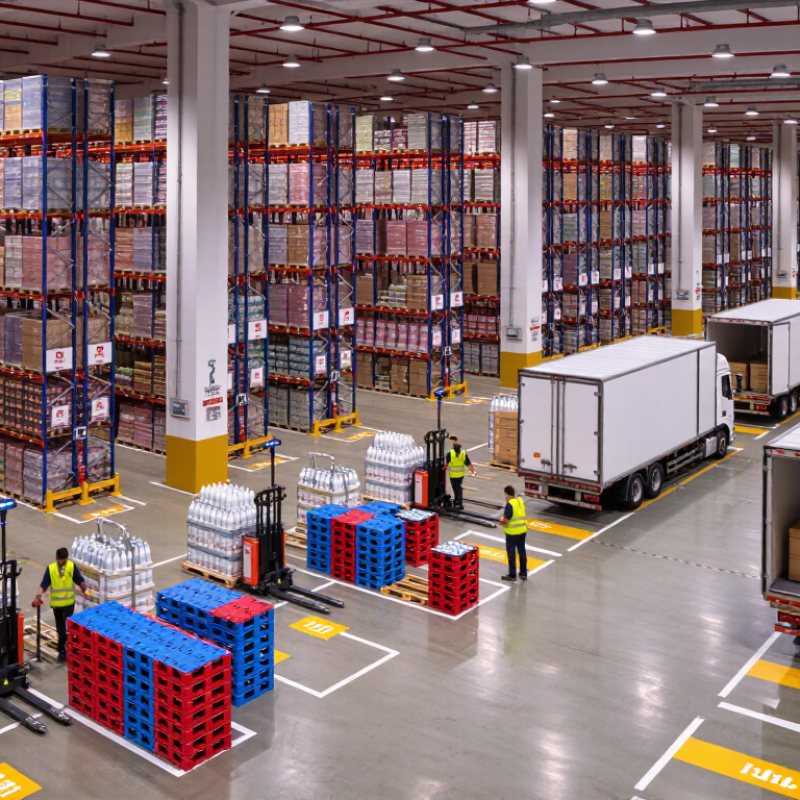
FMCG warehousing distribution connects manufacturers, retailers, and consumers through fast, controlled product movement. In China, the system handles packaged food, beverages, household goods, and personal-care products. Its role is not simple storage. It manages demand forecasts, inventory rotation, order picking, transportation, and returns. China’s National Bureau of Statistics reported retail sales of consumer goods reached about RMB 47.1 trillion in 2024. That scale makes reliable distribution infrastructure commercially essential.
Speed matters. Waste matters more.
The China Federation of Logistics and Purchasing reported China’s total social logistics value at approximately RMB 360.6 trillion in 2024. FMCG operators therefore need measurable warehouse performance, including order accuracy, stockout rates, inventory days, and delivery punctuality. Temperature-controlled categories require additional monitoring, such as loading-door exposure, sensor records, and batch-level traceability.
A practical facility may use high-density shelving for stable products, separate picking zones for urgent orders, and scheduled replenishment near retail clusters. These details reduce handling time and protect product quality.
Choosing leading warehousing distribution companies should involve more than network size. Buyers should examine service-level evidence, emergency capacity, regional coverage, digital integration, and audit discipline. A low handling fee can conceal slow returns or excessive inventory. This is easy to overlook. Industry reports provide useful benchmarks, but warehouse conditions vary sharply across regions. A cautious review should compare reported performance with site-level records, because perfect efficiency is rarely real.
Check dock schedules, pallet labels, temperature logs, and loading discipline. Review receiving records, not only dispatch records. Speak with drivers and retail receivers. Their observations may contradict polished reports.
Compare promised arrival windows with actual arrival times. Track on-time, in-full delivery by region, order size, and product category. Record damaged cartons and incomplete orders. Holiday peaks reveal hidden weaknesses.
Demand differs across coastal cities, inland towns, and rural routes. Regional centers should connect efficiently with city facilities and last-mile vehicles. A smaller local network may serve county markets better.
Warehouse systems should track batches, expiry dates, locations, and stock movements. Transport tools should connect routes with delivery evidence. Barcode scanning reduces errors. Technology still fails when master data is poor.
Review temperature logs, insulated docks, refrigeration maintenance, and alert procedures. Ask for backup equipment records. Test one chilled shipment from receiving through delivery. A single test proves little.
Examine inventory accuracy, order accuracy, delivery punctuality, damage rates, stock rotation, and vehicle utilization. Compare normal weeks with holiday periods. Fast delivery alone is not enough.
Not always. Large networks may offer technology and backup capacity. Regional operators may provide stronger local execution. Compare actual service records, not facility size alone.
Low damage rates may reflect limited product variety or selective reporting. Reported warehouse areas may use inconsistent definitions. Manual counting can distort data. Record assumptions and revisit them later.
Check food handling, transport practices, worker training, data protection, and emergency procedures. Review audit results and equipment maintenance records. Compliance documents can look complete but still miss daily problems.
Retail FMCG Warehousing Distribution in China plays a vital role in connecting manufacturers, retailers, and consumers through organized storage, inventory management, order processing, and transportation services. Leading providers are evaluated by warehouse coverage, storage conditions, fulfillment accuracy, delivery speed, supply chain visibility, service reliability, and the ability to support different product categories and retail formats. A strong distribution partner can help retailers reduce stockouts, improve inventory turnover, and respond efficiently to changing market demand.
China’s major retail FMCG distribution companies are increasingly investing in regional warehouse networks, automated handling systems, digital inventory platforms, intelligent route planning, and data-driven forecasting. Industry development is being shaped by omnichannel retail, faster delivery expectations, cold-chain requirements, sustainability goals, and the growth of smaller community-based stores. When selecting a provider, retailers should consider geographic reach, technology integration, operational flexibility, compliance management, cost structure, and scalability. The most suitable partner is one that combines dependable infrastructure with transparent coordination and continuous improvement.