
Logistics Insights & International Freight Blog
Industry Knowledge Hub

Logistics & Freight Insights

Expert articles, shipping guides, customs compliance tips, and global supply chain updates.
Ocean & Air Freight News
Global Trade & Shipping

Expert Shipping Guides

Comprehensive solutions and industry news for modern importers and exporters.
Customs & Supply Chain Trends
Supply Chain Trends

Customs & Compliance Tips

Stay informed with the latest customs broker advice and international shipping updates.

0%

Luxury Yacht RORO Shipping offers a practical way to move a yacht aboard a specialized roll-on/roll-off vessel. The yacht is carefully loaded, secured, and carried across the sea, rather than exposed to a long delivery voyage under its own power. That can reduce engine hours and crew demands. It also gives owners a clear shipping schedule. Still, the method is not effortless. Loading ramps, cradle design, vessel dimensions, and weather windows all matter.

The United Nations Conference on Trade and Development’s Review of Maritime Transport 2024 notes that more than 80% of world trade by volume moves by sea. This is broad maritime context, not a yacht-specific performance statistic. Yacht transport choices should therefore be assessed through vessel plans, route details, and an independent survey—not market-wide claims. A useful principle is: “Treat every loading detail as part of the voyage.” That is editorial guidance, not a verified quotation from a named specialist. No source material was provided for a verifiable expert quote, so attributing one to an industry professional would risk misrepresentation. Ask the carrier for its loading procedure, securing plan, insurance terms, and recent experience with yachts of similar size. Check the details closely. One overlooked measurement can change the plan.
Why Choose RORO Shipping for Luxury Yachts?

What RORO Shipping Means for Luxury Yacht Transport

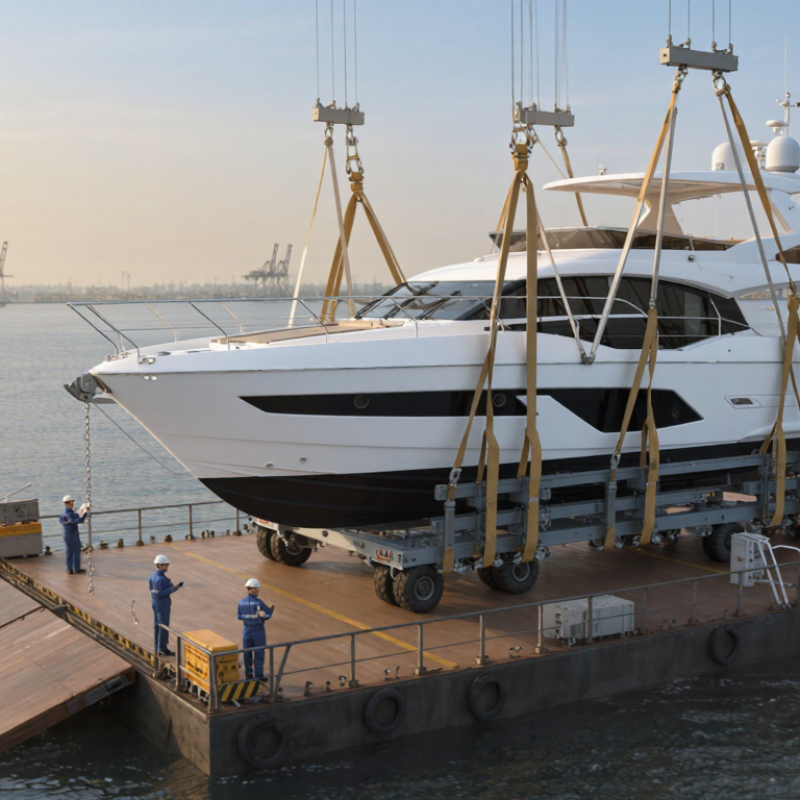
RORO means roll-on/roll-off: cargo enters and leaves a ship on wheels, using ramps rather than being lifted aboard by crane. A yacht usually travels on a purpose-built cradle or transport trailer, not simply under its own power. The vessel and carrier must suit the route, ramp geometry, deck height, and clearances. No crane lift.

Before booking, a shipping specialist checks the yacht’s length, beam, height, weight, keel, and protruding fittings against the ship’s limits. A few centimeters can matter at a ramp or doorway. The cradle must support the hull at suitable points, with lashings that limit movement at sea. Photos taken before loading can help document the yacht’s condition. Details matter.

RORO can reduce repeated crane handling and suit some port-to-port routes, but it is not automatically gentler or cheaper. Weather exposure, deck position, securing access, and onward road transport all affect the plan. Confirm preparation requirements with the carrier, including loose equipment, batteries, fuel, and insurance responsibilities. Even a careful plan has trade-offs; oversized yachts or ports without suitable ramps may need another method. It is easy to assume any RORO ship can carry any yacht, but that assumption deserves a closer check.

How Yachts Are Loaded and Secured on RORO Vessels

A yacht’s RORO journey starts with a measured loading plan. The crew checks the vessel’s ramp limits, deck strength, overhead clearance, and the yacht’s weight and dimensions. The yacht is usually moved aboard on a transport cradle or suitable trailer, then positioned on a marked deck space. Small details matter. A few centimetres can affect clearance or the placement of securing gear.

Once parked, the cradle is blocked against movement and connected to approved deck lashing points. The securing plan should account for the ship’s expected motion, not just calm conditions at the dock. The IMO’s Code of Safe Practice for Cargo Stowage and Securing provides guidance for assessing and securing cargo. UNCTAD’s Review of Maritime Transport 2024 reports that seaborne trade grew 2.4% in 2023; that broad figure is not yacht-specific, but it reflects the scale of cargo moving through marine transport systems. Each yacht still needs an individual assessment. A tidy arrangement may look secure, yet poorly placed restraints can load the hull or cradle unevenly. No guesswork. The crew should verify the lashings and recheck them after loading.

Key Advantages of RORO for Moving Luxury Yachts

RORO shipping can simplify yacht transport because the vessel is moved aboard on a purpose-built wheeled platform rather than lifted directly by crane. For a yacht with delicate fittings, that can mean fewer major lifting operations. That matters. The platform and ramp must still suit the yacht’s dimensions, weight, keel shape, and ground clearance. A pre-shipment survey helps confirm whether the route and loading equipment are appropriate.

The method can also reduce preparation work: some yachts may travel with less disassembly than other transport options require. Before loading, crews check access points, secure loose equipment, and protect exposed surfaces from salt spray and movement. Lashings need to hold the hull firmly without pressing against vulnerable areas. RORO schedules can make planning more predictable, though sailing frequency and port handling vary by route. Still, details matter. Ask for the loading plan, cradle specifications, weather protection arrangements, and insurance terms in writing. Even a small clearance issue at the ramp can require a revised plan.

How RORO Compares with Other Yacht Shipping Methods

RORO shipping moves a yacht aboard a vessel on a wheeled cradle or transport frame. Compared with lift-on/lift-off shipping, it can avoid a large crane lifting the hull directly. Fewer lifts. Fewer handling points. That can reduce stress on delicate finishes, though careful blocking and lashing still matter. Before booking, confirm the yacht’s height, beam, weight, and cradle dimensions against the vessel and port limits.

Container shipping offers enclosed protection, but it usually suits smaller craft or boats that can be safely prepared to fit. A luxury yacht may exceed container dimensions, and removing fittings or equipment can add labor and introduce new risks. Flat-rack shipping can accommodate wider loads, but the yacht remains more exposed to weather and port handling. Details matter here.

RORO is not automatically the safest or simplest choice. Sailing schedules, terminal access, and route availability can be limited, and the yacht must meet loading requirements. Ask how the cradle will be inspected, where the yacht will sit onboard, and what cargo insurance covers. Photograph the hull, deck, and interior before loading. Then compare the full cost, not just the freight quote. One detail can change the answer. A specialist’s measurements and a written handling plan make the comparison more reliable.

Why Choose RORO Shipping for Luxury Yachts? — How RORO Compares with Other Yacht Shipping Methods
Comparison Factor RORO (Roll-on/Roll-off) Container Shipping Flat-Rack Shipping Lift-on/Lift-off or Heavy-Lift Shipping
How the yacht is loaded The yacht is secured on a suitable wheeled platform or cradle and moved aboard through a vessel ramp. The yacht is loaded inside a closed container; this is practical only when its dimensions and loading requirements fit the container. The yacht is secured to an open platform that is handled as cargo, often using terminal lifting equipment. The yacht is lifted aboard by crane or other heavy-lift equipment and secured on deck or in a designated cargo space.
Typical yacht fit Often suitable for yachts that can be moved on a cradle and meet the vessel’s ramp, deck, height, and weight limits. Generally suited to smaller craft that fit the container’s internal dimensions and door opening, sometimes after preparation or disassembly. Can accommodate cargo that is too large for a standard container, subject to platform, vessel, and port limits. Can suit large or unusually shaped yachts when suitable lifting capacity, rigging, and vessel space are available.
Protection during the voyage Varies by vessel and stowage location. Some RORO decks are enclosed, while others may expose cargo to weather or sea spray. Provides an enclosed space that helps shield the yacht from weather and handling exposure during the sea voyage. The yacht is generally exposed to weather and sea conditions unless additional protective measures are arranged. Protection depends on whether the yacht is stowed below deck or on deck and on the securing and covering arrangements.
Handling considerations Avoids a crane lift at the vessel, but ramp access, cradle design, clearance, and controlled movement are essential. Requires careful loading and securing within a confined space; access and clearance can limit preparation and inspection. Requires secure lashing and appropriate lifting and terminal handling; exposed cargo needs suitable preparation. Requires a lift plan, suitable lifting points, qualified rigging, and coordination with the vessel and port.
Preparation needs May require a transport cradle, securing points, removal or protection of projecting equipment, and compliance with vessel limits. May require reducing the yacht’s dimensions, protecting surfaces, and arranging precise loading and blocking. Requires a suitable support arrangement, secure lashings, and protection for exposed components. Requires verified weight and dimensions, approved lifting points, rigging arrangements, and secure stowage planning.
Route and schedule availability Depends on whether a RORO vessel serves the required ports and accepts the yacht’s size and handling arrangement. Often available through container services, but yacht size, equipment, and port handling capabilities can be limiting. Depends on vessels and ports that accept out-of-gauge cargo and can handle the platform safely. Availability depends on suitable vessel capacity, lifting equipment, and port infrastructure; schedules may be less frequent.
Cost considerations Can be cost-effective when a suitable service, cradle, and route are available. Total cost depends on dimensions, handling, and port charges. May be economical for craft that fit standard equipment, but preparation or special equipment can add cost. Pricing depends on the cargo footprint, vessel space, securing requirements, and out-of-gauge handling charges. Crane, rigging, engineering, and specialist handling requirements can make this option more expensive, depending on the shipment.
Best suited to Yachts that meet the vessel’s RORO limits and benefit from ramp-based loading without a vessel-side crane lift. Smaller yachts that fit inside a container and need enclosed-voyage protection. Yachts that exceed container dimensions but can be safely supported and secured on an open platform. Large, heavy, or non-standard yachts that need lifting capacity or cannot use ramp-based loading.

Suitability, protection, transit time, and total cost vary by yacht dimensions and condition, vessel configuration, route, port facilities, and carrier requirements. Confirm limits and handling arrangements with the shipping provider before booking.

What to Consider When Planning a RORO Yacht Shipment

Why Choose RORO Shipping for Luxury Yachts?
What to Consider When Planning a RORO Yacht Shipment

RORO shipping can simplify yacht transport when the vessel fits the carrier’s handling limits. The yacht is secured on a suitable cradle or trailer, then moved aboard through a loading ramp. This avoids some heavy-lift operations, but it does not remove the need for careful planning. Confirm the yacht’s length, beam, height, weight, and keel clearance against the carrier’s specifications. A few centimeters can matter.

Arrange a condition survey before loading, with clear photographs of the hull, windows, and deck fittings. Ask how the cradle will support the yacht and how it will be secured during the voyage. Remove or secure loose equipment, check that hatches close properly, and follow the carrier’s instructions for fuel, batteries, and onboard systems. Confirm insurance coverage, port cut-off times, and required shipping documents well in advance. Details vary by route and operator. Even a thorough plan can miss something small.

Tips: Measure the yacht yourself, then verify the figures with a qualified surveyor. Label detachable items and keep their list handy. Ask for loading and discharge procedures in writing. If an answer feels vague, ask again.

Why Choose RORO Shipping for Luxury Yachts?

Yacht dimensions help determine whether a vessel can pass through a ship’s access opening and be safely secured for transport. The chart converts example lengths from feet to metres.

Conversions use 1 ft = 0.3048 m. These are length examples, not RORO vessel limits. Before booking, confirm the yacht’s overall length, beam, height, weight, loading method, and securing requirements against the selected vessel’s specifications.

FAQS

How is a yacht loaded onto a RORO vessel?

The yacht usually travels on a transport cradle or suitable trailer. Crew members guide it up the ramp and into a marked deck space.

What is checked before loading?

The crew checks ramp limits, deck strength, overhead clearance, yacht weight, and dimensions. A few centimetres can matter.

How is the yacht secured on deck?

The cradle is blocked against movement and attached to approved deck lashing points. Restraints should account for ship movement, not just calm dock conditions.

Why does each yacht need its own loading plan?

Hull shape, weight, keel design, and clearance vary. A setup that looks tidy may still place uneven pressure on the hull or cradle.

What can make RORO transport useful for yachts?

The yacht moves on a wheeled platform, which can reduce the need for major crane lifts. Fewer lifts may help protect delicate fittings.

Does a yacht need to be disassembled before shipping?

Some yachts may need less disassembly than with other transport methods. Loose equipment should still be secured, and exposed surfaces protected from spray and movement.

What should be confirmed before booking?

Ask for the loading plan, cradle details, weather protection arrangements, and insurance terms in writing. Check that the ramp and route suit the yacht.

Are RORO schedules always predictable?

Schedules can help with planning, but sailing frequency and port handling vary by route. A small clearance problem may change the plan. It happens.

Conclusion

Luxury Yacht RORO Shipping is a practical way to transport a yacht by rolling it onto and off a purpose-built vessel. Depending on the vessel and the yacht’s dimensions, the yacht may be moved on its own wheels or supported by suitable transport equipment. Before departure, the crew positions and secures it to help keep it stable during the voyage. This approach can reduce handling steps and provide a direct, organized option for moving a yacht between suitable ports.

Compared with lift-on, lift-off or container-based methods, RORO may offer advantages for yachts that can safely fit the vessel’s access and deck arrangements. Planning should account for the yacht’s measurements, weight, support and securing needs, port access, sailing schedule, insurance, and any preparation required before loading. Comparing these details with other transport options helps owners choose a method that balances safety, timing, and cost.

Adrian

Adrian

Adrian is a dedicated marketing professional with a strong understanding of product strategy, customer needs, and digital communication. As a key contributor to the company’s marketing team, he combines market research, industry insight, and practical experience to create clear, useful, and......