Explore our specialized multimodal transport, project cargo engineering, hazardous materials logistics, and customized container solutions engineered specifically for Chinese machinery exports.
Priority charter and commercial air freight for urgent machinery components, hydraulic valves, and precision parts from Chinese manufacturing hubs to Europe.
Contact Us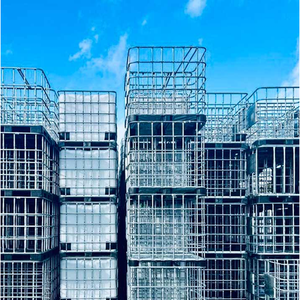
Certified intermediate bulk container management, hazardous liquid asset return services, and global chemical transport fleet logistics.
Contact Us
End-to-end breakbulk chartering, heavy machinery ocean transport, and compliant hazardous material handling across international sea routes.
Contact Us
Direct FCL/LCL ocean shipping and heavy machinery vessel allocation connecting Shanghai, Ningbo, and Shenzhen ports to global industrial gateways.
Contact Us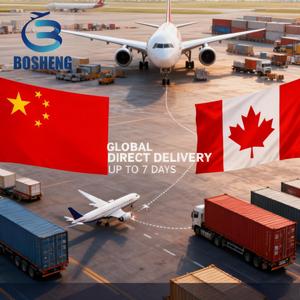
UN-approved dangerous goods logistics, lithium-ion power pack transport, and full door-to-door customs clearance across Spain, Belgium, and Sweden.
Contact Us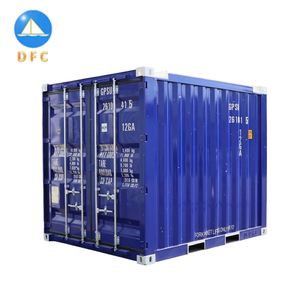
Custom engineered heavy-duty flat rack equipment compliant with DNV 2.7-1 offshore energy specifications for oversized mechanical rigs.
Contact Us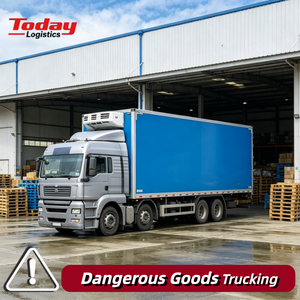
Heavy-duty drayage, specialized chassis transport, and ADR/DOT compliant dangerous goods road haulage for industrial chemical equipment.
Contact Us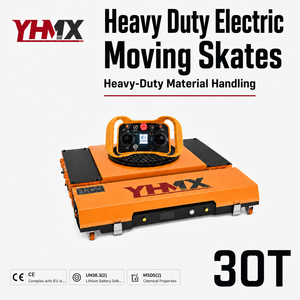
State-of-the-art wireless remote-controlled industrial tank carrier engineered for factory internal heavy material handling and export loading.
Contact UsChina has solidified its position as the undisputed epicentre of industrial machinery manufacturing, hosting heavy engineering giants across industrial zones in Jiangsu, Shandong, Zhejiang, Guangdong, and Liaoning. From massive crawler cranes, tunnel boring machines (TBMs), and hydraulic excavators to 30-ton electric tank transporters and DNV-certified offshore energy modules, Chinese factories supply the capital equipment underpinning global infrastructure expansion.
However, procuring heavy machinery from Chinese original equipment manufacturers (OEMs) represents only half of the commercial equation. Executing the global distribution of Out-of-Gauge (OOG), heavy-lift, and super-heavy breakbulk cargo introduces complex engineering, legal, and operational risk vectors. Transporting oversized industrial units requires meticulous structural weight calculations, route clearance surveys across inland China, specialized ocean vessel chartering (RoRo, Breakbulk, Flat Rack), and compliant customs brokerage under U.S. CBP, EU CE regulations, and international maritime law.
This comprehensive technical report serves as an authoritative guide for international procurement directors, project logistics managers, EPC (Engineering, Procurement, and Construction) contractors, and supply chain executives. It provides deep analytical insights into selecting Chinese manufacturing partners, managing specialized transport infrastructure, navigating dangerous goods (Class 3/8/9) integrations, and executing seamless ocean and air logistics strategy.
Selecting the correct maritime and overland transport modality is paramount to preserving structural integrity, preventing load shift incidents, and optimizing total landed costs. Oversized freight cannot be accommodated in standard 20ft or 40ft Dry Van ISO containers. Below is an engineering comparison matrix of primary project cargo transport modes utilized when shipping from Chinese manufacturers.
| Transport Modality | Optimal Cargo Dimensions / Payload | Primary Technical Advantages | Handling & Port Requirements | }
|---|---|---|---|
| Flat Rack Containers (20'/40' FR) | Width > 2.44m, Height > 2.59m; Up to 45,000 kg load capacity. | Standardized container vessel booking; predictable liner schedules; lower cost than full breakbulk charter. | Requires shore-to-ship gantry cranes; specialized synthetic webbing and chain lashing. |
| Roll-on/Roll-off (RoRo) Vessels | Self-propelled wheeled machinery (excavators, trucks, electric tank transporters). | Zero overhead crane lifting required; cargo remains protected inside vessel decks; minimal exposure to salt spray. | Requires specialized RoRo port berths (e.g., Shanghai Taicang, Guangzhou Nansha); higher revenue ton calculation. |
| MPV Breakbulk Chartering | Super-heavy lifts (> 100 Metric Tons), non-standard dimensions, mining equipment. | Vessels equipped with heavy tandem ship cranes (up to 1,000 MT capacity); custom deck stowage plans. | Requires specialized stevedoring teams, port captain loading oversight, and custom lifting beam rigs. |
| Air Charter / Express Lift | Critical spare parts, urgent hydraulic assemblies, high-value tech components. | Rapid transit time (24–48 hours door-to-door); minimal transit shock vibration. | Strict volumetric weight restrictions; nose-loading freighter aircraft (An-124, B747-8F). |
When shipping machinery on 40ft High Cube Collapsible Flat Racks or DNV-certified offshore frames, structural dynamic forces must be mitigated during ocean transit. Accelerations caused by vessel roll, pitch, and heave generate massive shear stress on tiedown points. Lashing plans executed at Chinese ports must adhere to IMO/ILO/UNECE Code of Practice for Packing of Cargo Transport Units (CTU Code).
Steel chains rated at Grade 80 or Grade 100 with turnbuckles are mandatory for machinery over 15 metric tons. Friction-increasing rubber matting (friction coefficient μ ≥ 0.6) must be installed beneath machine tracks or wheels to prevent horizontal sliding. Center of Gravity (CoG) markers must be explicitly stamped on all custom crating prior to factory gate-out in China.
Operating as an elite international freight forwarder and licensed U.S. Customs Broker (supported by strategic control towers in Los Angeles, Shanghai, Ningbo, and Rotterdam), our organization bridges the operational gap between Chinese industrial factories and overseas destination sites. We bring over two decades of specialized project cargo experience, providing unmatched value to global importers.
Access to low-boy trailers, multi-axle hydraulic platform trailers (SPMT), and bridge clearance permits across China’s highway networks (G15, G42) for seamless factory-to-port heavy transit.
In-house licensed US Customs Brokers and global regulatory experts handling ISF 10+2, tariff engineering (HTS Chapter 84/85 duty optimization), and CBP/FDA/EPA clearances.
Certified handling of hazardous industrial equipment, chemical IBC tanks, lithium-ion battery integration units (UN38.3), and dangerous goods door-to-door forwarding.
The global heavy equipment procurement landscape is undergoing a structural transition driven by technological innovation, environmental mandates, and digital supply chain architecture. Buyers sourcing from Chinese factories must align their logistics strategy with these four key macro trends:
Chinese heavy equipment factories are rapidly phasing out traditional internal combustion powerpacks in favor of electric drive systems and autonomous wireless remote control units. Industrial movers—such as the 30 Ton Electric Tank Transporter—are becoming standard in advanced factory environments. Sourcing battery-powered heavy machinery introduces complex logistics requirements under dangerous goods regulations (IMDG / IATA DGR). Importers must ensure their freight forwarding partner possesses specialized lithium battery transport certification (UN 3480 / UN 3481) and temperature-monitored carrier networks.
As offshore wind energy, deep-sea oil exploration, and marine hydrogen infrastructure expand globally, demand for specialized DNV-certified offshore containers and flat racks has surged. Standard ISO shipping containers lack the structural yield strength and dynamic load certification needed for offshore crane transfers in high sea states. Chinese manufacturers in Jiangsu and Shandong now produce specialized 10ft, 20ft, and 40ft offshore flat racks tested against rigorous drop-impact and dynamic lifting metrics. Logistics execution requires continuous surveyor verification and marine warranty inspection (MWI) sign-offs.
Modern project cargo logistics relies on digital twin simulation prior to cargo pickup. Utilizing 3D CAD modeling software, our engineering team maps out machine dimensions against vessel hold geometry, crane boom radius limits, and road underpass clearances. This eliminates costly port demurrage and structural fit issues during loading at Chinese breakbulk terminals.
With the European Union Maritime FuelEU regulations and IMO 2030 carbon intensity targets taking effect, ocean carriers operating on Asia-Europe and Trans-Pacific routes are prioritizing dual-fuel LNG and green methanol vessels. Major EPC contractors buying machinery from China are integrating scope 3 carbon tracking into their freight procurement RFPs. Partnering with forwarders offering green vessel allocation and biofuel offsets is fast becoming a mandatory procurement criterion.
Importing heavy machinery from China into Western markets (North America, Europe, Australia) requires navigating a complex regulatory environment. Failure to prepare documentation accurately can result in customs detentions, severe financial penalties, or cargo seizure.
Machinery imports fall under Harmonized Tariff Schedule (HTS) Chapters 84 and 85. Identifying the precise 10-digit HTS code for specialized equipment—such as self-propelled industrial carriers, hydraulic excavators, or offshore structures—is essential for calculating baseline customs duties, Section 301 tariffs (where applicable), and antidumping duties (ADD). Our licensed customs brokers perform pre-shipment classification reviews to ensure full compliance while utilizing legitimate trade preference programs to minimize duty liability.
For ocean shipments bound for the United States, the U.S. Customs and Border Protection (CBP) requires an Importer Security Filing (ISF) to be transmitted at least 24 hours prior to cargo loading onto the vessel at the Chinese port of origin. For out-of-gauge cargo and breakbulk shipments, precise commodity data, stuffing location codes, and consolidated importer numbers must be declared to prevent $5,000 per violation liquidated damages fines.
Expert answers to technical procurement, logistics, customs, and shipping questions regarding Chinese heavy machinery exports.
Flat Rack (FR) containers utilize liner container ships and are ideal for oversized machinery that fits within container ship bay dimensions (up to ~45 tons). RoRo (Roll-on/Roll-off) is best for wheeled or tracked machinery (like excavators or electric tank carriers) that can be driven directly onto specialized vessel decks. Breakbulk involves chartering space on multi-purpose heavy-lift vessels where cargo is individually hoisted into ship holds via ship-board or shore cranes, reserved for super-heavy (>50-100+ tons) or ultra-dimensional equipment.
Moving oversized freight from factory inland sites (e.g., Xuzhou, Zhengzhou, Changsha) to coastal sea ports (Shanghai, Ningbo, Qingdao) requires Super-Load Transport Permits issued by provincial road transport authorities. Route surveys are conducted to evaluate bridge load ratings, overhead wire heights, and highway toll gate widths. Specialized heavy haulage carriers utilizing hydraulic multi-axle trailers (SPMT) are deployed under police escort when required.
DNV 2.7-1 is the global standard for offshore containers and lifting sets used in open sea environments. Unlike standard ISO shipping containers, DNV-certified units are constructed with high-yield strength steel, reinforced corner castings, and dedicated pad-eyes capable of withstanding dynamic snatch loads during crane transfers between supply vessels and offshore oil/wind platforms in rough seas.
Shipping dangerous goods (such as chemical equipment, IBC containers, or lithium battery systems) requires a Dangerous Goods Declaration (DGD), Material Safety Data Sheets (MSDS/SDS) in English and Chinese, UN Packaging Specification Certificate issued by China Inspection and Quarantine (CIQ/Customs), and certified IMDG packaging compliance. Pre-approval from ocean carriers is mandatory prior to container gate-in.
As a licensed U.S. Customs Broker, we manage end-to-end customs entry filing, HTS code tariff classification, ISF filings, EPA engine compliance declarations (Form 3520-21 for diesel/gas powered machinery), FDA clearance for industrial chemical units, and duty payment processing through U.S. Customs Automated Commercial Environment (ACE).
Lashing calculations are performed based on vessel acceleration forces under the IMO CTU Code. We utilize heavy-duty Grade 80/100 chain lashings, dunnage wood distribution, friction rubber pads, and custom steel stopper welding on flat rack beds. Independent marine surveyors inspect and issue Sea-Fastening Certificates before vessel departure from Chinese ports.
Speak directly with our senior heavy-lift logistics directors and licensed customs compliance specialists. We optimize route planning, vessel chartering, and door-to-door execution for your Chinese machinery procurement.
Contact Us