Explore our specialized industrial return hardware, dangerous goods handling containers, and international multimodal return shipping services tailored for cross-border merchants and global OEMs.
In modern cross-border trade, the supply chain is no longer a linear pathway from factory floor to end-consumer; it is an integrated, circular economic ecosystem. As global e-commerce volumes surge alongside stringent environmental mandates (such as the EU Battery Regulation and WEEE directives), managing international product returns has escalated from an operational headache into a core strategic driver of corporate profitability and customer retention.
Historically, cross-border returns from North America and Europe back to manufacturing bases in China were plagued by prohibitive freight expenses, complex tariff barriers, punitive customs duties, and opaque multi-agent handoffs. Today, leading China Reverse Logistics Return Management Factories & Exporters have transformed this landscape. By leveraging specialized customs supervision modes (such as China Bonded Repair 1210 & 9610 framework), automated RMA (Return Merchandise Authorization) hubs, and component-level re-manufacturing facilities in Pearl River Delta and Yangtze River Delta economic zones, enterprise buyers can unlock multi-million dollar annual savings.
According to supply chain intelligence benchmarks, unmanaged cross-border returns erode between 18% to 34% of net product margins. The table below illustrates the cost savings achieved through optimized China-centric reverse logistics pipelines:
| Cost Vector | Legacy Unmanaged Return | Optimized China Bonded Return Hub | Financial Gain / Savings |
|---|---|---|---|
| Customs Import Duty (China) | Paid in Full (13% - 25%) | 0% (Duty-Free Bonded Repair Zone) | 100% Tax Elimination |
| International Freight Freight Rate | Unconsolidated Parcel Air Express | Consolidated Sea/Air Bulk Drayage | 55% - 70% Freight Reduction |
| Refurbishment & Re-packaging | High Western Labor Rates ($45+/hr) | Tier-1 Factory Technician Rates ($8/hr) | 82% Labor Cost Optimization |
| Asset Scrap & Write-off Rate | 40% Abandoned or Destroyed | < 3% Scrap (Re-marketed Grade A) | +37% Asset Recovery Rate |
Building upon two decades of global logistics expertise, our reverse logistics management framework integrates international freight forwarding, hazmat transport, and high-precision warehouse engineering into a seamless operation. Centered around major logistical nodes in Los Angeles (USA), Rotterdam (Netherlands), Hamburg (Germany), and primary manufacturing hubs across China (Shenzhen, Ningbo, Shanghai, Guangzhou), we provide full lifecycle control for return assets.
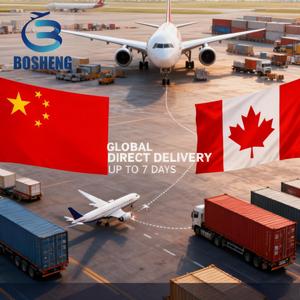
From expedited air freight door-to-door forwarding between China and Europe/USA to full container load (FCL) and less-than-container load (LCL) ocean freight, we engineer optimal routing strategies for returned inventory.
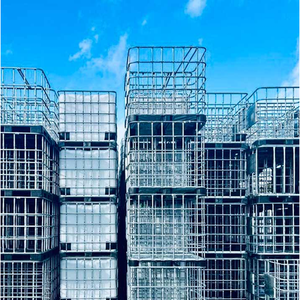
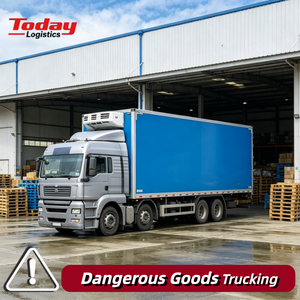
Certified in Class 3, Class 8, and Class 9 dangerous goods transportation. Specialized in handling lithium-ion battery returns, energy storage systems, and chemical transportation equipment (including refurbished IBC containers).
Licensed by U.S. CBP and operating in full compliance with General Administration of Customs China (GACC). Expert execution of Duty Drawback filings, bonded warehouse entry, and temporary import clearance.
To eliminate supply chain friction, premier Chinese reverse logistics exporters deploy an integrated five-stage return workflow. This systemic methodology guarantees real-time item tracking, regulatory verification, rapid component testing, and maximum financial recovery.
The process initiates at overseas consolidation nodes (e.g., Los Angeles, CA or Amsterdam, NL). Local RMA platforms issue pre-printed carrier barcode labels to end-customers. Returns are collected at regional distribution hubs, scanned into the global WMS (Warehouse Management System), and undergo preliminary visual verification to filter out non-authentic goods before international ocean or air consolidation.
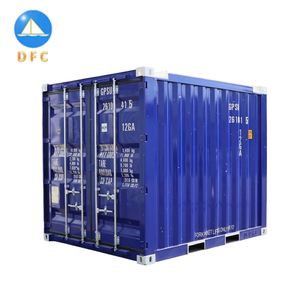
Consolidated returns are shipped via ocean or air using specialized heavy-duty equipment such as DNV-certified offshore flat-rack containers or industrial tank carriers. Upon arrival in China, goods enter specialized Comprehensive Bonded Zones (CBZs). Under "Bonded Maintenance & Repair" policies (Customs Code 1210/9610), cargo clears customs without payment of import tariffs or VAT, significantly easing corporate cash flow.
Inside the factory repair hub, items are unboxed in ESD-protected cleanroom environments. Automated test rigs evaluate core functionality across three operational tiers:
• Grade A (Minor cosmetic defect): Re-packaged immediately in factory-sealed OEM boxes for global re-shipment.
• Grade B (Functional repair required): Board-level micro-soldering, component replacement, and firmware flashing.
• Grade C (Heavy damage/E-waste): Dismantled for raw material recycling in strict adherence to environmental standards.
Refurbished Grade A and B units are assigned fresh serial numbers and integrated back into active sales channels. Goods can be re-exported directly from China's bonded hubs to secondary emerging markets (Latin America, Southeast Asia, Eastern Europe) or returned to domestic e-commerce inventory, maximizing secondary asset yields.
As global trade demands greater transparency, environmental accountability, and speed, reverse logistics infrastructure in China is undergoing a massive technological paradigm shift. Enterprise procurement officers and logistics directors must align their sourcing strategies with five overarching industry trends over the next decade:
Machine learning algorithms analyze historic buyer behavior, product batch defect ratios, and seasonal trends to predict return spikes before they occur. Procurement hubs use this data to dynamically reserve bonded repair capacity and pre-order replacement components.
China is expanding its Free Trade Zone (FTZ) network to permit micro-repair nodes directly adjacent to major seaport terminals. This drastically cuts internal trucking legs, allowing return goods to be inspected, sanitized, and certified within 48 hours of vessel discharge.
Single-use corrugated boxes are rapidly being replaced by heavy-duty, reusable smart return containers equipped with real-time IoT temperature, tilt, and GPS sensors. Reusable IBC containers and modular heavy tank transporters lead this sustainable transformation.
Addressing critical regulatory, operational, and financial inquiries for global importers, B2B procurement managers, and cross-border brand owners.
Select the optimal transportation pipeline based on payload urgency, cargo classification, and financial parameters:
| Transport Mode | Ideal Commodity Type | Lead Time (Global-to-China) | Hazmat Certification |
|---|---|---|---|
| Expedited Air Cargo Express | High-value consumer electronics, medical chips, automotive ECUs | 2 - 4 Days | IATA Dangerous Goods (Class 9) |
| Standard Ocean LCL / FCL | Apparel, bulk retail items, heavy industrial machinery parts | 18 - 28 Days | IMDG Vessel Certified |
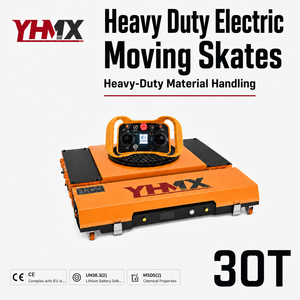
| Flat-Rack & Heavy Transporter | Over-dimensional industrial equipment, 30-ton tanks, offshore rigs | 25 - 40 Days | DNV Certified Industrial Heavy-Lift |
| Chemical & Tank Container | Liquid chemical return, used IBC reconditioning, hazmat liquids | 20 - 30 Days | Class 3 & Class 8 Liquid Hazardous |
Consult with our senior supply chain engineers today to design a customized duty-free bonded repair and reverse logistics pipeline for your enterprise.
