Explore our specialized fleet of reefer units, hazardous cargo transportation frames, ISO tank carriers, and door-to-door international freight forwarding channels built to handle delicate frozen seafood and industrial perishable cargo.
In international maritime and intermodal trade, maintaining cellular integrity in high-value marine protein—such as Pacific salmon, yellowfin tuna, Atlantic cod, king crab, and white shrimp—requires rigorous adherence to thermodynamic preservation. As China reinforces its status as a primary manufacturing titan for advanced reefer containers, insulated packaging, and cold chain equipment, the industry has evolved beyond basic static refrigeration into precision-controlled micro-climatic engineering.
Deterioration in frozen seafood is driven primarily by lipid oxidation, protein denaturation, and ice crystal growth. Standard commercial freezing at -18°C slows metabolic degradation, but ultra-low temperature cold chains (maintaining -35°C to -60°C for sashimi-grade products) stop enzyme reactivity entirely. Sourcing equipment from elite Chinese manufacturers ensures access to patented dual-stage scroll compressors, Vacuum Insulation Panels (VIP), and automated Controlled Atmosphere (CA) systems calibrated for trans-oceanic voyages spanning 30 to 45 days.
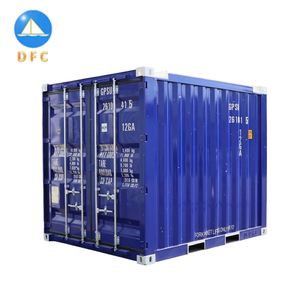
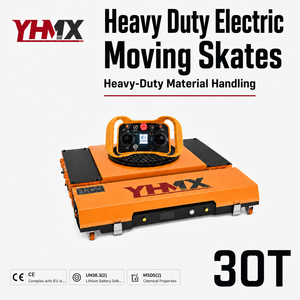
Modern supply chains require cross-functional capabilities. Logistics providers must seamlessly integrate non-hazardous marine reefer shipping with complex specialized cargoes, including DNV-certified offshore flat rack containers for industrial equipment, Class 3/8/9 dangerous goods handling (such as dangerous battery-powered telemetry units and refrigerant gases), and heavy-duty 30-ton remote-controlled tank carriers for localized processing facilities.
Selecting the right shipping asset depends on thermal tolerance, transit duration, and regulatory compliance (e.g., US FDA FSVP, EU Regulation CE 853/2004, and China GB/T 31080). Below is a comprehensive engineering overview of cold-chain asset specifications manufactured and supplied through certified Chinese logistics channels.
| Equipment / Asset Class | Operational Temp Range | Insulation & Thermal Tech | Primary Target Marine Cargo | IoT Telemetry & Safety Features |
|---|---|---|---|---|
| Ultra-Low Deep Reefer (40ft High Cube) | -35°C to -60°C | VIP (Vacuum Insulation Panels) + Polyurethane Foaming | Sashimi Tuna, Bluefin Pelagic Species, Sea Urchin | Dual scroll compressors, real-time CO2/O2 atmospheric sensors, remote GPS tracking |
| Standard Maritime Reefer (20ft / 40ft FCL) | +25°C to -30°C | High-density injected Cyclopentane Polyurethane (100mm) | Frozen White Shrimp, Squid, Tilapia Fillets, Cod Block | Microprocessor temperature data-logging, automated defrost cycle optimization |
| Multi-Temp Active Hybrid Air Cargo Pods | -20°C to +4°C | Phase Change Material (PCM) + Compressor Cooling | Live Shellfish, High-Value Sturgeon Caviar, Live Lobster | IATA-certified lithium battery power pack, aircraft-safe pressure equalization |
| DNV 2.7-1 Offshore Flat Rack Containers | Ambient / Heavy Structural | Anti-corrosion Marine Grade Steel (C5-M Coating) | Offshore Processing Machinery, Freezing Skid Modules | Heavy-duty lashing points, Lloyd's Register / DNV Type Approval Certification |
| Class 3 / 8 / 9 Hazardous Material Transporters | Controlled Hazardous | Explosion-proof lining, chemical resistant coating | Refrigerant Gaseous Tanks, Battery Packs, Cleaning Solvents | UN Certified packaging, Hazmat Door-to-Door customs documentation compliance |
Procurement executives and supply chain directors sourcing cold chain hardware and logistics services from China must navigate structural shifts in international shipping. The next half-decade will be shaped by three major forces:
Under international mandates such as the Kigali Amendment to the Montreal Protocol, traditional R-134a and R-404A refrigerants are being phased out in favor of hydrofluoroolefins (HFOs) like R-452A and R-513A, as well as natural refrigerants such as CO2 (R-744). Chinese manufacturers lead the deployment of energy-efficient reefer machinery that reduces fuel consumption on ocean container vessels by up to 28%.
Modern cold chain procurement requires end-to-end visibility. Modern reefers integrate 5G/satellite IoT modems that continuously broadcast internal temperature, relative humidity, door-open alerts, shock events, and power source health directly to cloud dashboards. This real-time data flow helps satisfy insurance underwriters and regulatory inspection agencies.
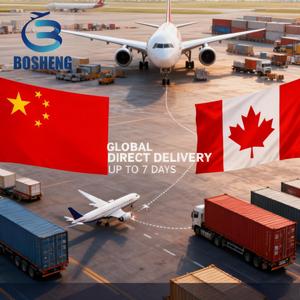
With expanding railway networks connecting China to Europe (China-Europe Railway Express) and rapid sea-to-air multimodal transit nodes in the Middle East and North America, buyers are shifting toward integrated door-to-door logistics contracts. These green lanes incorporate heavy-duty electric drayage vehicles—such as 30-ton remote-controlled electric tank and container carriers—to eliminate port-side tailpipe emissions.
The Chinese manufacturing base for cold chain logistics hardware has expanded beyond standard marine container assembly into specialized, high-performance structural engineering. Key technological developments include:
Traditional polyurethane foam insulation degrades over time due to gas diffusion. Modern Chinese reefer designs incorporate fumed-silica VIP cores protected by multi-layer aluminum barrier films. This achieves a thermal conductivity ($\lambda$) below $0.004 \text{ W/(m}\cdot\text{K)}$, allowing wall thickness to be reduced by 35% while increasing internal volumetric storage for cargo.
Offshore seafood harvesting, processing platforms, and arctic shipping routes require extreme structural resilience. Flat rack containers and offshore reefers are constructed using specialized high-yield structural steel (S355J2+N) designed to withstand dynamic wave impact and operating temperatures as low as -40°C. Non-destructive testing (NDT), full magnetic particle inspection (MPI), and third-party certifications by DNV, ABS, or Lloyd's Register are standard across these manufacturing lines.
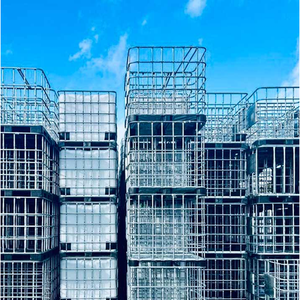
Seafood processing and industrial marine operations require secondary chemical support, including cleaning solutions, refrigerants, and high-capacity lithium energy storage systems. Specialized Chinese manufacturing offers UN-certified used and new IBC (Intermediate Bulk Container) return and purchase programs, alongside dedicated Class 3 (Flammable Liquids), Class 8 (Corrosives), and Class 9 (Miscellaneous Hazardous Goods, including batteries) transport frames designed to comply with IMDG (International Maritime Dangerous Goods) protocols.
As a recognized leader in international freight forwarding, custom brokerage, and cold-chain supply chain management, our enterprise infrastructure bridges major Chinese manufacturing hubs (Ningbo-Zhoushan, Shanghai, Qingdao, Shenzhen) with North American, European, and global import gateways.
Our logistics operations operate continuously around the clock. Every container equipped with IoT sensors is monitored for temperature spikes, power failures, or unexpected route diversions, triggering immediate port-side technician intervention before cargo damage occurs.
Perishable imports require flawless regulatory execution. Our in-house licensed Customs Brokers manage Importer Security Filings (ISF), FDA Prior Notices, HACCP validation checks, and Tariff Classifications (HTS) to clear US Customs (CBP) efficiently at ports like Los Angeles, Long Beach, and Seattle.
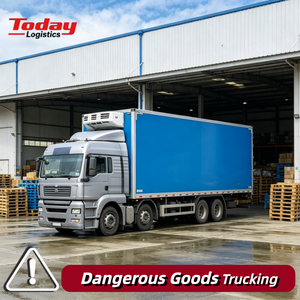
We hold specialized certifications to ship regulated dangerous goods alongside standard commercial freight. Whether handling Class 9 lithium batteries powering reefer units, Class 3 solvents, or Class 8 chemicals in IBC tanks, our Hazmat specialists ensure full IMDG and IATA compliance.
Consult with our senior supply chain engineers for custom reefer quotes, international door-to-door air and ocean freight rates, customs clearance support, and specialized hazardous material transport options.
Get a Quote