High-capacity inland feeder freight, hazardous material container transport, and heavy industrial project equipment handling across key Chinese river-sea corridors.
Inland Waterway Transport (IWT) stands as the backbone of China's domestic industrial logistics and export supply chain network. Encompassing over 125,000 kilometers of navigable rivers, canals, and lakes, China’s inland water system—anchored primarily by the Yangtze River Economic Belt (YREB) and the Pearl River Delta (PRD)—handles the highest inland water freight volume of any nation globally. For international procurement directors, supply chain architects, and bulk commodity buyers, understanding the structural mechanics of China wholesale barge suppliers and export forwarders is essential for unlocking substantial cost efficiencies and carbon reductions.
Transporting cargo via inland river barges provides unprecedented economic density. Compared to long-haul diesel trucking or congested rail corridors, river barges offer a dramatically reduced cost per ton-kilometer (TKM). Bulk commodities such as iron ore, grain, cement, liquefied chemicals, energy storage equipment, and heavy industrial machinery benefit from economies of scale where a single 10,000-DWT (Deadweight Tonnage) Yangtze river-sea barge replaces up to 300 heavy-duty semi-trucks.
To quantify the competitive edge provided by top-tier Chinese barge exporters, consider the technical energy metrics and logistics costs comparing transport modes across central inland corridors:
| Transport Mode | Cost Ratio per Ton-KM (USD) | Fuel Consumption (L / 1000 Ton-KM) | CO2 Emission (g / Ton-KM) | Average Payload Capacity |
|---|---|---|---|---|
| Inland Waterway Barge (Container / Bulk) | $0.008 - $0.015 | 4.2 L | 18 - 24g | 3,000 - 12,000 DWT (200 - 800 TEU) |
| Electrified Freight Rail | $0.025 - $0.040 | 7.8 L (Equivalent) | 35 - 50g | 2,500 - 4,000 Tons |
| Heavy Road Trucking (Diesel) | $0.065 - $0.110 | 28.5 L | 90 - 130g | 30 - 40 Tons |
Procuring barge transport in China requires precise matching of vessel design, draft limits, air draft restrictions (under bridges), and cargo characteristics. Wholesale barge operators deploy distinct hull designs optimized for river hydraulics, lock dimensions (such as the Three Gorges Dam locks), and seasonal water depth variations.
The global shipping sector is undergoing a massive structural shift toward sustainability, digitalization, and regulatory compliance. As international buyers audit their Scope 3 emissions under ESG framework mandates, Chinese barge transport suppliers are pioneering clean propulsion technology and digitalized supply chain tracking.
China is aggressively deploying pure electric container feeder barges along the Yangtze and Pearl River systems. Utilizing standardized mobile power container batteries (swappable 20ft containerized battery packs), electric barges operating on 700-TEU capacities achieve 100% zero-emission voyages between inland industrial hubs and ocean ocean gateways. Buyers contracting with green barge fleets secure carbon offset advantages under carbon border adjustment mechanisms (CBAM).
Integration of 5G telemetry, BeiDou satellite positioning, and AI-driven automated lock booking systems across the Grand Canal and Yangtze locks has drastically reduced port turnaround times. Vessel Traffic Management Systems (VTMS) now enable predictive arrival scheduling, decreasing congestion delays at major locks by over 35%.
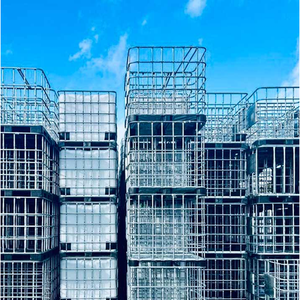
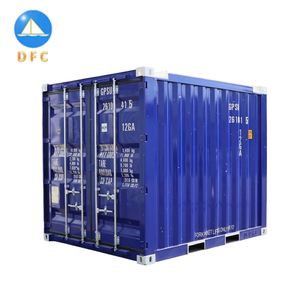
Traditionally moved in open dry-bulk holds, high-value bulk commodities, battery raw materials, and hazardous substances are increasingly shifted to specialized containerized transport—utilizing reusable IBC containers, flexitanks, and DNV certified offshore racks. This transition minimizes cargo loss, prevents environmental contamination, and streamlines direct transfer onto ocean-going vessels.
Operating as a premier freight forwarder, exporter, and intermodal transport operator headquartered in key global shipping hubs, our organization integrates inland river barging with end-to-end international ocean and air freight logistics.
Round-the-clock real-time GPS/AIS vessel tracking, water level monitoring, and proactive status reporting across all global time zones.
In-house customs clearance specialists ensuring seamless filing of ISF, CBP entries, MSA permits, and tariff classifications for export/import trade compliance.
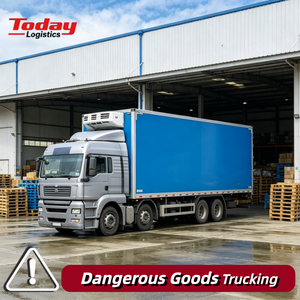
Certified handling of Dangerous Goods (Class 3, 8, 9), including commercial lithium-ion batteries, chemicals, and hazardous waste under strict IMDG codes.
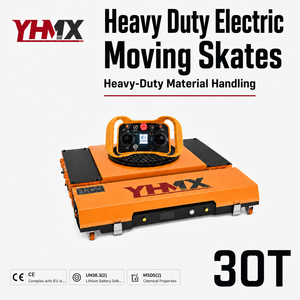
Customized engineering solutions for project cargo using wireless remote-control tank carriers, SPMTs, and heavy-duty deck barge ballasting.
Provision of DNV 2.7-1 certified flat racks, offshore containers, and heavy-duty IBC units engineered to withstand demanding marine conditions.
Every buyer is paired with a senior logistics engineer who designs optimal multi-modal routing, securing competitive freight charter rates.
The primary feeder system operates along the Yangtze River arterial trunk, connecting inland industrial cities (Chongqing, Wuhan, Jiujiang, Anqing, Wuhu, Nanjing) directly to coastal mega-ports at Shanghai (Yangshan) and Ningbo-Zhoushan. In Southern China, the Pearl River network connects Foshan, Jiangmen, and Zhongshan to Hong Kong, Shenzhen (Yantian/Chiwan), and Guangzhou (Nansha).
During the dry season (typically November through March), water levels in upper river sections drop, enforcing shallow draft limits (e.g., reducing allowed vessel draft from 6.0 meters to 3.5 meters). Exporters must adjust deadweight loading or utilize specialized light-draft river-sea vessels. Top forwarders manage dynamic loading schedules to prevent low-water surcharges and port congestion.
Yes, provided the barge operator holds an official Maritime Safety Administration (MSA) Dangerous Goods Transportation License and vessels comply with double-hull safety standards. Hazardous materials (Class 3, 8, and Class 9 battery systems) require specialized declaration documentation, approved container packaging (e.g., UN-rated IBC containers or DNV certified racks), and dedicated storage stowage on deck.
While trucking from inland hubs (e.g., Wuhan to Shanghai) takes 18-24 hours and rail takes 2-3 days, river barge transport takes approximately 4 to 6 days downstream. However, river barging provides up to a 65% cost savings and handles immense freight volumes impossible to transport via highway corridors.
Heavy equipment is loaded utilizing Roll-on/Roll-off (RoRo) ramps paired with Self-Propelled Modular Transporters (SPMTs), or via heavy floating crane barges. Precise ballast calculations are calculated by marine engineers to maintain barge stability during roll-on procedures.
Click the "Inquire Now" button below or contact our global logistics desk. Provide your origin port/quay, destination seaport, commodity type, total tonnage or TEU volume, dimensions (for project cargo), and target schedule. Our chartering team will respond with a comprehensive all-inclusive rate proposal.
Partner with China's leading wholesale barge suppliers and global freight experts. Secure competitive feeder rates, zero-emission routing options, and full customs compliance.
