As a world-class OEM manufacturer of heavy-duty fresh produce reefer containers and an integrated global freight logistics provider, we engineer thermal control technologies designed to eliminate cold chain breaks. From controlled atmosphere (CA) cargo units to ISO-certified intermodal freight systems, our end-to-end solutions guarantee cargo integrity from harvest to shelf.

The transportation of highly perishable agricultural commodities—ranging from avocados, stone fruits, and leafy greens to tropical berries—demands an unyielding microclimate control system. Standard dry cargo containers or basic insulated boxes fall drastically short when subjected to long-haul trans-oceanic routes spanning 20 to 45 days. As a specialized Custom OEM Fresh Produce Reefer Container Manufacturer, our engineering framework integrates thermodynamic structural integrity, precise airflow management, and active atmosphere manipulation.
Thermal gain through container walls is the single greatest catalyst for cold chain degradation. Our custom reefer manufacturing process utilizes high-density, closed-cell polyurethane foam injected under high pressure into double-wall panels composed of anti-corrosive SPA-H Corten steel exteriors and food-grade MG3 aluminum or stainless steel interiors (Grade 304/316).
Fresh produce continues metabolic respiration post-harvest, consuming O₂ and producing CO₂, moisture, and ethylene (C₂H₄)—the primary hormone responsible for senescence and decay. Our OEM units feature optional integrated CA technology including real-time O₂ and CO₂ scrubbers, dynamic ethylene extraction filters, and positive-pressure membrane nitrogen generators. By regulating oxygen levels between 2%–5% and carbon dioxide between 3%–10%, the metabolic aging process is drastically slowed down, extending cargo shelf life by over 200%.
Compatible with 380V/460V 3-phase power, seamless switching between 50Hz and 60Hz ports globally with Carrier Transicold, Thermo King, or Daikin digital scrolling compressors.
Advanced digital humidity control maintains relative humidity (RH) between 60% and 95%, protecting against fruit dehydration while preventing fungal botrytis outbreaks.
Fully compliant with International Convention for Safe Containers (CSC) and DNV 2.7-1 standards for heavy offshore and rugged multimodal transportation stability.
The global perishable produce trade is undergoing a structural transformation driven by changing consumer expectations for year-round fresh availability, stricter ESG regulatory compliance, and rapid technological adoption. Procurement directors, agricultural exporters, and fleet managers must align their capital expenditure strategy with the following forward-looking industry benchmarks:
With the enforcement of the Kigali Amendment to the Montreal Protocol, traditional Hydrofluorocarbon (HFC) refrigerants such as R-134a are being phased out in favor of low Global Warming Potential (GWP) alternatives. Modern reefer container procurement is now heavily weighted toward ultra-low GWP refrigerants including R-1234yf and natural refrigerants like R-744 (Carbon Dioxide / CO₂). OEM manufacturers who integrate CO₂-based transcritical refrigeration loops allow shipping lines to eliminate synthetic chemical risks while reducing carbon footprint fines at European and North American ports.
In traditional cold chain logistics, temperature data was extracted post-voyage via manual dataloggers—a reactive model that resulted in billions of dollars in annual food waste claims. Next-generation reefer container procurement mandates integrated satellite-cellular telematics. Key hardware standards include:
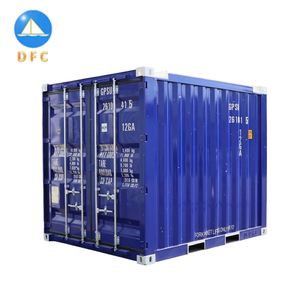
While standard 20ft and 40ft High Cube (HC) reefer containers dominate ocean shipping lines, modern procurement strategies prioritize specialized dimensional formats. Exporters operating across diverse regional geographies—such as inland trucking corridors in Europe, rail links across Central Asia, or offshore platforms—require customized container geometry:
| Specification Parameter | 20ft Standard OEM Reefer | 40ft High Cube (HC) Reefer | 45ft Super-Cube Custom OEM | Offshore DNV Heavy Reefer |
|---|---|---|---|---|
| Internal Volume (m³) | 28.3 m³ | 67.5 m³ | 76.2 m³ | 18.5 – 32.0 m³ |
| Temperature Range | -30°C to +30°C | -35°C to +30°C | -30°C to +25°C | -40°C to +30°C (Ultra-Deep) |
| Target Commodity Focus | High-Density Fruits / Meat | Bulk Bananas, Apples, Avocados | Lightweight Leafy Greens / Flowers | Rough Offshore & Remote Provisions |
| Insulation Thickness | 65 – 100 mm Polyurethane | 70 – 110 mm High-Density PU | 75 – 120 mm Vacuum Insulated | 120 mm Reinforced Steel-PU |
| Primary Transport Mode | Ocean / Rail / Trucking | Trans-Oceanic Liner Services | Dedicated Highway & Rail Freight | Offshore Supply Vessels (OSV) |
Distinguishing ourselves from pure-play container traders or isolated freight forwarders, our combined identity as an OEM Manufacturer and Licensed International Freight Director delivers unprecedented synergy for global supply chain operations. We don't merely manufacture containers; we design, build, test, and deploy physical cold chain assets while executing international freight forwarding across air, sea, and overland networks.
Operating state-of-the-art automated manufacturing plants, every fresh produce reefer unit undergoes rigorous physical testing prior to factory sign-off:
Building upon the logistics leadership demonstrated by top freight forwarders operating out of major global gateways like Los Angeles, Shenzhen, Rotterdam, and Hamburg, our freight forwarding arm handles all operational complexities:
Designed to assist procurement specialists, cold store operators, and trade executives in making informed container acquisition and freight routing decisions.
We offer full OEM customization including internal stainless steel panel grades, custom T-bar or flat floor layouts, specialized air duct designs, dual-temperature zone partitioning, integrated nitrogen/oxygen Controlled Atmosphere (CA) ports, custom exterior livery/branding paint, and pre-installed IoT telematics modules.
Ventilation management merely exchanges inside air with outside ambient air to remove fresh carbon dioxide accumulation. Controlled Atmosphere (CA) actively controls gaseous equilibrium by scrubbing ethylene gas and actively injecting or removing nitrogen/oxygen, slowing down cellular respiration to a near-dormant state for long-distance transport.
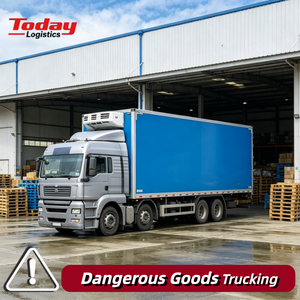
Yes. Our freight forwarding network is fully certified to handle Class 3, 8, and 9 dangerous goods—including lithium-ion battery energy storage systems (BESS), industrial chemicals in IBC containers, and specialized equipment requiring DNV-certified flat racks or tank transporters.
All container units are manufactured in compliance with ISO 6346, ISO 1496/2, CSC (International Convention for Safe Containers), TIR, UIC, and classification society standards such as ABS, BV, LR, or DNV.
We utilize high-output clip-on or underslung diesel generator sets (gensets) during inland road or rail movement. Coupled with 24/7 live IoT tracking, any temperature anomaly triggers immediate automated alerts to our localized logistics response teams.
Standard production runs for customized ISO reefer batches typically range from 3 to 6 weeks following engineering design approval. Rapid dispatch of standard 20ft and 40ft High Cube reefer units from inventory reserves can be arranged within 7 business days.
Speak directly with our senior reefer engineering specialists and global freight forwarding directors. Receive customized OEM technical blueprints, factory-direct pricing, and comprehensive multimodal freight quotes tailored to your exact cargo requirements.
