Explore our specialized fleet, custom DNV container solutions, hazardous cargo handling, and door-to-door international logistics products engineered for global B2B procurement.
In an era defined by geopolitical recalibrations, strict environmental mandates, and dynamic consumer demand shifts, global enterprise procurement leaders are compelled to rethink traditional monomodal shipping strategies. The modern international supply chain requires an integrated, resilient, and adaptive approach: OEM/ODM Cross-Border Multimodal Freight Forwarding.
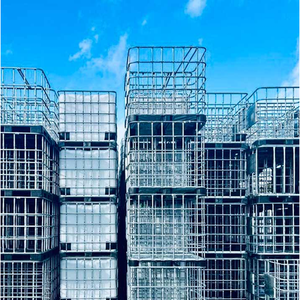
Multimodal freight forwarding combines sea, air, rail, and highway transportation into a seamless logistics continuum under a single contractual framework and single Bill of Lading (NVOCC standard). As an established OEM/ODM freight forwarding factory and turnkey supply chain solutions supplier, our infrastructure bridges the gap between Asian manufacturing powerhouses and North American/European consumer markets. By engineering customized container hardware (DNV 2.7-1 offshore racks, custom IBC tanks), providing specialized hazardous cargo protocols (Classes 3, 8, and 9), and utilizing smart electric yard transport equipment (30-ton remote-guided carriers), we provide global importers with an unbeatable strategic advantage.
Standard standardized freight options frequently fail when handling high-value industrial machinery, hazardous energy storage systems (ESS), or fragile chemical compounds. OEM/ODM freight forwarding moves beyond simply buying carrier space; it encompasses the custom design, manufacturing, and regulatory certification of specialized intermodal shipping assets.
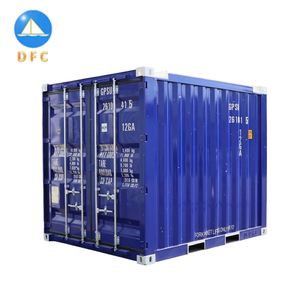
For offshore oil, gas, and renewable energy installations, standard ISO containers lack the structural integrity required to withstand harsh marine dynamic forces. Our OEM fabrication lines build custom 10ft, 20ft, and 40ft offshore flat racks and open-top containers certified under DNV 2.7-1 / EN 12079. Featuring high-yield structural steel, specialized tie-down points, and anticorrosive marine coatings, these units are tailored for heavy-lift project cargo shipping across the globe.
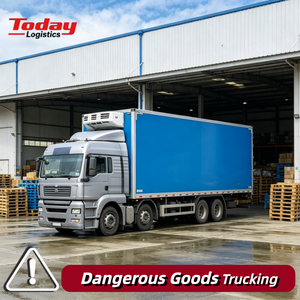
Shipping hazardous goods requires absolute compliance with UN Dangerous Goods Codes, IMDG regulations for sea freight, and ICAO/IATA guidelines for air cargo. We operate dedicated hazmat consolidation yards, provide certified reconditioned IBC tank containers for liquid chemicals, and deploy temperature-controlled reefer containers designed for sensitive Class 9 lithium-ion batteries (UN3480/UN3481) with real-time telemetry tracking.
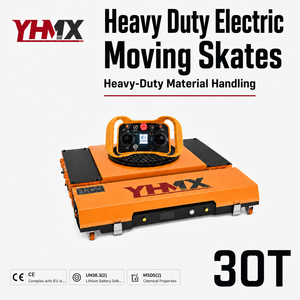
Optimizing warehouse and terminal drayage is critical for overall supply chain velocity. We supply heavy-duty 30-ton electric tank transporters powered by advanced lithium iron phosphate battery systems. Managed via high-precision wireless remote controls, these heavy carriers allow enterprise facilities to safely relocate massive chemical tanks, breakbulk machinery, and heavy industrial modules without relying on fossil-fuel yard trucks.
To assist global procurement directors in evaluating trade-offs between speed, cost, and carbon footprint, the following data visualization matrix outlines the key performance metrics of our core cross-border multimodal routes connecting Asia-Pacific manufacturing hubs to North America and Europe:
| Transport Corridor Mode | Average Transit Time | Cost Benchmark ($/CBM) | Carbon Intensity (gCO2/t-km) | Customs Clearance Protocols |
|---|---|---|---|---|
| Direct Air Freight (Express) | 2 – 4 Days | High ($4.50 - $7.20) | 500 - 700 | Prior Automated Pre-Clearance (LAX / AMS) |
| Sea-Air Multimodal Hub Routing | 10 – 14 Days | Moderate ($2.10 - $3.40) | 200 - 320 | Integrated Bonded Transit Clearance |
| Ocean Freight FCL (Direct Liner) | 18 – 28 Days | Optimal ($0.45 - $0.90) | 10 - 25 | Full CBP Entry / ISF 10+2 Clearance |
| Cross-Border Rail-Sea Synchromodal | 14 – 20 Days | Balanced ($1.20 - $1.80) | 40 - 70 | Unified CIM/SMGS Railway Consignment Note |
As enterprise procurement transitions into a digital-first and compliance-driven framework, freight forwarding is undergoing structural shifts. Organizations moving goods across borders must adjust their sourcing protocols to address key macro trends:
Unlike traditional intermodal transport—where routing decisions are locked in prior to departure—synchromodality allows for dynamic mode switching during transit. Driven by IoT sensors and real-time predictive analytics, shipments can seamlessly transition from sea to air or rail mid-route based on port congestion data, weather disruptions, or sudden market surges. Procurement teams booking OEM/ODM freight services now demand dynamic SLA guarantees built on synchromodal flexibility.
With the full implementation of the European Union's Carbon Border Adjustment Mechanism (CBAM) and Scope 3 emissions reporting mandates globally, carbon accounting is now a core requirement in freight procurement. Supply chain partners are expected to provide verifiable carbon auditing per container unit. Our investments in zero-emission 30-ton electric tank carriers, solar-powered warehousing hubs, and bio-fuel ocean vessel allocations ensure our procurement partners meet strict global sustainability criteria.
The worldwide transition toward renewable energy has driven exponential growth in the shipping of energy storage systems (ESS) and lithium-ion batteries. Regulatory agencies (US DOT, European ADR, IMO) have significantly tightened safety standards for battery transit. Future-proof procurement requires end-to-end specialized handling: certified fire-retardant container linings, smart thermal alert sensors, and direct drayage arrangements bypassing standard high-risk storage zones.
Technological innovation is redefining physical logistics assets into connected digital networks. Modern freight forwarding infrastructure relies on a series of critical technology pillars:
Using Optical Character Recognition (OCR) and machine learning engines trained on global Harmonized System (HS) tariff codes, customs entries are checked against regulatory databases in seconds. This eliminates human filing errors, speeds up US CBP and FDA releases, and ensures compliance with complex trade rules across international ports.
Modern intermodal containers—from DNV flat racks to chemical IBCs—are increasingly upgraded with smart IoT telematics. Shippers gain real-time visibility over location, internal temperature, shock impact, humidity, and door-opening alerts via cloud control towers, ensuring cargo integrity for critical industrial goods.
Positioned strategically with primary operational headquarters near Los Angeles International Airport (LAX) and the Ports of Los Angeles and Long Beach—the busiest container trade gateway in North America—our organization provides unmatched operational capabilities for global B2B clients:
Detailed technical answers to common questions regarding our OEM/ODM multimodal freight options, hazardous material handling, and international shipping protocols.
