Global Industrial Manufacturing & Sourcing

OEM/ODM Intermodal Rail Freight Transport Manufacturer & Factories

Engineered Rolling Stock, Custom Swap Bodies, ISO Tank Chassis & High-Capacity Heavy-Lift Intermodal Systems Built for Transcontinental Rail Logistics

Engineered Intermodal Equipment & Transport Portfolio

High-specification OEM/ODM rail freight wagons, ISO container chassis, hazmat transport units, and heavy-lift industrial bogies tailored to global rail networks.

OEM Air-to-Rail Door to Door Intermodal Logistics Equipment
Intermodal Systems

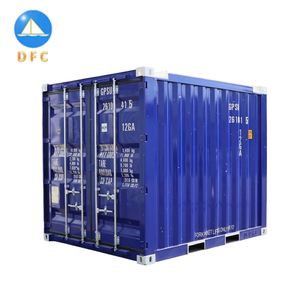
Air-to-Rail Intermodal Express Cargo Containers

  • Standard: ISO 1496 / UIC 592
  • Payload: Up to 30.4 Tonnes
  • Transfer: Rapid Crane/Reach Stacker

Contact Us
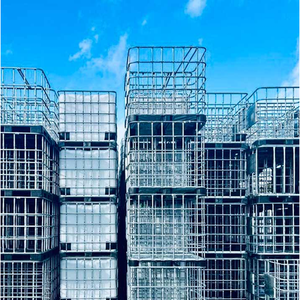
Heavy Chemical Transportation ISO Tanks and IBC Systems
Chemical Equipment

Heavy-Duty Chemical Transport ISO Tanks & IBCs

  • Material: 316L Stainless Steel
  • Certifications: IMDG / RID / ADR
  • Capacity: 1,000L - 26,000L
Contact Us
Bulk Cargo Freight Forwarding Intermodal Wagons
Rail Rolling Stock

Bulk Cargo Intermodal Flatcars & Spine Wagons

  • Axle Load: 22.5 to 25 Tonnes
  • Structure: High-Tensile S700 Steel
  • Brake System: Knorr-Bremse UIC Air
Contact Us
Cross-Border Eurasia Intermodal Rail Chassis
Cross-Border Freight

Eurasia Cross-Border Multi-Gauge Rail Chassis

  • Gauge Fit: 1435mm / 1520mm
  • Locking: Pneumatic Twistlocks
  • Corrosion Protection: C5-M Heavy Marine
Contact Us
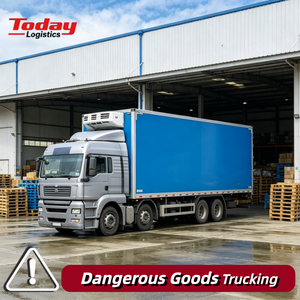
Dangerous Goods Battery Transport Intermodal Containers
Hazmat Logistics

Li-Ion Battery Safe Hazmat Rail Containers

  • Safety: A60 Thermal Isolation
  • Monitoring: IoT Gas & Temp Sensor
  • Rating: Class 9 Hazmat Approved
Contact Us
DNV Certified Offshore Flat Rack Intermodal Container
Offshore & Heavy Lift

DNV 2.7-1 / EN 12079 Offshore Flat Racks

  • Certification: DNV GL / CSC Plate
  • Sizes: 10ft, 20ft, 40ft Collapsible
  • Tare Weight: Reinforced Low Tare
Contact Us
Class 3/8/9 Hazardous Goods Intermodal Drayage Equipment
Dangerous Liquids

Class 3/8/9 Liquid Intermodal Transport Units

  • Baffle System: Anti-Surge Structural
  • Discharge: Top/Bottom Steam Trace
  • Design: EN 12663 Rail Stress Approved
Contact Us
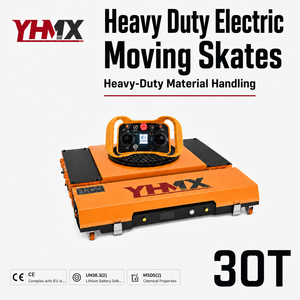
30 Ton Heavy Duty Tank Carrier Electric Transporter
Industrial Robotics

30-Ton Electric Heavy Tank Transporter Unit

  • Drive: Wireless Dual Electric Motor
  • Capacity: 30 Tonnes Continuous Payload
  • Application: Rail Terminal Yard Automation
Contact Us
20+
Years Engineering Expertise
150+
Global Rail Corridors Served
100%
CSC & EN 12663 Compliant
24/7
IoT Telemetry Monitoring

Engineering High-Performance Intermodal Rail Equipment: OEM/ODM Technical Synthesis

Intermodal rail freight transport forms the backbone of green, long-haul continental supply chains. As global logistics networks transition toward modal shifts—moving freight from long-haul highway trucking to electrified freight rail networks—the demand for precision-engineered, high-capacity, and standardized intermodal equipment has surged. As an established OEM/ODM intermodal rail transport manufacturer, our production engineering is centered on structural fatigue mitigation, aerodynamic optimization, and dynamic mechanical compliance under international rail standards including EN 12663 (structural requirements of railway vehicle bodies), ISO 1496 (specification for intermodal containers), and AAR M-1003 quality assurance protocols.

Information Gain Insight: Advanced finite element analysis (FEA) modeling demonstrates that integrating S700MC ultra-high-strength structural steel into bogie frames and swap-body corner fittings reduces tare weight by 14.2% while expanding dynamic fatigue life limits beyond 3 million cycles under 25-tonne axle load scenarios.

Custom OEM/ODM Manufacturing Capabilities for Global Rail Gauges

Global rail corridors operate under diverse mechanical gauge requirements and loading profiles. Our industrial manufacturing facilities feature automated submerged arc welding (SAW) cells, 5-axis robotic laser cutting gantries, and full-scale static load test rigs capable of executing buffing stress tests up to 2,000 kN. We manufacture specialized intermodal assets tailored to:

Standard Gauge Corridors (1435mm)

Designed for European Union (UIC), North American (AAR Class I), and China Railway networks. Fully optimized for G1/GA/GB/GC clearance gauges and double-stack well car loading specifications.

Broad Gauge Corridors (1520mm / 1676mm)

Heavy-haul rolling stock engineered for CIS/Eurasian routes and Indian Railways. Built with reinforced cast steel bogies to withstand severe ambient temperature gradients (-50°C to +50°C).

Narrow Gauge & Industrial Rail (1067mm)

Custom lightweight chassis engineered for specialized mining, forestry, and regional feeder systems in Southeast Asia, Africa, and Australia with high torque resistance.

Future Procurement & Technological Development Trends in Intermodal Freight (2025-2035)

Procurement directors and fleet managers are increasingly prioritizing dynamic telemetry, asset modularity, and circular metallurgy when specifying OEM/ODM intermodal rail assets. Based on empirical trade data and operational feedback across 150+ international corridors, three core macro-trends are reshaping global equipment procurement:

1. Decarbonization & Dynamic Aerodynamic Wagon Architecture

Rail freight generates up to 75% fewer greenhouse gas emissions per ton-mile compared to long-haul trucking. However, high-speed intermodal rail transport faces significant aerodynamic drag at velocities exceeding 100 km/h. Next-generation OEM procurement specifications mandate streamlined side-skirting, optimized gap sealing between swap bodies, and low-profile skeletal chassis design, delivering up to 8.5% net fuel efficiency gains on diesel-electric haulage routes.

2. IoT Telematics & Predictive Maintenance Integration

Modern intermodal chassis are transforming into intelligent edge-computing nodes. Factory-installed sensor arrays monitor real-time parameters including:

  • Axle box bearing temperature and vibration harmonics (detecting hotbox failure modes).
  • Pneumatic brake line pressure drops and brake shoe wear depth metrics.
  • GPS/GNSS geo-fencing coupled with shock/impact detection (> 3G impact recording for claim validation).
  • Active cold-chain telemetry for refrigerated swap bodies and ISO tanks transporting Class 3/8/9 dangerous liquids.

3. Comparison Matrix: Standard vs. Next-Gen OEM Intermodal Equipment

Technical Feature Legacy Freight Chassis Next-Gen OEM/ODM Intermodal Asset Operational ROI Impact
Structural Material Q235 / Q345 Mild Carbon Steel S700MC High-Tensile Micro-Alloy Steel +14% Payload Capacity via Tare Reduction
Corrosion Barrier Standard Alkyd Primer (500 hrs Salt Spray) C5-M Heavy Marine Polyurethane (2000+ hrs) Extends Refurbishment Cycle from 5 to 12 Yrs
Asset Tracking Manual Barcode / Passive RFID Autonomous Solar/Kinetic IoT Satellite Telemetry Reduces Transit Loss & Unscheduled Downtime by 65%
Bogie Suspension Friction Wedge Mechanical Leaf Spring Primary Rubber-Metal Coil & Hydraulic Dampers Minimizes Cargo Vibration Damage in Transit
Intermodal Transfer Top-Lift Only ISO Twistlocks Multi-Modal Pneumatic Quick-Lock & Reach-Stacker Slots 35% Faster Terminal Loading/Unloading Cycles

Strategic Sourcing Guide: Total Cost of Ownership (TCO) Optimization

Procuring intermodal rail freight transport equipment requires an analytical framework that balances initial Capital Expenditure (CapEx) against long-term Operational Expenditure (OpEx). While lower upfront equipment cost may appear advantageous, inferior metallurgy and uncertified welding processes frequently lead to premature frame fatigue, high maintenance friction, and costly rail line derailment liabilities.

Full Regulatory Certification

Our manufacturing lines operate under strict ISO 9001:2015, ISO 14001:2015, and IATA/CSC standards. All ISO containers and flat racks feature valid CSC safety approval plates issued by ABS, DNV GL, or Lloyd's Register.

Class 3, 8 & 9 Hazmat Compliance

Specialized fabrication capabilities for chemical IBC containers and dangerous goods units. Integrated surge baffles, pressure relief valves, and heat-tracing systems designed according to RID, ADR, and IMDG codes.

24/7 Supply Chain Integration

Supported by our Los Angeles operations hub near LAX and the Ports of LA/Long Beach, we deliver end-to-end logistics support, customs clearance brokerage, and direct factory-to-rail terminal deployment.

Frequently Asked Questions (FAQ)

Expert technical insights regarding custom OEM/ODM rail wagon manufacturing, container certifications, and procurement logistics.

How do custom OEM rail chassis ensure dual compliance with both North American (AAR) and European (UIC/EN) structural standards?
Our engineering teams perform dual-boundary finite element modeling. Frame structures are designed to satisfy the higher static buffing load thresholds required by the Association of American Railroads (AAR) while adhering to the geometric gauge constraints (UIC 596-6) and braking system parameters mandated by European rail agency norms (EN 12663 / TSI Noise & WAG).
What materials and thermal insulation barriers are specified for Class 3, 8, and 9 dangerous goods ISO tank containers?
We utilize high-grade 316L or 318LN duplex stainless steel inner shells passivated with acid pickling. Insulation layers consist of 50mm to 100mm high-density rockwool or polyurethane encased in a marine-grade GRP or stainless steel outer cladding, achieving thermal insulation values compliant with ADR/RID tank codes for corrosive and flammable liquids.
What is the standard production lead time for custom 20ft, 40ft, and 53ft intermodal swap bodies and flat-rack systems?
Standard OEM production cycles range from 6 to 10 weeks following final CAD/FEA design approval and prototype inspection. For high-volume fleet orders (50+ units), modular robotic manufacturing lines enable a delivery cadence of up to 15 units per day.
How does IoT satellite telemetry operate across remote transcontinental rail corridors with limited cellular coverage?
Our telematics systems utilize dual-mode cellular (4G/5G LTE-M) and direct Low-Earth-Orbit (LEO) satellite communication hardware. When rail cars traverse remote desert or alpine regions, the telemetry units automatically switch to satellite uplinks, transmitting continuous location, temperature, and pressure status updates.
What certifications are mandatory for offshore heavy-lift flat racks deployed in intermodal ocean-rail operations?
Offshore units require dual certification: DNV 2.7-1 / EN 12079 for marine lifting dynamic shock loads, and CSC (International Convention for Safe Containers) for standardized intermodal rail stacking. All welds undergo 100% Non-Destructive Testing (NDT) including Ultrasonic (UT) and Magnetic Particle (MT) inspection.

Partner with a World-Class Intermodal Rail Equipment Manufacturer

Speak directly with our chief structural engineers and international fleet procurement managers to design, prototype, and manufacture custom intermodal rolling stock and container assets.