Top 10 Freight Forwarding Consolidation Services Factories & Exporter

Strategic Procurement Whitepaper, Global Logistics Benchmark & End-to-End Buyer’s Hub Optimization Guide

Recommended Consolidation Products & Logistics Services

Engineered for high-efficiency enterprise supply chains, specialized dangerous goods, and cost-effective multi-vendor cargo aggregation.
Air Cargo Door to Door Service From China to Netherlands
Air Cargo Door to Door Service From China to Netherlands International Shipping
Streamlined express air freight consolidation linking major East Asian manufacturing hubs directly to Amsterdam (AMS) and European distribution centers. Includes full customs clearance and final-mile delivery.
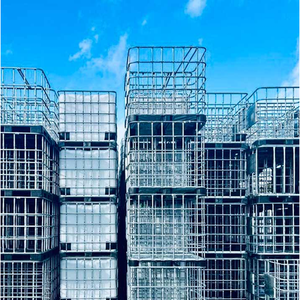
Used IBC Containers Chemical Transportation Equipment
Used IBC Containers For Chemical Transportation Equipment Return And Purchase Service Available
Industrial-grade Intermediate Bulk Containers (IBC) optimized for chemical fluid export consolidation. Complete return logistics, safety re-certification, and purchase solutions for bulk chemical exporters.
Top-Rated Freight Forwarding Services Ocean & Air Transport
Top-Rated Freight Forwarding Services | Affordable Ocean & Air Transport | Bulk Cargo & Hazardous Material Handling
End-to-end multimodal transport solutions catering to enterprise bulk cargo, DG consolidation, and contract logistics across transpacific and transatlantic trade corridors.
Sea Freight Forwarder China To UK USA Germany Shipping Agent
Sea Freight Forwarder China To UK USA Germany Shipping Agent Agente Di Spedizione Italy Logistique Transport Chine Vers France
Comprehensive LCL and FCL buyer's consolidation services connecting China ports to major global trade lanes including Long Beach, Felixstowe, Hamburg, and Genoa.
Professional Battery Door to Door Hazardous Materials Shipment
Professional Battery Door to Door China Hazardous Materials Shipment Spain Belgium Sweden Shipping Agent
Specialized Class 9 hazardous material shipping for lithium batteries and energy storage systems. Certified UN-packaging, MSDS audit, and compliance-driven DDP solutions for Europe.
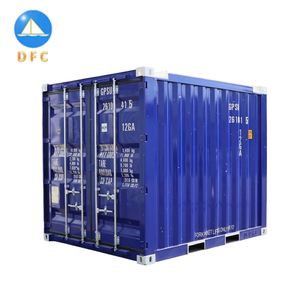
Dnv Certified Offshore Flat Rack Shipping Container
High Quality Dnv Certified 10ft 20ft 40ft Offshore Flat Rack Shipping Container For Industrial Project Logistics Customized
DNV 2.7-1 certified heavy-duty flat rack containers designed for out-of-gauge (OOG) machinery, offshore industrial project freight consolidation, and harsh maritime environments.
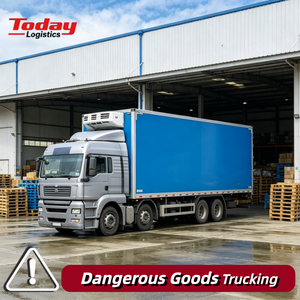
Logistics Trucking Hazardous Cargo Class 3 8 9 Door Door
Cost-Effective Today Logistics Trucking Hazardous Cargo Logistics Class3/8/9 Door Door Dangerous Goods Freight Forwarder
Fully compliant drayage and road freight for dangerous goods (Class 3 flammable liquids, Class 8 corrosives, Class 9 miscellaneous). Licensed drivers and dedicated hazmat fleets.
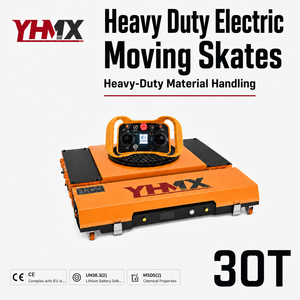
30 Ton Electric Tank Carrier Heavy Duty Industrial Transporter
New 30 Ton Electric Tank Carrier Heavy Duty Industrial Tank Transporter With Wireless Remote Control For Retail
Heavy machinery equipment handling solution for internal warehouse consolidation, factory yard transport, and bulk industrial tank movement with wireless precision controls.
20+
Years Operational Expertise
150+
Global Destination Ports
35%
Avg Freight Cost Savings
24/7
Real-Time Control Tower

Executive Summary: The Strategic Value of Consolidation in Modern Global Supply Chains

In an increasingly volatile international trade environment marked by shifting geopolitical alliances, volatile fuel surcharges, and stringent regulatory demands, multinational enterprises and high-volume exporters can no longer rely on fragmented shipping methodologies. Freight forwarding consolidation—commonly known as Buyer's Consolidation or Less-than-Container Load (LCL) aggregation—has evolved from a simple cost-reduction tactic into a core strategic supply chain discipline.

By consolidating smaller shipments originating from multiple factories across manufacturing regions into single, fully utilized Full Container Loads (FCL) or consolidated air ULDs (Unit Load Devices), global buyers achieve dual operational objectives: drastic reductions in ocean freight rates per cubic meter (CBM) and accelerated customs processing at destination ports. This whitepaper systematically evaluates the top 10 consolidation service frameworks, operational paradigms, regulatory compliance benchmarks, and sourcing methodologies required for procurement directors, logistics managers, and international supply chain leaders to build resilient global supply networks.

Information Gain Insight: According to international freight benchmark data, enterprises transitioning from decentralized LCL ocean shipments to integrated Buyer's Consolidation Hubs achieve an average reduction of 28% to 42% in total destination handling charges (THC), alongside a 65% reduction in administrative customs entries.

Deconstructing Freight Forwarding Consolidation Architecture

Understanding the exact structural mechanics of freight consolidation is essential for optimizing procurement workflows. Consolidation is not a one-size-fits-all service; it encompasses distinct operational models designed for specific commercial requirements:

1. Standard LCL Consolidation

Multi-tenant container stuffing where cargo from multiple distinct shippers destined for various consignees is combined by a Non-Vessel Operating Common Carrier (NVOCC) at a Container Freight Station (CFS).

2. Buyer’s Consolidation (FCX)

A single overseas buyer contracts a specialized freight forwarder to gather goods from 5 to 50+ tier-1 and tier-2 supplier factories, consolidating them into exclusive FCL containers assigned directly to the buyer.

3. Cross-Dock Hub Consolidation

Near-port bonded warehouse operations where goods are received, quality-inspected, palletized, relabeled, and stuffed into containers within a 24-to-48-hour window to meet tight shipping schedules.

The Financial Mathematics of Buyer's Consolidation

To demonstrate the economic rationale behind consolidation, consider a procurement scenario involving an importer acquiring goods from six distinct factories across the Yangtze River Delta in China, with final destination in Los Angeles, California. Under traditional LCL shipping, each factory ships independently:

  • Independent LCL Scenario: 6 separate LCL bookings, 6 individual Master Bills of Lading (MBL), 6 sets of origin CFS origin fees, 6 separate import customs entry filings in the US, and 6 individual LCL destination deconsolidation fees. Average landed freight cost: $165 per CBM.
  • Consolidated Buyer Hub Scenario: All 6 supplier deliveries are directed to a single origin consolidation hub in Shanghai or Ningbo. The forwarder inspects, aggregates, and stuffs the goods into one 40ft High Cube (HC) container under 1 FCL ocean bill. Landed freight cost equivalent: $98 per CBM.

The net financial result is a 40.6% cost reduction, alongside enhanced supply chain security, zero risk of cargo mix-ups with third-party goods, and standardized drayage delivery straight to the buyer's regional distribution facility.

Top 10 Sourcing & Selection Criteria for Freight Consolidation Exporters

When selecting a top-tier freight forwarding consolidation partner or factory exporter network, supply chain directors must conduct rigorous due diligence across ten key operational capability vectors:

Vector # Evaluation Criterion Industry Standard Requirements Strategic Impact
01 Bonded Warehouse Network Strategically positioned facilities within 30km of tier-1 container ports. Eliminates extra drayage costs; allows duty-free storage prior to export staging.
02 Dangerous Goods (DG) Licensing Certified handling for Class 3, Class 8, and Class 9 (Lithium Batteries). Prevents hazardous cargo rejections and ensures strict IMO/ICAO compliance.
03 Customs Brokerage Integration In-house licensed customs brokers with direct EDI connection to US CBP / EU Customs. Minimizes clearance hold-ups; expedites Importer Security Filing (ISF) matching.
04 Specialized Equipment Availability Access to Flat Racks, Open Tops, Refrigerated units, and DNV 2.7-1 Offshore Racks. Supports heavy machinery, out-of-gauge industrial gear, and offshore energy projects.
05 Digital Visibility & Tracking API/EDI tracking integration providing real-time SKU-level container visibility. Eliminates blind spots across the supply chain, lowering safety stock requirements.
06 Value-Added Services (VAS) Kitting, barcode labeling, palletization, shrink-wrapping, and pre-shipment QC. Reduces destination labor costs by performing retail-ready prep at the origin hub.
07 Reverse Logistics & Return Systems Capabilities for handling chemical return equipment (e.g., IBC container returns). Creates sustainable circular supply chain loops for industrial chemical exporters.
08 Multi-Modal Transport Flexibility Seamless switching between ocean FCL, express air freight, sea-air, and rail freight. Provides agility during peak sea freight congestion or rate spike events.
09 Carrier Contract Allocation Density Direct Service Contracts with top ocean shipping alliances (2M, Ocean Alliance, THE Alliance). Guarantees space allocations and vessel access even during peak shipping seasons.
10 End-to-End Liability Insurance Comprehensive Marine Cargo Insurance options covering full CIF value + 10%. Mitigates financial loss against General Average declarations and maritime perils.

Emerging Procurement Trends & Strategic Industry Drivers (2025–2030)

The global freight consolidation landscape is undergoing rapid transformation driven by technological innovation and shifting international trade dynamics. Exporters and enterprise procurement teams must align their operational models with the following key trends:

1. AI-Driven Container Optimization & Load Planning

Modern consolidation factories are replacing manual load planning with advanced AI algorithms. 3D load-optimization software calculates item dimensions, weight distribution limits, center-of-gravity variables, and unloading sequences. This ensures maximum volumetric utilization of container space (often increasing volumetric load efficiency from 82% to over 96%) while ensuring cargo stability during rough sea transits.

2. Decarbonization & Green Logistics Hubs

With environmental, social, and governance (ESG) reporting becoming mandatory across European and North American markets, freight forwarders are implementing carbon-neutral consolidation hubs. By optimizing cargo routes, utilizing electric terminal tractors (such as 30-ton heavy-duty electric tank carriers), and deploying solar-powered bonded warehouses, forwarders enable importers to quantify and reduce Scope 3 emissions across their logistics networks.

3. Strategic Expansion of Asian & European Multimodal Corridors

Nearshoring and supply chain diversification have elevated the importance of flexible routing options. Transpacific routes directly connecting South-East Asian feeder hubs to the West Coast of North America (specifically the Port of Los Angeles and Long Beach hub) are integrated with direct rail links and European door-to-door air freight services (e.g., China-to-Netherlands express cargo routes), enabling agile inventory re-routing in real time.

4. Specialized Dangerous Goods & Battery Logistics Compliance

The rapid expansion of electric vehicles (EVs), renewable energy storage systems, and industrial electronics has increased global demand for Class 9 hazardous materials transport. Top forwarding factories are building specialized temperature-controlled hazmat consolidation cells equipped with automatic fire suppression and certified UN-rated protective packaging to comply with strict international maritime dangerous goods (IMDG) codes.

Enterprise Advantage Profile: Operating Excellence with LA 24-7 Forwarder

Positioned at the premier maritime gateway of Southern California, LA 24-7 Forwarder serves as a benchmark for international freight forwarding consolidation services. Operating 24 hours a day, 7 days a week, our facility bridges the gap between global overseas factories and North American commercial markets.

Core Strategic Competencies:

  • Strategic Los Angeles Location: Situated within minutes of Los Angeles International Airport (LAX) and the twin Ports of Los Angeles and Long Beach, providing immediate drayage access, swift cross-docking, and rapid transshipment options.
  • Comprehensive Dangerous Goods (DG) Mastery: Certified capabilities in managing Class 3 flammable liquids, Class 8 corrosive substances, and Class 9 hazardous battery shipments. Fully compliant with US DOT, IATA, and IMDG regulations.
  • Offshore & Heavy Project Logistics: Specialized equipment sourcing, including custom DNV 2.7-1 certified offshore flat rack containers and 30-ton heavy-duty industrial transporters for out-of-gauge engineering projects.
  • In-House US Customs Brokerage: Direct electronic interface with US Customs and Border Protection (CBP), FDA, USDA, and DOT agencies, providing seamless import entry processing, ISF compliance, and duty minimization guidance.
  • Circular Chemical Container Logistics: Specialized return services for industrial chemical transportation equipment, including IBC container inspection, purchase, return shipping, and re-certification protocols.

Frequently Asked Questions (FAQ) — Freight Consolidation Sourcing

What is the difference between traditional LCL and Buyer's Consolidation? +
Traditional LCL combines cargo from unrelated shippers and consignees in a single container managed by an NVOCC, leading to multiple destination fees and potential customs delays if one shipment is held. Buyer’s Consolidation aggregates cargo from multiple suppliers dedicated exclusively to one single buyer into dedicated containers (FCL), lowering unit shipping costs, eliminating third-party cargo risks, and streamlining destination customs clearance.
How does freight consolidation reduce overall international shipping costs? +
Consolidation reduces costs by converting high per-CBM LCL rates into lower per-container FCL ocean rates. Additionally, it consolidates administrative expenses by replacing multiple individual customs entries, bills of lading, and terminal handling charges (THC) with a single unified shipment documentation set.
What documentation is required for dangerous goods (Class 3, 8, 9) cargo consolidation? +
Hazardous cargo shipments require an accurate Material Safety Data Sheet (MSDS/SDS), a signed Dangerous Goods Declaration (DGD), UN-certified specification packaging certificates, proper hazard labeling, and pre-approval from both origin warehouse operators and vessel/air carriers prior to consolidation loading.
How do you handle out-of-gauge (OOG) or heavy industrial machinery consolidation? +
Out-of-gauge industrial equipment requires specialized containers such as DNV-certified 20ft/40ft Flat Racks or Open Top units. Heavy machinery is secured using certified wire-rope lashing, heavy-duty shoring, and timber blocking, often utilizing remote-controlled electric carriers for precise warehouse positioning.
Can air freight consolidation be combined with door-to-door delivery services? +
Yes. Air freight consolidation merges multiple cargo lots onto single airport ULD pallets for long-haul international flights (e.g., China to Netherlands or US destinations). Upon arrival at the destination hub, the freight forwarder manages import customs clearance, deconsolidation, and final-mile truck drayage straight to the consignee's door.
What is the typical turnaround time at an origin cross-dock consolidation hub? +
Standard cross-dock consolidation operations process cargo within 24 to 48 hours of receipt at the origin warehouse. This includes cargo receiving, dimensional weight verification, barcode scanning, palletization, container loading, and customs export declaration filing.

Optimize Your Global Consolidation Logistics Network Today

Partner with LA 24-7 Forwarder for tailored air, ocean, hazardous material, and buyer consolidation solutions backed by 24/7 control tower support.

Contact Us