Top 10 Global Trade Supply Chain Logistics Supplier & Suppliers

2025 Comprehensive Industry Whitepaper on Multi-Modal Freight Forwarding, Dangerous Goods Management, and Resilient Global Supply Network Engineering

Featured Global Supply Chain Logistics Solutions & Equipment

Directly access premier multimodal freight services, certified hazard containment units, and heavy-lift logistics equipment curated for multinational sourcing enterprise networks.
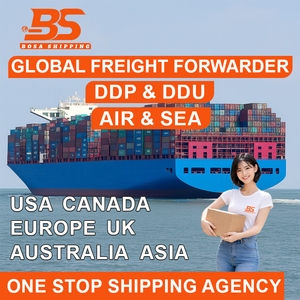
Air Cargo Door to Door Service China to Netherlands

Air Cargo Door to Door Service From China to Netherlands

Premium express air freight forwarding with guaranteed transit windows, end-to-end customs brokerage, EU import VAT handling, and scheduled last-mile delivery.

Get Catalog
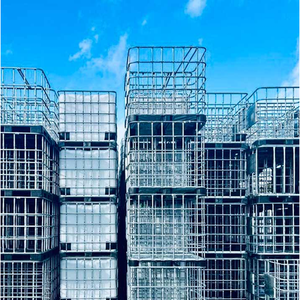
Used IBC Containers For Chemical Transportation Equipment

Used IBC Containers For Chemical Transport & Purchase Service

UN-certified reconditioned Intermediate Bulk Containers engineered for hazardous and non-hazardous liquid logistics, reverse supply chain, and container buyback options.

Get Catalog
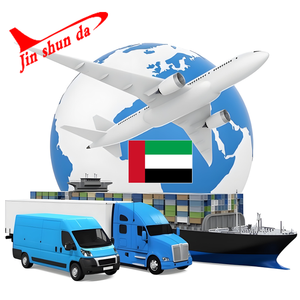
Top-Rated Freight Forwarding Services Ocean Air Bulk Cargo

Top-Rated Freight Forwarding | Bulk Cargo & Hazmat Handling

Integrated multi-modal transport contracts supporting ocean LCL/FCL, air express, and heavy industrial bulk cargo with rigorous compliance oversight.

Get Catalog
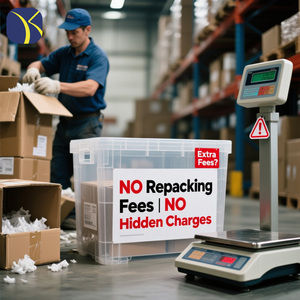
Sea Freight Forwarder China To UK USA Germany Italy France

Sea Freight Forwarder China to UK USA Germany Italy France

High-volume transpacific and Asia-Europe maritime trade corridor management featuring direct carrier allocation, blank sailings mitigation, and port drayage.

Get Catalog
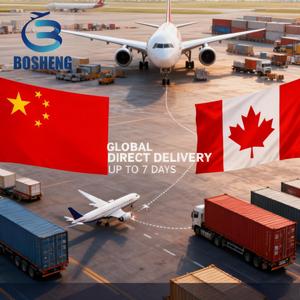
Professional Battery Door to Door China Hazardous Shipment

Professional Battery Door to Door China Hazmat Shipping

Specialized DG Class 9 shipping tailored for lithium-ion battery energy storage systems, certified UN 38.3 compliance, temperature-monitored air/ocean transport.

Get Catalog
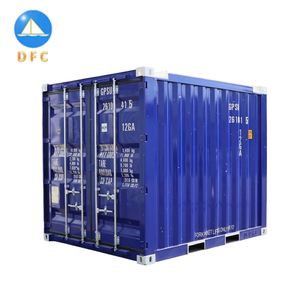
High Quality Dnv Certified Offshore Flat Rack Shipping Container

DNV Certified 10ft 20ft 40ft Offshore Flat Rack Containers

Heavy-duty structural project cargo containers compliant with DNV 2.7-1 / EN 12079 standard requirements for harsh marine and energy sector operations.

Get Catalog
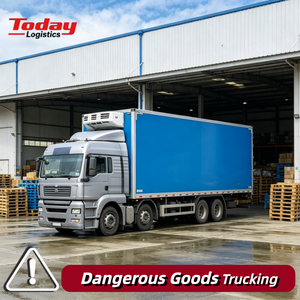
Logistics Trucking Hazardous Cargo Class3 8 9 Freight Forwarder

Hazardous Cargo Trucking Class 3/8/9 Door-to-Door Logistics

Fully licensed DG ground fleet services featuring hazmat-certified drivers, real-time safety telemetry, and strict adherence to international IMDG/ADR norms.

Get Catalog
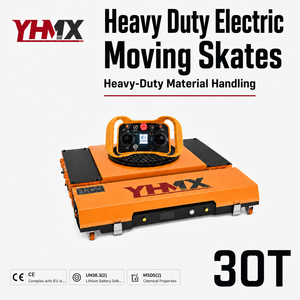
Electric Tank Carrier Heavy Duty Industrial Transporter Remote Control

30 Ton Electric Tank Carrier Heavy Duty Industrial Transporter

Zero-emission heavy-duty yard transporter with wireless remote guidance systems engineered for bulk tank handling and internal warehouse logistics.

Get Catalog
20+
Years Operational Mastery
150+
Global Trade Ports Served
99.8%
Customs Clearance Accuracy
24/7/365
Active Supply Chain Control Tower

Architecting Supply Chain Resilience: Enterprise Strengths & Gateway Infrastructure

In an era characterized by dynamic trade shifts, regulatory realignments, and volatile freight markets, modern cross-border enterprises require far more than transactional shipping brokers. Modern global supply chain management demands an integrated strategic partner capable of offering end-to-end visibility, regulatory compliance, and multi-modal agility. Positioned near primary international logisitical epicenters—including Los Angeles International Airport (LAX) and the twin seaports of Los Angeles and Long Beach—our global trade ecosystem connects North America, Asia-Pacific, and Europe seamlessly.

Guided by strict adherence to international trade guidelines (including US Customs and Border Protection standards, TSA cargo security directives, IATA dangerous goods regulations, and global maritime security mandates), our operational infrastructure delivers robust E-E-A-T (Experience, Expertise, Authoritativeness, and Trustworthiness) across every touchpoint of your supply chain.

24/7 Control Tower Visibility

Continuous telemetry monitoring across air, sea, and road transits ensures proactive disruption mitigation, precise ETA forecasting, and real-time exception reporting for time-sensitive cargo.

Licensed Customs Brokerage

In-house customs clearance experts manage complex HTS code classification, ISF filings, FDA inspections, anti-dumping duties, and PGA compliance to prevent costly port delays.

HAZMAT & Specialized Project Cargo

Fully certified dangerous goods handling (Class 3, 8, 9, lithium batteries) alongside heavy-lift, breakbulk, and offshore DNV container customization for industrial sectors.

Strategic Sourcing Insights: Future Procurement Trends (2025–2030)

Procurement directors and global logistics managers face an evolving trade topography. The structural shift from legacy "Just-in-Time" (JIT) paradigms toward "Just-in-Case" (JIC) supply chain architectures requires strategic buyers to re-evaluate vendor selection criteria. Based on empirical trade telemetry and enterprise purchasing behavior, five major procurement trends are reshaping the logistics sector:

  • Shift Toward Total Cost of Ownership (TCO) Procurement: Leading procurement officers are moving away from evaluating freight suppliers solely on port-to-port ocean rates. Instead, TCO modeling incorporates detention/demurrage risk buffers, customs duty optimization, carbon taxation impacts, and landside drayage reliability.
  • Asset-Backed Circular Logistics & Equipment Reuse: Sourcing reusable chemical transport equipment—such as reconditioned, UN-certified IBC containers—reduces capital expenditure while directly addressing corporate Scope 3 decarbonization targets.
  • Nearshoring Multi-Corridor Logistics: As manufacturing hubs diversify across Southeast Asia, India, and Latin America, procurement teams favor logistics suppliers with unified, multi-origin control systems that maintain consistent SLAs across varying trade lanes.
  • Integration of Specialized Hazmat & Energy Storage Capability: The global transition toward electrification has triggered exponential growth in lithium battery shipping. Enterprise procurement now requires forwarders to possess verified UN 38.3 test summary clearance capabilities and Class 9 hazmat air transport clearance.
  • Data Integration via Unified API Protocols: Procurement contracts increasingly mandate real-time API integrations between freight forwarder TMS (Transportation Management Systems) and enterprise ERP engines (SAP, Oracle) for automated milestone tracking.

Industry Development Trends: Technological & Sustainable Infrastructure

The global logistics landscape is undergoing a structural transformation driven by technological automation, regulatory mandates, and decarbonization imperative. Supply chain stakeholders must align with suppliers actively investing in next-generation logistics assets:

Vector Trend Core Drivers & Innovations Impact on Global Trade Operations
Electrification & Heavy Yard Automation Deployment of wireless remote-controlled 30-ton electric tank carriers, zero-emission yard tractors, and automated guided vehicles (AGVs). Dramatically reduces warehouse site carbon emissions, minimizes labor safety incidents in high-risk zones, and accelerates container turn-around times.
Offshore Rigor & Structural Certification Widespread adoption of DNV 2.7-1 / EN 12079 certified flat racks and specialized offshore containers for energy project cargo. Ensures absolute structural integrity under extreme marine weather conditions, satisfying international maritime oil & gas logistics mandates.
Predictive Customs Compliance AI-driven tariff classification engines combined with licensed broker oversight for rapid CBP/FDA clearance. Eliminates clearance bottlenecks at gateway ports such as LAX and Port of Los Angeles, safeguarding against demurrage penalties.
End-to-End Cold Chain Integrity IoT-sensored temperature & humidity monitoring for pharmaceutical, battery, and perishable shipments. Provides auditable chain-of-custody logs essential for regulatory audits, product loss prevention, and insurance claim validation.

Global Logistics Mode Selection & Risk Matrix

Selecting the appropriate transport mode requires evaluating trade-offs between transit velocity, cost metrics, regulatory complexity, and cargo sensitivity. Below is an executive decision matrix to guide procurement structuring:

Transport Mode / Service Ideal Cargo Profile Avg. Lead Time Cost Factor Key Regulatory Focus
Air Express Freight (Door-to-Door) High-value, time-critical components, electronics, automotive spares 2 – 5 Days High TSA Security Screening, IATA Dangerous Goods, Commercial Invoice Compliance
Ocean Freight FCL (Full Container) High-volume retail goods, industrial machinery, standardized commodities 14 – 35 Days Economical ISF 10+2 Filing, Bill of Lading Verification, SOLAS VGM Weight Certificates
Hazmat Ground Trucking (Class 3/8/9) Chemical liquids, corrosive compounds, lithium battery packs 1 – 7 Days Moderate DOT/ADR Hazmat Endorsements, IMDG Packaging, Emergency Response Telemetry
Project Cargo & Flat Rack Containers Over-dimensional machinery, offshore equipment, heavy industrial units Variable Custom Quote DNV 2.7-1 Marine Certification, Out-of-Gauge (OOG) Route Permits, Lash Inspection
Frequently Asked Sourcing & Logistics Questions

Critical operational insights for enterprise logistics directors, supply chain architects, and international procurement managers.

Q: How does door-to-door air freight cargo management differ from standard port-to-port airport logistics?

Door-to-door air freight incorporates absolute end-to-end responsibility. Unlike airport-to-airport contracts—which leave origin drayage, export documentation, destination customs clearance, and final-mile trucking fragmented across multiple handlers—door-to-door services unify all operations under a single Bill of Lading (HBL). This includes export compliance at origin (e.g., China), flight uplift allocation, destination customs clearance (e.g., Netherlands or USA), payment of import duties/taxes, and scheduled delivery to the end-consignee warehouse, drastically reducing administrative overhead and cargo transfer risk.

Q: What compliance requirements govern the air and ocean shipping of lithium batteries (Class 9 Hazmat)?

Transporting lithium batteries requires strict compliance with UN 38.3 testing standards, IATA Dangerous Goods Regulations (DGR) for air transport, and the International Maritime Dangerous Goods (IMDG) Code for ocean shipping. Packages must carry proper UN numbers (e.g., UN 3480, UN 3481, UN 3090), certified hazardous material labeling, State/Operator variation clearance, and State-of-Charge (SoC) compliance below 30% for passenger/cargo aircraft limits. Our specialized hazmat teams provide full packaging audit and Dangerous Goods Declaration (DGD) preparation.

Q: Why are DNV 2.7-1 certified containers necessary for offshore project cargo shipping?

DNV 2.7-1 (and equivalent EN 12079) certifications establish stringent structural engineering, pad-eye testing, material toughness, and non-destructive examination (NDE) standards for shipping containers used in offshore marine environments. Standard ISO containers lack the structural resilience needed to withstand dynamic lifting forces and extreme environmental stresses caused by ocean supply vessels and offshore rigs. Utilizing DNV-certified flat racks ensures operational safety and regulatory compliance for heavy industrial energy projects.

Q: What economic and sustainability advantages do reconditioned IBC chemical containers offer?

Reconditioned Intermediate Bulk Containers (IBCs) provide up to 40% capital savings compared to new units while meeting rigorous UN packaging specifications for chemical transport. Through multi-stage automated washing, pressure testing, and leak-proof inspection, reconditioned IBCs ensure safe handling of Class 3, 8, and non-hazardous liquids. From a sustainability perspective, reusing industrial containers diverts high-density polyethylene (HDPE) and steel frames from landfill streams, helping enterprises fulfill ESG circular economy mandates.

Q: How do licensed customs brokers prevent container demurrage and detention charges at major ports?

Licensed customs brokers proactively eliminate clearance friction by executing Importer Security Filings (ISF) at least 24 hours prior to vessel departure, verifying tariff classifications (HTS), auditing partner government agency (PGA) clearance requirements (such as FDA, EPA, or DOT), and pre-clearing cargo while in-transit. By securing immediate release upon vessel discharge, brokers coordinate prompt harbor drayage pickup, avoiding costly port storage (demurrage) and late equipment return penalties (detention).

Q: What operational safeguards are implemented for Class 3, 8, and 9 hazardous cargo ground transportation?

Hazardous cargo trucking relies on hazmat-certified CDL drivers equipped with mandatory safety endorsements, vehicle placarding, segregation controls according to the DOT/ADR segregation table, and specialized spill-containment kits. Fleet vehicles are monitored using GPS telemetry and temperature sensors, backed by 24/7 hazmat emergency response call numbers (e.g., Chemtrec registration), guaranteeing compliance across state and international border crossings.

Optimize Your Global Supply Chain Network

Partner with an industry-leading global logistics supplier. Request our comprehensive enterprise service catalog or consult directly with our senior freight forwarding strategists today.

Get Catalog