Explore our specialized hazardous material fleet, DNV-certified offshore infrastructure, and direct door-to-door international chemical transport services compliant with Class 1 to Class 9 regulations.
Precision air freight logistics for sensitive, high-value, and regulated hazardous goods targeting European hubs via Amsterdam Schiphol (AMS) with complete DDP customs clearance.
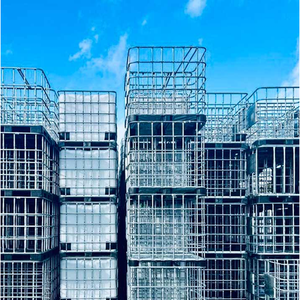
UN-rated reconditioned and new Intermediate Bulk Containers (IBC) designed for liquid chemical transport, featuring specialized valve seals and global reverse logistics capabilities.
Integrated ocean and air bulk cargo logistics handling raw chemical powders, flammable liquids, and toxic solids with full DG packaging, labeling, and vessel chartering.
Direct ocean routes connecting East Asian manufacturing hubs to key ports across the USA, UK, Germany, and Italy, specializing in segregated dangerous goods stowing.
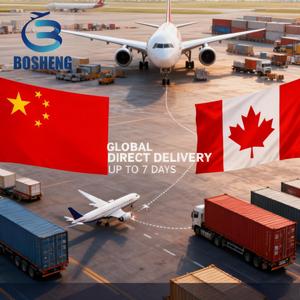
End-to-end engineered logistics for EV batteries, energy storage systems (ESS), and industrial lithium packs into Spain, Belgium, Sweden, and broader EU zones.
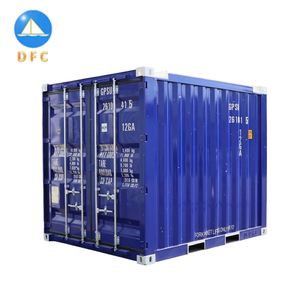
Rigidly structural 10ft, 20ft, and 40ft offshore containers engineered for harsh oceanic platforms, mining operations, and heavy chemical skid machinery transport.
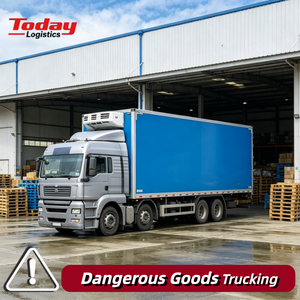
GPS-tracked, HAZMAT-certified drayage and over-the-road trucking services equipped with spill containment units, emergency protocols, and certified drivers.
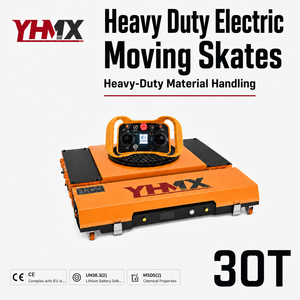
Next-generation heavy-duty zero-emission terminal tractor designed for safe maneuverability of heavy chemical ISO tanks within industrial facilities and dockyards.
A authoritative guide for procurement directors, logistics engineers, and environmental health & safety (EHS) managers navigating global dangerous goods transport regulations.
Transporting dangerous goods across international boundaries requires strict adherence to overlapping regulatory bodies. Primary among these are the United States Hazardous Materials Regulations (49 CFR), the European Agreement concerning the International Carriage of Dangerous Goods by Road (ADR), the International Maritime Dangerous Goods Code (IMDG Code), and the International Air Transport Association (IATA DGR).
Failure to correctly classify, pack, mark, label, or document hazardous shipments leads to severe civil penalties, immediate vessel rejection, port hold-ups, and massive environmental liability. Enterprise procurement managers must evaluate supply chain partners based on their certified Dangerous Goods Safety Advisers (DGSA) and licensed customs brokerage infrastructure.
A foundational requirement of hazardous logistics is precise UN hazard classification. Reliable service factories engineer tailored containment profiles according to chemical risk profiles:
| Hazard Class | Primary Material Classification | Core Regulatory Packaging Requirements | Transport Risk Level |
|---|---|---|---|
| Class 1 | Explosives & Blasting Agents | UN Specification Outer Packaging, Blast Containment | High Risk / Extreme Control |
| Class 2 | Gases (Flammable, Non-Toxic, Cryogenic) | Pressure Vessels, ISO Tank Containers, Cryogenic Dewars | Medium to High Risk |
| Class 3 | Flammable Liquids (Petroleum, Solvents) | UN-Rated Drums, IBC Containers (31HA1), Vapor Seals | High Volatility / Flammable |
| Class 4 | Flammable Solids & Spontaneous Combustibles | Moisture-proof Liners, Inert Gas Purging | Spontaneous Reactivity Risk |
| Class 5 | Oxidizing Substances & Organic Peroxides | Temperature Control (SADT), Organic Isolation | High Thermal Instability |
| Class 6 | Toxic & Infectious Substances | Hermetic Seal, Biohazard Triple Containment | Severe Health Hazard |
| Class 7 | Radioactive Materials | Lead-Lined Type A/B/C Casks, Radiation Monitoring | Specialized Nuclear Oversight |
| Class 8 | Corrosive Substances (Acids, Alkalis) | PTFE/PE Linings, Acid-Proof DNV Offshore Frames | High Structural Degradation Risk |
| Class 9 | Miscellaneous DG (Lithium Batteries, Dry Ice) | UN 38.3 Testing, Thermal Runaway Prevention Boxes | Rapid Global Growth Class |
How global chemical manufacturers, energy producers, and electronics giants are restructuring their hazardous material supply chains for resilience, safety, and ESG compliance.
Driven by global EV adoption and grid-scale Energy Storage Systems (ESS), procurement demand for certified Class 9 lithium-ion battery logistics has surged. Procurement contracts now mandate UN 38.3 verification, state-of-charge (SoC) monitoring below 30% for air transport, and specialized fire-suppressant secondary packaging to eliminate thermal runaway risks.
Static tracking is obsolete. Future-ready dangerous goods transporters utilize sensor-laden ISO tank containers and smart IBCs. Real-time satellite telemetry measures internal tank pressure, ambient temperature, humidity, shock impact, and GPS geo-fencing. Instant alert systems trigger automatic emergency response protocols prior to safety vent blowouts.
Sustainability and ESG mandates are reframing industrial packaging. Enterprise buyers are shifting from single-use containers to standardized closed-loop reverse logistics. Reconditioned, UN-certified Intermediate Bulk Containers (IBCs) with verified composite inner bottles significantly lower carbon footprints while guaranteeing chemical containment integrity.
Modern dangerous goods freight forwarders leverage advanced engineering and digital tracking to achieve zero-incident transit rates across complex multimodal routes.
Hazmat shipments face strict municipal road bans, tunnel restrictions (such as ADR Tunnel Codes A-E), and port terminal dwell limits. Advanced logistics operators integrate predictive AI routing engines that synthesize live weather telemetry, traffic congestion, port labor status, and hazardous route regulations to prevent unexpected vehicle halts and excessive thermal exposure.
High-risk chemical terminals increasingly deploy remote-controlled and automated electric heavy-duty tank carriers. Capable of hauling up to 30 tons of toxic or flammable media within processing facilities, these wireless transporters eliminate human driver exposure during loading, unloading, and high-risk terminal maneuvers.
Headquartered in Los Angeles with direct gateway access to LAX and the Ports of Los Angeles and Long Beach, we provide full-spectrum global logistics for complex industrial supply chains.
Our operations function around the clock. Every critical chemical or battery cargo is continuously monitored by a dedicated logistics coordinator, providing real-time milestone notifications and instantaneous crisis management.
In-house licensed US Customs Brokers master complex Importer Security Filings (ISF), EPA chemical notifications, FDA compliance, and Harmonized System (HTS) tariff classifications to bypass administrative holds.
From heavy oilfield machinery to DNV 2.7-1 offshore containers and oversized tank transports, our project logistics team plans heavy-lift riggings, RoRo chartering, and hazardous drayage.
Expert insights on regulatory compliance, packaging standards, and air/ocean transport limitations for international hazmat procurement.
International ocean shipment of Class 3 Flammable Liquids under the IMDG Code requires a complete Dangerous Goods Declaration (DGD) signed by a certified shipper, an up-to-date Safety Data Sheet (SDS/MSDS) highlighting flashpoints and boiling points, a Container Packing Certificate, and correct UN Specification packaging markings (e.g., UN 1A1 or UN 31HA1).
Furthermore, the outer intermodal container must display Class 3 placards on all four sides, indicating the specific 4-digit UN number (e.g., UN 1263 for Paint/Solvents) prior to entering port terminals.
Lithium-ion batteries are classified under Class 9 Miscellaneous Dangerous Goods. Standalone lithium-ion cells and batteries are categorized as UN 3480, whereas batteries contained in or packed with equipment fall under UN 3481.
Under ICAO/IATA DGR regulations, standalone lithium-ion batteries (UN 3480) are strictly forbidden on passenger aircraft and must travel on cargo-only aircraft at a State of Charge (SoC) not exceeding 30% of their rated capacity. Outer packaging must pass UN 38.3 thermal, altitude, impact, and short-circuit testing standards.
DNV 2.7-1 (EN 12079) is an essential safety certification governing offshore freight containers transferred at sea. Unlike standard ISO intermodal containers, DNV-certified offshore flat racks and containers are engineered to withstand extreme dynamic impact forces, atmospheric corrosion, and harsh ocean wave action during supply vessel-to-rig crane transfers.
They undergo rigorous structural testing including pad-eye load lifting tests, drop tests, and non-destructive examination (NDT) of critical welds to guarantee heavy machinery and hazardous offshore skid protection.
Full Container Load (FCL) dangerous goods shipping dedicates an entire ocean container to a single shipper, allowing simplified segregation of hazardous materials according to IMDG segregation tables. It offers lower risk of cross-contamination and faster port processing.
Less than Container Load (LCL) consolidation allows smaller hazmat shipments to share container space; however, strict segregation rules apply. Chemicals that react dangerously with one another (e.g., Class 8 acids and Class 3 flammables) cannot be co-loaded within the same LCL container, requiring expert forwarder consolidation auditing.
Customs clearance for hazardous materials involves multi-agency oversight beyond standard U.S. Customs and Border Protection (CBP). Importing chemical cargo into the United States, for example, requires strict clearance under the Toxic Substances Control Act (TSCA) via EPA certification, DOT Form HS-7 for transported pressurized gas equipment, and potential FDA registration for cosmetic or pharmaceutical precursors.
Licensed customs brokers must verify TSCA positive or negative certifications prior to vessel berthing to avoid immediate cargo quarantine or re-exportation orders.
Reverse logistics for IBC containers involves chemical residual neutralization, pressure leak-proof testing, structural frame repair, inner bottle replacement (re-bottling), and UN recertification. Qualified logistics partners provide global asset tracking to collect emptied 1000-liter IBC containers from end-user chemical plants, returning re-certified packaging assets into supply chain circulation.
Consult with our licensed hazardous material freight specialists. We engineer custom multimodal air, sea, and ground transport strategies aligned with strict ADR, IMDG, IATA, and US DOT standards.
Contact Us