Top China Heavy Industrial Breakbulk Logistics Exporter & Exporters

Whitepaper & Technical Logistics Engineering Guide for Global Project Cargo, Out-of-Gauge (OOG) Equipment, and Dangerous Goods Chartering

Featured Heavy Industrial Logistics Products & Fleet Solutions

Explore our specialized transport solutions engineered for out-of-gauge heavy machinery, hazardous industrial chemicals, DNV offshore units, and specialized air/sea freight routing.
Air Cargo Door to Door Service From China to Netherlands International Shipping
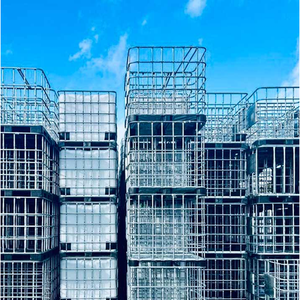
Used IBC Containers For Chemical Transportation Equipment Return And Purchase Service Available
Used IBC Containers For Chemical Transportation Equipment Return & Purchase Service
Top-Rated Freight Forwarding Services Ocean Air Bulk Cargo Hazardous Material Handling
Top-Rated Freight Forwarding | Bulk Cargo & Hazardous Material Handling
Sea Freight Forwarder China To UK USA Germany Shipping Agent Italy France
Sea Freight Forwarder China to UK, USA, Germany, Italy & France Logistics Agent
Professional Battery Door to Door China Hazardous Materials Shipment Spain Belgium Sweden
Professional Battery & Hazardous Cargo D2D Shipping to Spain, Belgium & Sweden
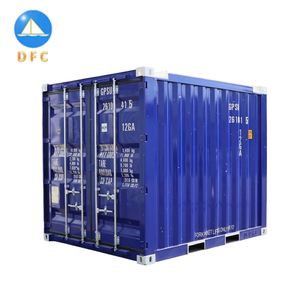
High Quality Dnv Certified 10ft 20ft 40ft Offshore Flat Rack Shipping Container For Industrial Project Logistics
DNV Certified 10ft 20ft 40ft Offshore Flat Rack Container for Heavy Industrial Cargo
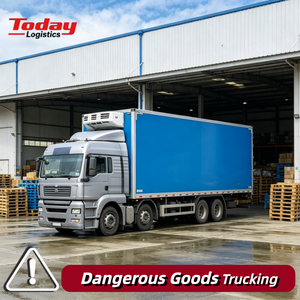
Cost-Effective Today Logistics Trucking Hazardous Cargo Logistics Class3 8 9 Door Door Dangerous Goods
Hazardous Cargo Trucking & Door-to-Door Logistics (DG Class 3, 8 & 9 Solutions)
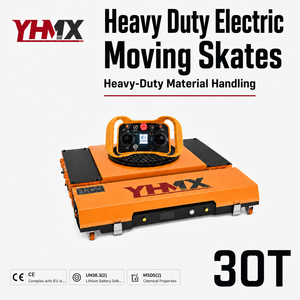
New 30 Ton Electric Tank Carrier Heavy Duty Industrial Tank Transporter Wireless Remote Control
30 Ton Electric Tank Carrier Heavy Duty Industrial Transporter with Remote Control
20+
Years Engineering Expertise
150+
Global Seaports Connected
10,000+
Heavy Lift Projects Moved
100%
CBP & IMO Compliance Rate

1. Executive Summary: The Strategic Evolution of Chinese Heavy Breakbulk Exports

As the world's primary manufacturing engine for infrastructure, energy projects, industrial processing plants, and mining machinery, China has evolved into the central nexus of global Heavy Industrial Breakbulk Logistics. Managing out-of-gauge (OOG) and ultra-heavy lift cargo requires far more than basic freight forwarding—it demands rigorous marine engineering, compliance with international safety codes (such as the IMO Code of Safe Practice for Cargo Stowage and Securing), specialized chartering arrangements, and seamless multi-modal execution.

International Engineering, Procurement, and Construction (EPC) firms, industrial importers, and state-owned infrastructure enterprises face increasing complexities: dynamic ocean charter markets, shifting geopolitical trade routes, stringent customs requirements for hazardous goods (Class 3 Flammable Liquids, Class 8 Corrosives, and Class 9 Dangerous Goods including Lithium-ion Batteries), and strict environmental mandates.

This industry whitepaper provides an exhaustive technical roadmap designed for supply chain directors, procurement managers, and logistics engineers. We analyze the end-to-end ecosystem of exporting heavy industrial breakbulk cargo from China’s key industrial gateways—including Shanghai, Tianjin, Ningbo-Zhoushan, and Qingdao—to destinations across North America, Europe, the Middle East, and Southeast Asia.

2. Technical Breakdown of Breakbulk & Heavy Lift Transport Modes

Determining the optimal transport methodology for heavy industrial exports depends on several engineering variables: unit dimensions (length, width, height), gross weight, center of gravity (CoG), structural integrity points, port crane capacities, and destination berth constraints. Below is a comparative technical matrix of the primary breakbulk shipping modes utilized by leading Chinese exporters:

Logistics Transport Mode Max Weight / Dimensions Suitable Cargo Types Key Operational Advantage Risk Profile & Control
Multi-Purpose Vessel (MPV) Breakbulk Up to 1,500 Metric Tons (Tandem Lift) Pressure vessels, wind turbine blades, refinery columns, transformers Direct pier-to-pier chartering; independent vessel crane capacity Requires Marine Warranty Surveyor (MWS) lashing approval
Roll-on / Roll-off (RoRo) Vessels Up to 120–400 Metric Tons (Mafi Trailer) Wheeled machinery, 30-ton electric tank carriers, SPMT modular units Zero overhead crane lifting required; minimal ocean weather exposure Restricted door height; requires specialized roll-trailer securing
Flat Rack & Open Top (OOG Container) Up to 45–50 Metric Tons per container Skidded generators, oversized valves, customized industrial pumps Integration into scheduled container liner loops; fixed transit times Over-width/over-height surcharges; exposed to marine atmosphere
DNV 2.7-1 Certified Offshore Racks Customized up to 40ft units (10t–40t payload) Subsea equipment, offshore drilling rigs, oil & gas skid modules Certified structural integrity for harsh offshore lifting environments High capital cost; requires certified sling & shackle assemblies
Specialized Air Charter (Heavy Lift Air Freight) Up to 120 Metric Tons (e.g., An-124 / B747-8F) Time-critical aerospace components, emergency turbines, DG batteries Fastest transit time (24–48 hours door-to-door globally) High volumetric cost; rigorous dangerous goods packing checks

Heavy Lift Engineering & CoG Calculation

Every breakbulk export requires rigorous load-in engineering. Our naval architects compute exact Center of Gravity (CoG) coordinates and design customized spreader-bar lifting rigs to avoid structural buckling during tandem crane operations.

IMO Cargo Securing & Lashing Protocols

To withstand severe sea states (pitching, rolling, and heaving forces up to 1.5g), all heavy items are lashed using certified grade-80 chain stoppers, heavy-duty turnbuckles, and welding sea-fastening stoppers directly to vessel tank tops.

Hazardous Cargo & Battery Compliance

Transporting Class 3 flammable chemicals, Class 8 corrosives, or Class 9 lithium-ion battery banks requires UN-tested packaging, valid MSDS documentation, and full compliance with IMDG and ICAO dangerous goods codes.

3. Strategic Procurement Trends in Heavy Logistics (2025–2030)

The global heavy industrial supply chain is undergoing a structural paradigm shift driven by technological innovations, environmental regulations, and regionalization of manufacturing. EPC directors and global sourcing teams must align their procurement strategies with four key future trends:

Trend A: Decarbonization & Green Methanol Heavy Fleets

With the International Maritime Organization (IMO) enforcing strict EEXI and CII carbon intensity targets, major ocean carriers and breakbulk charterers are introducing green-methanol and dual-fuel heavy lift vessels. Future procurement contracts increasingly mandate Scope 3 carbon emission reporting per ton-kilometer transported. Chinese exporters integrating low-carbon maritime corridors gain a decisive competitive advantage in European and North American tender processes.

Trend B: Autonomous SPMTs & Electric Tank Carriers

Inland port-to-factory transfer of heavy modules is transitioning away from traditional diesel hydraulic trailers toward 30-Ton Electric Tank Carriers and wireless remote-controlled Self-Propelled Modular Transporters (SPMTs). These zero-emission, high-precision transporters allow millimeter-exact positioning within tight plant facilities, eliminating localized noise and exhaust emissions while enhancing operational safety.

Trend C: IoT Telemetry & Dynamic Strain Tracking

Real-time visibility in breakbulk logistics has evolved far beyond GPS container tracking. Modern heavy-lift shipments utilize IoT sensor networks mounted directly onto out-of-gauge equipment to monitor dynamic g-forces, tilt angles, ambient humidity, temperature fluctuations, and structural strain during ocean transits. This data provides verifiable proof of cargo integrity upon port discharge.

Trend D: Return & Reuse Logistics for Industrial Packaging

Circular supply chains are expanding into industrial chemical logistics. Instead of single-use bulk drums, international chemical manufacturers are adopting circular procurement models for Used IBC Containers and returnable ISO tanks. Specialized logistics providers now manage global equipment return loops, re-certification services, and environmentally compliant container washing infrastructure.

4. Enterprise Advantages: Why Global EPC Leaders Partner With Us

Leveraging decades of specialized freight forwarding experience, robust port infrastructure partnerships across China, and deep regulatory knowledge, our enterprise provides end-to-end solutions engineered to minimize supply chain volatility.

  • End-to-End Multimodal Execution: From factory floor heavy-haulage in inland China to final foundation positioning at overseas project sites, we manage every step of the logistics chain.
  • Full Spectrum Chartering Capability: Direct relationships with global heavy-lift vessel owners, breakbulk liner services, and air cargo freighter operators guarantee space allocation even during peak market conditions.
  • Certified Dangerous Goods (DG) Experts: Fully licensed handlers for hazardous chemical IBC transportation, Class 3/8/9 dangerous goods trucking, and specialized lithium battery door-to-door air/ocean logistics.
  • Offshore Structural Compliance: Customized manufacturing and supply of DNV 2.7-1 certified 10ft, 20ft, and 40ft offshore flat rack shipping containers designed to endure extreme offshore oil rig environments.
  • 24/7 Dedicated Project Logistics Control Tower: Real-time status reporting, proactive milestone tracking, and seamless customs brokerage clearing through US CBP, European Union customs agencies, and global port authorities.

Frequently Asked Questions (FAQ)

Detailed technical answers to common queries regarding Chinese heavy industrial breakbulk logistics, dangerous goods handling, and project cargo chartering.

What defines "Breakbulk Cargo" versus standard Out-of-Gauge (OOG) container cargo?
Breakbulk cargo refers to oversized goods that cannot fit into standard ISO shipping containers or containerized Flat Racks due to extreme weight or dimensions (e.g., large industrial boilers, refinery columns, heavy transformers). Breakbulk items are loaded directly into the hold or onto the weather deck of a specialized Multi-Purpose Vessel (MPV) and secured individually. OOG cargo, by contrast, utilizes open-top or flat-rack containers carried on conventional container vessels.
How are marine lashing and sea-fastening calculations performed for heavy breakbulk exports?
Lashing calculations are conducted by marine engineers in accordance with the IMO Code of Safe Practice for Cargo Stowage and Securing (CSS Code) Annex 13. Calculations account for the vessel's GM (metacentric height), transverse accelerations, pitch, roll, and wind forces for specific sea routes. Certified sea-fastening plans specify exact lashing point Safe Working Loads (SWL), chain angles, and steel stopper welding requirements.
What documentation is required to export Class 9 Lithium Batteries or Class 3/8 Chemicals from China?
Exporting hazardous cargo requires a valid Material Safety Data Sheet (MSDS), UN38.3 Test Summary (for lithium batteries), Dangerous Goods Declaration (DGD), Dangerous Goods Inspection Certificate for Packaging (Outbound Package Performance Test), and Shanghai/Tianjin Port MSA (Maritime Safety Administration) approval prior to vessel loading.
Why are DNV 2.7-1 certified containers mandatory for offshore industrial logistics?
DNV 2.7-1 / EN 12079 certifications govern offshore containers subjected to harsh marine environments and dynamic lifting forces from supply vessels to offshore oil & gas platforms. Unlike standard ISO containers, DNV units undergo rigorous structural fatigue testing, possess certified pad-eyes, and are equipped with tested wire rope sling assemblies designed for high-wave offshore dynamic loads.
What are the advantages of using 30-Ton Electric Tank Carriers over traditional diesel transporters?
Electric tank carriers offer precise speed control via wireless remote control, zero localized carbon emissions, low noise operational profiles, and compact dimensions. They are ideal for transferring heavy tanks, chemical vessels, and machinery within manufacturing plants, cleanrooms, and congested port terminals where indoor diesel exhaust is strictly prohibited.
How does a door-to-door air freight service handle oversized heavy industrial components to Europe?
Door-to-door heavy air freight involves securing specialized heavy-lift freighter aircraft (such as B747-8F, B777F, or chartered An-124), organizing inland heavy-haul permits from factory to airport, executing main-deck nose-loading using mobile cranes or high-loaders, completing fast-track export/import customs clearance, and delivering via low-bed trailer to the final European destination.
What services are offered for chemical equipment return and IBC container purchasing?
We provide comprehensive reverse logistics programs for re-usable Intermediate Bulk Containers (IBCs) and chemical transport equipment. Services include cross-border return transportation, UN-performance re-certification, leak testing, chemical residue cleaning coordination, and cost-effective purchasing options for reconditioned IBC containers suitable for industrial chemical transport.
How can I request an engineering evaluation and rate quotation for heavy breakbulk freight?
To receive a comprehensive engineering assessment and freight quote, simply click the "Get Catalog" button below to initiate a live consultation with our senior project cargo team. Please provide technical drawings, dimensions, gross weight, CoG location, loading/discharge port preferences, and required target dates.

Engineered Heavy Logistics Solutions For Global Trade

Need customized project cargo chartering, DNV offshore containers, hazardous cargo door-to-door routing, or heavy equipment transport? Contact our senior logistics engineering team today for immediate technical consultation and full catalog access.

Get Catalog