Direct Factory Sourcing & End-to-End Intermodal Logistics Solutions from Leading Chinese Manufacturing Hubs
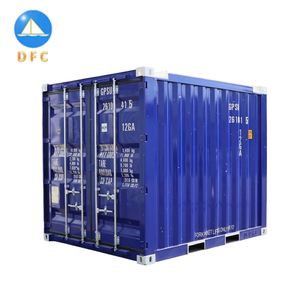
China's open top container manufacturing ecosystem represents the gold standard for global heavy-lift and out-of-gauge (OOG) intermodal logistics. Unlike standard dry van ISO containers, open top containers (available primarily in 20ft and 40ft dimensions, alongside custom 10ft offshore modules) are engineered to accommodate cargo that cannot be loaded through end doors—such as heavy industrial machinery, oversized glass sheets, granite blocks, structural steel beams, and wind turbine components. Top China open top container cargo shipping factories leverage high-tensile Corten SPA-H anti-corrosive steel to craft structural frames capable of enduring severe marine dynamic stresses.
A critical engineering differentiator in modern Chinese open top container factories is the swing-out rear header assembly. When loading over-height or crane-hoisted equipment, the top rear header can be unlatched and swung out of the way, allowing unhindered overhead crane clearance. Structural integrity is preserved via reinforced corner castings meeting ISO 1161 standards, which interface seamlessly with vessel twistlocks and port gantry spreaders.
Technical Fact: Premium Chinese open top containers undergo CSC (Container Safety Convention) testing under dynamic payload loads exceeding 1.8x maximum gross mass, ensuring structural safety when stacked 9-high fully loaded on ultra-large container vessels (ULCVs).
Manufactured using 900g/m² high-density coated fabric reinforced with TIR-approved sealing cables, providing 100% waterproof and UV-resistant protection.
Constructed with 28mm marine-grade hardwood plywood or optional anti-skid steel diamond plates capable of sustaining axle loads up to 7,200 kg per ISO testing.
Heavy-duty lashing rings welded directly into top and bottom side rails, each rated for a minimum lashing load of 1,000 kg to 5,000 kg for secure cargo tie-down.
The global trade architecture is undergoing a seismic shift toward intelligent, low-carbon, and highly specialized freight container assets. Procurement managers sourcing open top containers and OOG shipping services from China must align their supply chain strategies with these evolving macro trends:
Next-generation open top containers manufactured in top Chinese factories (located in Qingdao, Ningbo, Shanghai, and Shenzhen) are increasingly pre-fitted with integrated IoT sensors. Because open top cargo often involves high-value, sensitive industrial equipment, buyers demand real-time telematics. These sensors continuously monitor GPS position, tarpaulin seal integrity, internal humidity, temperature fluctuations, and impact/tilt forces during vessel transit.
While traditional soft-top tarpaulin containers dominate the market due to cost efficiency, there is a rapidly accelerating trend toward Hard-Top Open Top Containers. Featuring a removable steel roof operated via crane twistlocks, hard-top units combine the loading versatility of an open top with the security, structural rigidity, and weatherproofing of a standard dry box. This design is fast becoming the preferred procurement standard for sensitive power generation equipment and defense project cargo.
Aligned with global ESG mandates, premier Chinese container manufacturers are integrating green hydrogen-reduced iron and recycled steel scrap into their production lines. B2B buyers can now request EPD (Environmental Product Declaration) certificates verifying reduced embodied carbon metrics for container fleets produced for international lease or purchase.
Shipping open top container cargo requires specialized logistics engineering that extends far beyond standard containerized freight. When cargo exceeds the roofline of an open top container (In-Gauge vs. Out-of-Gauge / Over-Height), freight rates, vessel slot planning, and port handling dynamics change dramatically.
When cargo loaded into an open top container fits within the top height rail, it is classified as In-Gauge (IG). IG open tops can be stowed below deck on container ships, resulting in significantly lower ocean freight tariffs. Conversely, when cargo extends above the top rail, it is designated as Out-of-Gauge (OOG) Over-Height (OH) cargo. OOG open tops prevent containers from being stacked directly on top, requiring carriers to charge for "lost slots" (void spaces on the ship grid).
Optimization Strategy: Sourcing custom low-bed open-top containers or flat racks directly from Chinese manufacturers can often reduce total height profiles by 150mm to 300mm, successfully re-classifying OOG freight into IG status and saving thousands of dollars per intermodal voyage.
Navigating Chinese manufacturing hubs and execution of end-to-end multi-modal shipping requires an authoritative logistics partner with deep operational expertise. Our global network—headquartered strategically near primary sea and air hubs including Los Angeles (LAX/Port of LA), Rotterdam, Hamburg, Shanghai, and Ningbo—provides unmatched end-to-end control.
Our dedicated project cargo team operates around the clock across all global time zones, providing active tracking, door-to-door oversight, and instant exception alerts for heavy-lift movements.
Fully licensed by national regulatory agencies (including US Customs CBP, EU Customs, and China Customs), ensuring fast clearance, accurate HTS tariff classification, and strict ISF filing accuracy.
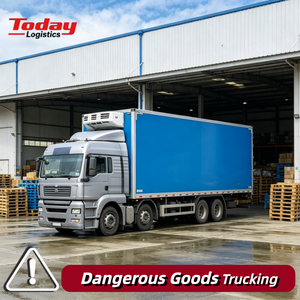
Certified handlers for dangerous goods (Class 3, Class 8, Class 9 DG, and Lithium Batteries under UN38.3 standards), complete with specialized drayage and safety protocols.
Direct integration with certified Chinese container production lines guarantees authentic ISO/CSC certification, factory audits, pre-shipment inspections, and competitive pricing.
