1. The Architecture of Modern Commercial Import Customs Clearance
Commercial Import Customs Clearance is the formalized, legally binding procedure by which goods entering a sovereign customs territory—such as the United States under U.S. Customs and Border Protection (CBP)—are declared, audited, evaluated for duties, taxes, and fees, and authorized for domestic entry into commerce. For global procurement directors, supply chain VPs, and enterprise buyers, customs clearance is no longer a simple transactional administrative step at the port of arrival; it is a critical strategic node that directly governs landed cost precision, working capital efficiency, risk mitigation, and regulatory continuity.
With global supply chains facing systemic volatility, heightened enforcement under the Uyghur Forced Labor Prevention Act (UFLPA), shifting Section 301/232 tariff landscapes, and rigorous Partner Government Agency (PGA) scrutiny, executing a seamless commercial import customs clearance requires deep structural expertise. Failure to maintain compliance leads to severe fiscal friction: supply chain bottlenecks, CBP Form 28 (Request for Information) holds, demurrage charges exceeding thousands of dollars per day, liquidated damages, and potential cargo forfeiture.
Why Standard Customs Filing Fails Enterprise Importers
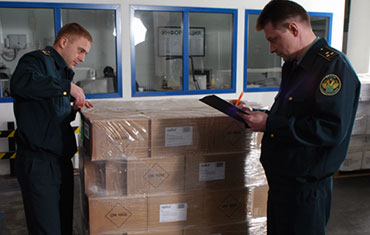
Generic entry filings often rely on outdated static tariff schedules and transactional third-party data inputs. Modern CBP operations leverage automated targeting algorithms (such as the Automated Commercial Environment - ACE system) that cross-reference Harmonized Tariff Schedule (HTS) codes, manufacturer identification numbers (MID), declared transaction values, and country-of-origin manifests in real time.
At LA 24-7 Forwarder, our licensed customs brokers bridge the gap between technical customs law and operational execution. Headquartered minutes from the Port of Los Angeles, the Port of Long Beach, and LAX (5510 W 104th St, Suite 300), we deploy structured compliance frameworks designed to eliminate delays before your container touches U.S. soil.
Information Gain Insights: The Real Cost of Customs Delays in 2025
Industry data indicates that over 64% of commercial import holds at U.S. West Coast ports stem from three preventable operational oversights: late Importer Security Filings (ISF 10+2), misaligned HTS Subheadings under Section 301 rules, and incomplete PGA filings (FDA, EPA, DOT, FCC). Working with an established, 24/7 licensed broker eliminates these systemic operational hazards.
2. Enterprise Service Solutions & Customs Entry Breakdown
Commercial importers require specialized entry structures depending on commodity classification, valuation, intent of distribution, and regulatory jurisdiction. Below is our core service breakdown designed to address diverse global procurement requirements:
Formal Customs Entry (Type 01)
Designed for commercial import shipments valued over $2,500 (or sensitive commodities regardless of value). Includes full ACE electronic transmission, HTS code verification, Duty/FLC calculations, and CBP Form 7501 preparation.
Antidumping & Countervailing Duty (Type 03)
Specialized clearance for goods subject to ADD/CVD orders. Our compliance experts analyze preliminary and final DOC determinations to ensure precise bond coverage and avoid catastrophic retroactive rate adjustments.
Foreign Trade Zone (FTZ) Entry (Type 214)
Optimize cash flow by deferring, reducing, or eliminating U.S. duties. We assist high-volume importers in transferring goods into local FTZs near the Ports of Los Angeles and Long Beach without immediate duty assessment.
In-Bond Transportation (IT / TE / IE)
Seamless movement of un-cleared commercial freight under continuous customs bond from coastal ports of entry (LAX/LA/LGB) to interior inland ports or bonded warehouses for localized clearance.
Essential Components of Enterprise Import Compliance
| Clearance Protocol | Filing Timeline | Key Regulatory Data Points | Risk / Penalty Exposure |
|---|---|---|---|
| Importer Security Filing (ISF 10+2) | Minimum 24 Hours prior to ocean vessel loading at foreign port. | Seller, Buyer, Importer of Record, Consignee, Manufacturer, Country of Origin, HTS-6, Container Stuffing Location, Stuffer. | $5,000 baseline CBP fine per late or inaccurate filing; mandatory vessel hold. |
| Customs Bond (Continuous vs. Single) | Established prior to ISF submission or Entry summary. | Bond amount determined by 10% of annual duties, taxes, and fees paid (Minimum $50,000 for continuous bond). | Inability to clear cargo; costly Single Entry Bond (SEB) premiums and delayed port release. |
| PGA Integration (FDA, EPA, USDA, CPSC) | Submitted concurrently with CBP Entry (often prior to arrival). | Product Registration Numbers, FDA Prior Notice, Device Listings, EPA Declarations, Veterinary Certificates. | Immediate refusal of admission, mandatory redelivery to port, cargo destruction order. |
| UFLPA Traceability Audit | Prepared continuously prior to procurement origin lock. | Bills of Materials, Raw Material Mining/Harvest Certificates, Time-stamped Logistics Data, Wage Records. | Indefinite CBP detention under Withhold Release Orders (WROs); public brand damage. |
3. Future Procurement & Customs Clearance Trends (2025–2030)
The global trade landscape is undergoing a structural paradigm shift driven by legislative reform, geopolitical realignments, and advanced digital technologies. Enterprise procurement teams must align their commercial import customs clearance strategies with four emerging macro trends:
Trend 1: AI-Powered Automated Customs Classification & Audit Trail Algorithms
Customs agencies globally, including U.S. CBP, are deploying machine learning algorithms to screen 100% of electronic entry data. Modern procurement workflows now integrate automated HTS classification tools that parse technical product blueprints, CAD files, and chemical composition charts to assign 10-digit HTSUSA codes. However, AI classification without licensed customs broker oversight carries immense risk; automated system errors can lead to systemic misclassification penalties under 19 U.S.C. § 1592.
Trend 2: Supply Chain Transparency & Forced Labor Enforcement (UFLPA)
Regulatory enforcement has shifted from post-entry duty audits to pre-entry supply chain mapping. Under the Uyghur Forced Labor Prevention Act (UFLPA) and similar global mandates (e.g., EU Corporate Sustainability Due Diligence Directive), importers face a rebuttable presumption that goods made wholly or in part in specific regions are inadmissible. Future commercial clearance mandates full upstream visibility—from tier-1 assembly down to raw silica, cotton, aluminum, or polysilicon extraction.
Trend 3: Tariff Engineering & Strategic Nearshoring Realignment
With elevated Section 301 tariffs on Chinese manufacturing continuing to impact profit margins, global procurement teams are shifting sourcing to Southeast Asia, India, and Mexico. Commercial customs clearance now heavily incorporates tariff engineering—redesigning products prior to export or shifting manufacturing processing steps to legally alter HTS classification and lower duty liability under preferential Trade Agreements (e.g., USMCA).
Our team at LA 24-7 Forwarder works proactively with global buyers during the product design phase to structure supply chains for maximum legal tariff minimization.
Trend 4: De Minimis Overhaul & Section 321 Reform
The historical reliance on Section 321 ($800 de minimis duty-free entry) for high-volume e-commerce and commercial sample imports is undergoing aggressive regulatory constriction. Proposed administrative rule changes will mandate full formal entry data sets, HTS code reporting, and PGA compliance for low-value imports. Forward-thinking enterprise brands are restructuring their cross-border shipping models toward bulk ocean/air formal customs clearance coupled with localized 3PL distribution facilities.
4. Why Leading Global Importers Choose LA 24-7 Forwarder
Delivering high-precision customs clearance, risk mitigation, and end-to-end supply chain integration from Los Angeles.

Licensed U.S. Customs Brokerage & Compliance Mastery
Our in-house brokers possess over 20 years of hands-on technical experience navigating complex CBP rules, binding rulings, administrative protests, and PGA regulations. We protect your business from costly compliance infractions.
24/7 Operations at LAX, Port of LA & Long Beach
International commerce never stops. Operating around the clock, our clearance teams monitor flight arrivals at LAX and vessel discharges at LA/LGB terminals to submit entry data immediately, cutting port hold times to the absolute minimum.
Transparent Pricing & Duty Optimization Strategies
We eliminate hidden administrative surcharges. Through rigorous HTS code auditing, valuation reviews, and Duty Drawback management, we identify legitimate cost-saving opportunities to improve your bottom line.
End-to-End Logistics Synergies
Customs clearance is seamless when backed by our integrated air freight, ocean freight, drayage trucking, and secure warehousing infrastructure (5510 W 104th St, Suite 300, Los Angeles). We handle your cargo from foreign factory floor to U.S. doorstep.
5. Commercial Import Customs Clearance FAQ
Expert answers to technical compliance, tariff, and operational questions frequently asked by global procurement teams.
What are the legal responsibilities of the Importer of Record (IOR)?
What occurs during a U.S. Customs Intensive Exam or Census Hold?
How is customs duty calculated for commercial imports into the U.S.?
What is the difference between a Continuous Customs Bond and a Single Entry Bond?
How does Partner Government Agency (PGA) clearance affect release times?
What steps should an importer take if CBP issues a Form 28 (Request for Information)?
Streamline Your Commercial Import Customs Clearance Today
Avoid expensive port delays, optimize your tariff structures, and ensure 100% CBP compliance with Los Angeles’ premier freight forwarding and customs brokerage experts.