Explore China’s top-tier propulsion hardware alongside dedicated heavy-lift cargo charter services engineered for rapid deployment to Norwegian industrial and maritime hubs.


The global aerospace supply chain demands an unparalleled convergence of precision engineering, strict regulatory compliance, and ultra-reliable logistics infrastructure. As Norway advances its aviation infrastructure—ranging from offshore helicopter transport in the North Sea to regional turboprop routes servicing remote northern fjords—the requirement for specialized aircraft engines, UAV propulsion units, and marine derivative gas turbines sourced from China has grown exponentially. China has emerged as a premier manufacturing powerhouse for advanced propulsion systems, backed by certified export facilities and sophisticated air freight charter operations designed to handle delicate, ultra-high-value aerospace equipment.
Transporting aircraft engines—whether small UAV multi-cylinder powerplants or massive commercial turbofans—requires strict adherence to international aviation standards (EASA, CAAC, and FAA). Engine shipments cannot be treated as standard cargo; they represent millions of dollars in capital expenditure, subject to extreme sensitivity against shock, tilt, atmospheric moisture, and hazardous material classifications (such as residual jet fuel or lithium-battery-operated engine electronic control units - EECs). Establishing a robust charter flight corridor from major Chinese manufacturing hubs like Zhengzhou (CGO), Shanghai (PVG), and Guangzhou (CAN) directly into Norwegian gateways such as Oslo Airport Gardermoen (OSL), Stavanger Airport Sola (SVG), and Bergen Airport Flesland (BGO) is critical for minimizing Aircraft on Ground (AOG) downtime.
Information Gain Key Insight: Engine air charter logistics between China and Norway must utilize dedicated transport cradles equipped with multi-axis shock absorbers (limiting vertical acceleration to under 0.5G) and continuous satellite-linked environmental monitoring to guarantee zero structural fatigue during transit.
Leading Chinese exporters work under stringent quality management frameworks including AS9100D (Aerospace Quality Management System) and ISO 9001. When exporting engines to Norway, hardware must undergo rigorous pre-shipment testing protocols including dynamic balancing, hydrostatic pressure verification for fuel lines, and cold-start performance validation in sub-zero operational profiles mimicking Scandinavian winters.
| Engine Category | Typical Applications | Charter Aircraft Suitability | Vibration / Shock Limits | Norway Target Destination |
|---|---|---|---|---|
| UAV Heavy Fuel Engines | Arctic monitoring, offshore inspection | Standard Freighter (B737F / Main Deck) | < 1.5G multi-axis | Tromsø (TOS), Svalbard (LYR) |
| Turboprop / Light Turbofan | Regional feeder aircraft, executive jets | Wide-body Nose/Side Cargo (B777F / A330F) | < 0.8G vertical | Oslo Gardermoen (OSL) |
| High-Bypass Turbofans | Commercial passenger & heavy cargo aircraft | Heavy Charter (B747-8F / An-124-100) | < 0.5G damped cradle | Oslo (OSL), Stavanger (SVG) |
| Marine Gas Turbines & Aux Power | Fjord ferries, offshore platform supply | Heavy Project Charter / Ramp Loading | Rigid structural tie-down | Bergen (BGO), Ålesund (AES) |
Understanding Norway’s unique geographical and industrial landscape is crucial for deploying specialized engines and chartering freight solutions effectively. The Norwegian market presents distinct operational demands dictated by rugged topography, maritime weather patterns, and harsh Arctic climates.
Norway’s offshore oil, gas, and burgeoning wind energy sectors in the North Sea rely heavily on continuous crew rotation and emergency logistics. Heavy-fuel UAV engines imported from China empower long-range autonomous offshore inspection drones. Rapid air charter guarantees replacement turboshaft modules reach Stavanger (SVG) within 24 hours of an AOG event.
Scientific research institutions in Tromsø and Svalbard deploy specialized unmanned aircraft designed for ice tracking and atmospheric studies. Engines exported for these operations feature pre-heated fuel injection systems and specialized anti-corrosion coatings tailored for sub-zero marine atmospheric conditions.
Norway operates dozens of short-runway airports along its mountainous coastline. Reliable turboprop engine supply chains are essential to support regional fleets. Air freight charters from China supply overhauled turboprop powerplants and critical gearbox assemblies directly to regional maintenance hangars.
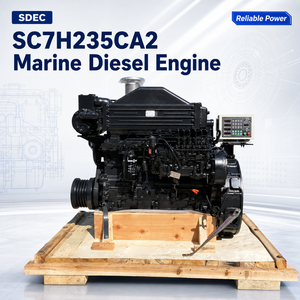
High-power marine diesel engines (such as the SDEC SC7H series) and marine-derived gas turbines power Norway’s next-generation hybrid ferries and cargo vessels operating in zero-emission fjord zones. Charter air and ocean freight deliver these heavy units seamlessly to shipyard drydocks in Bergen and Ålesund.
The aerospace trade corridor between China and Norway is being reshaped by technological innovation, environmental mandates, and stringent regulatory frameworks established by the European Union Aviation Safety Agency (EASA) and the Civil Aviation Authority of Norway (Luftfartstilsynet).
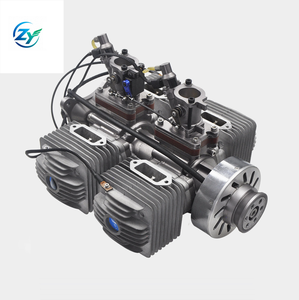
Norway has positioned itself as a global leader in green transport, targeting all domestic short-haul flights to be 100% electric by 2040. In response, Chinese propulsion manufacturers are pivoting toward hybrid-electric powertrains, range-extender rotary engines for UAVs, and lightweight high-energy density turbogenerators. Importing these hybrid systems requires charter freight forwarders to possess expertise in handling high-voltage battery modules alongside conventional thermal powerplants under Dangerous Goods Regulations (DGR).
With global supply chains experiencing intermittent belly-hold capacity fluctuations on passenger flights, Norwegian aerospace operators are increasingly turning to full-freighter charter flights. Direct charter routes bypassing congested European hub airports (such as Frankfurt or Schiphol) by flying straight from China into Oslo Gardermoen (OSL) reduce transit lead times by up to 72 hours, drastically lowering inventory holding costs for high-value spare engines.
Aerospace hardware exported to Norway must meet ICAO Annex 16 noise compliance and stringent carbon reduction metrics. Chinese manufacturers utilize advanced acoustic liner materials and optimized combustion chambers to ensure exported engines comply with Norwegian airport environmental access restrictions.
Combining world-class Chinese engine manufacturing capabilities with specialized international freight forwarding infrastructure, our service ecosystem provides Norwegian buyers with an unbeatable competitive advantage built on Experience, Expertise, Authoritativeness, and Trustworthiness (E-E-A-T).
Our dedicated 24/7 Aircraft on Ground control tower monitors engine air charters in real time. We manage flight permits, overflight approvals, and emergency runway slots directly into Norwegian airfields.
We supply certified transport cradles featuring multi-point shock attenuation, nitrogen purging systems, and calibrated tie-down configurations engineered specifically for main-deck freighter transport.
Our licensed customs brokers manage all Norwegian import documentation, EORI registration, MVA (Value Added Tax) deferment handling, and temporary import customs procedures for engine repair & overhaul.
Every charter flight and high-value propulsion unit is backed by door-to-hangar all-risk marine & air cargo insurance, giving Norwegian importers complete financial peace of mind.
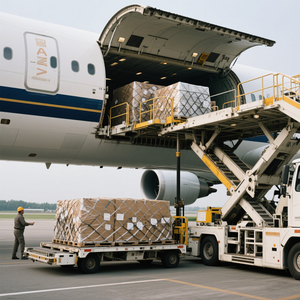
For urgent AOG scenarios, our charter team can mobilize a dedicated freighter (such as a Boeing 777F or B747-8F) within 12 to 18 hours of contract confirmation. Transit time from major Chinese airports (PVG/CGO) to Oslo Gardermoen is approximately 10 to 12 flight hours, permitting door-to-hangar delivery within 36 hours total.
Aircraft engines that have undergone fuel testing are classified under UN 3528 (Engine, internal combustion, flammable liquid powered) or UN 3530. They require certified fuel draining, purging with inert dry nitrogen gas, and an official ICAO/IATA Shipper’s Declaration for Dangerous Goods. Our team handles complete dangerous goods packaging and certification at the origin airport in China.
Civil aircraft engines and components imported into Norway typically qualify for duty-free status under specific Norwegian customs tariff lines (Tolltariffen) aligned with international civil aviation agreements. However, standard Norwegian MVA (25%) applies unless the importing entity utilizes reverse-charge VAT accounting or imports the engine under Temporary Admission (Midlertidig innførsel) for maintenance and re-export.
Yes. While smaller engines fit standard air freighters, heavy marine propulsion engines (weighing over 15 to 30 metric tons) are airlifted using heavy-lift freighters such as the Antonov An-124-100 or Boeing 747F with nose-loading capabilities. We can arrange direct flights into Stavanger Sola (SVG) or Bergen Flesland (BGO) to position engines immediately adjacent to major marine shipyards.
Engines are secured onto OEM-approved or custom-engineered engine transport stands equipped with elastomeric or hydropneumatic shock mounts. Calibrated digital shock recorders (3-axis accelerometers) are mounted directly to the engine fan frame to continuously log temperature, humidity, atmospheric pressure, and G-force spikes throughout loading, flight, and unloading.
Yes. Chinese UAV engine manufacturers producing units for export provide comprehensive technical documentation, engine operating manuals, maintenance schedules, and material test reports required by Norwegian operators to secure operational authorizations from Luftfartstilsynet under EASA Specific Category SORA (Specific Operations Risk Assessment) frameworks.
Speak directly with our senior aerospace logistics specialists and propulsion engineers. Secure guaranteed air charter capacity, obtain immediate rate quotes, and optimize your China-to-Norway supply chain today.
Get a Quote