Explore our turnkey line of custom-manufactured ISO tanks, offshore DNV units, heavy machinery transporters, and dangerous goods supply chain services tailored for Nigerian trade lanes.
Fast-track international logistics solutions for urgency chemical spare parts, valve assemblies, and OEM ISO tank components into West Africa and Europe.
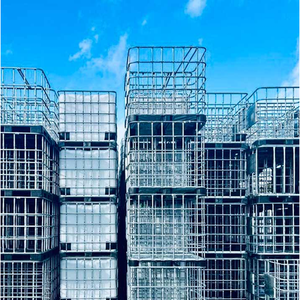
Heavy-duty 1000L composite IBC containers designed for localized chemical distribution, returnable fleets, and hazardous liquid transport in Nigeria.
Full container load (FCL) and ISO tank vessel chartering for corrosive, flammable, and toxic liquid chemicals entering Lagos Ports (Apapa / Tin Can).
End-to-end containerized logistics connecting manufacturing hubs in China, USA, and Europe directly to Onne Port and Lagos, Nigeria.
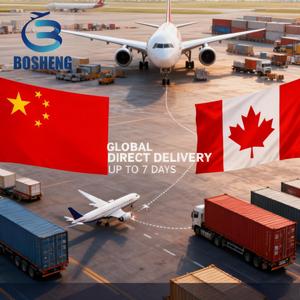
Specialized transport for lithium-ion battery banks, energy systems, and industrial chemical solutions with complete regulatory documentation.
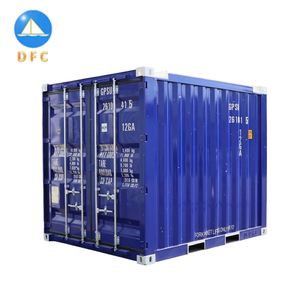
Engineered for extreme offshore oil & gas operations in Niger Delta fields. Heavy-duty structural frames built for dynamic crane lifting and rough sea handling.
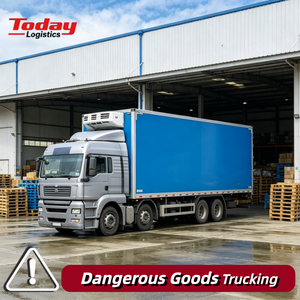
Dedicated heavy-duty trailer fleets equipped for last-mile ISO tank drayage from Nigerian sea ports to inland industrial plants and refineries.
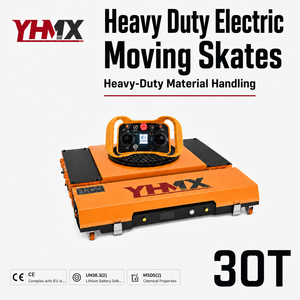
Wireless remote-controlled heavy-duty industrial transporters for moving ISO tanks, bulk vessels, and plant equipment within processing facilities.
As Nigeria rapidly transforms its industrial landscape through major investments in petroleum refining, petrochemical processing, fertilizer synthesis, and agro-chemical manufacturing, the demand for high-integrity bulk liquid supply chain infrastructure has escalated dramatically. Traditional break-bulk steel drums and flexible intermediate packaging (flexitanks) present significant risk profiles regarding product degradation, environmental leakage, and high handling labor costs. UN-certified Portable ISO Tank Containers represent the highest standard of safety, structural durability, and economic viability for bulk liquid trade into West Africa.
Key Technical Insight: ISO Tank Containers reduce bulk liquid transportation costs by up to 30% compared to standard drummed shipments, while eliminating single-use packaging waste and providing structural containment against harsh equatorial maritime transit conditions.
Custom OEM manufacturing requires precise chemical compatibility analysis, wall thickness calculation under ASME Section VIII rules, and thermal system design to withstand Nigeria's ambient tropical temperatures (frequently exceeding 38°C with high relative humidity). Our tanks are engineered under rigorous ISO 1496/3 standards, holding certifications from international classification societies including Bureau Veritas (BV), Lloyd's Register (LR), and Det Norske Veritas (DNV).
| ISO Tank Type | UN Portable Tank Code | Shell Material / Lining | Working Pressure (Bar) | Heating / Cooling Options | Target Chemical Commodities |
|---|---|---|---|---|---|
| Standard Hazardous | UN T11 | 316L Stainless Steel (4mm-6mm) | 4.0 Bar | Steam Coils / Glycol Jacket | Methanol, Ethanol, Solvents, Xylene, Toluene, Acetone |
| High-Corrosive Liquid | UN T14 | Carbon Steel + PTFE / PFA / Rubber Lining | 4.0 Bar - 6.0 Bar | External Heating Tracing | Hydrochloric Acid, Sulfuric Acid, Hydrofluoric Acid, Caustic Soda |
| Liquefied Gas | UN T50 | High-Tensile Carbon Steel (10mm+) | 15.0 Bar - 27.5 Bar | Sunshield Shielding / Refrigeration | LPG, Anhydrous Ammonia, Refrigerant Gases, Propane |
| Offshore DNV Frame | UN T11 / DNV 2.7-1 | 316L Stainless Steel + Structural Cage | 4.0 Bar | Steam / Electric Tracing | Drilling Mud Additives, Acidizing Chemicals, Offshore Demulsifiers |
| Food Grade / Oleo | UN T11 (Food Grade) | 316L Mirror Polished (RA < 0.4µm) | 2.65 Bar | Steam Heating System | Palm Fatty Acids, Crude Palm Oil (CPO), Food Additives, Glycerin |
Cargo transported to West Africa faces prolonged heat exposure during oceanic transit and port customs dwell time. For temp-sensitive chemicals or high-viscosity liquids (such as crude palm fatty acid distillates or heavy fuel additives), our OEM tank designs incorporate a 50mm-100mm high-density polyurethane (PU) or rockwool insulation layer encapsulated within a corrosion-resistant GRP (Glass Reinforced Plastic) or stainless steel outer jacket. Integrated steam heating channels allow rapid re-liquefaction at destination terminals without scorching heat-sensitive compounds.
Nigeria’s diverse industrial hubs require tailored logistics solutions. From offshore oil installations in the South-South region to sprawling agricultural processing belts in the North, our custom OEM ISO tanks and freight services support vital economic activities.
Deploying specialized T11 and T14 ISO tank fleets for feedstock delivery, industrial solvent import, and chemical catalyst transport supporting sub-Saharan Africa's largest petroleum refinery and fertilizer synthesis plants in Lekki, Lagos State.
Supplying DNV 2.7-1 certified offshore tank containers for well-acidizing, corrosion inhibitor transport, and offshore drilling fluid supply lines operated out of Onne Oil & Gas Free Zone and Warri Ports.
Providing intermodal ISO tank drayage for fast-moving consumer goods (FMCG), detergent raw materials (LABSA), bulk resins, latex emulsions, and caustic soda for textile and packaging plants.
Transporting concentrated agricultural pesticides, liquid fertilizer solutions, and industrial solvents via protected rail-truck intermodal routing from maritime gateways to Northern distribution nodes.
Navigating the Nigerian import-export corridor demands strict compliance with evolving maritime laws, local content policies, and health/safety mandates enforced by federal regulatory authorities.
The operationalization of the PIA has accelerated domestic refining and gas processing capability. Consequently, demand has shifted from importing finished chemical products to importing high-concentration bulk chemical intermediates, driving a projected 45% increase in ISO tank usage over traditional drum packaging by 2028.
While Apapa and Tin Can Island ports historically faced acute traffic congestion, the opening of Lekki Deep Sea Port has revolutionized container handling speed. Our ISO tank logistics operations utilize direct transshipment lanes, off-dock terminals, and coastal barge transport to bypass municipal road choke points.
Regulatory bodies such as the National Agency for Food and Drug Administration and Control (NAFDAC) and the Standards Organisation of Nigeria (SON) have tightened requirements on chemical storage integrity. Standard UN-certified ISO tanks guarantee compliance, zero spill risks, and easy verification under SONCAP protocols.
We bridge the gap between heavy chemical hardware manufacturing and complex international freight forwarding. As both a custom OEM ISO Tank manufacturer and an established global dangerous goods logistics provider, we offer end-to-end operational accountability.
Custom design tailored to specific chemical specific gravity (SG), corrosive properties, and discharge requirement (top or bottom discharge with secondary containment valves).
Full IMDG Class 3, 6.1, 8, and 9 freight clearance expertise. Certified hazard declaration, UN packaging approval, and specialized vessel space allocation.
Optional IoT GPS integration providing real-time tracking of tank location, internal temperature, pressure levels, and impact events during oceanic transit.
Established relationships with licensed heavy-haul trucking partners in Lagos and Port Harcourt equipped with specialized twist-lock chassis for safe road transport.
Answer: Typical manufacturing lead time for standard UN T11 or T14 ISO tanks is 30 to 45 days upon technical drawing approval. Ocean transit from major manufacturing hubs to Lagos (Apapa/Lekki) or Onne Port generally takes 28 to 38 days depending on the shipping line service. Accelerated production runs are available for urgent project requirements.
Answer: All our ISO tanks are shipped with comprehensive manufacturer documentation, including Pressure Vessel Mill Test Reports, ASME certificates, UN Portable Tank Type Approval, and Bureau Veritas / Lloyd's Register inspection certificates. These documents streamline NAFDAC Chemical Import Permit verification and SONCAP Certificate of Conformity (CoC) issuance.
Answer: For highly corrosive chemicals like Hydrochloric Acid (HCl), we engineer UN T14 ISO tanks lined with high-grade PTFE, PFA, or vulcanized natural rubber (4mm to 6mm thickness). For concentrated Sulfuric Acid (>93%), specialized 316L or 904L stainless steel shells without lining are manufactured based on specific temperature parameters.
Answer: Our custom ISO tanks can be equipped with stainless steel steam heating coils (offering 8.0 m² to 10.5 m² heat transfer surface area) or electric heat tracing systems. Insulation consists of 50mm thick rockwool or PU foam wrapped in GRP casing, ensuring cargo temperature retention and rapid reheating at destination plants in Nigeria.
Answer: Yes. We provide complete closed-loop supply chain management. Once the tank is discharged at your Nigerian facility, our local logistics team handles customs export re-filing, tank cleaning certification at authorized depots, and repositioning back on export vessels under ocean carrier agreements.
Answer: Under international maritime standards (IMDG code), ISO tanks must undergo a 2.5-year intermediate air pressure test and a 5-year full hydrostatic pressure test. We provide full technical support, spare parts (valves, gaskets, rupture discs), and recertification guidance for operating fleets.
Speak with our senior chemical logistics engineers and dangerous goods freight experts to optimize your bulk liquid supply chain into Nigeria and across West Africa.
Contact Us