Custom OEM manufactured micro-environment shippers, shock-dampened containers, and temperature-controlled hazmat carriers tailored for Tokyo semiconductor fabs.

As Greater Tokyo re-emerges as a global epicenter for next-generation semiconductor fabrication, research, and advanced packaging, the requirements placed upon logistics infrastructure have evolved from standard freight handling to nanoscale environmental engineering. With node geometry shrinking down to 2nm and sub-2nm thresholds across Japanese semiconductor innovation hubs, airborne molecular contamination (AMC), electrostatic discharge (ESD), micro-vibration during transit, and outgassing from packaging materials present catastrophic risks to yield rates.
Custom OEM Semiconductor Cleanroom Logistics Manufacturers play an indispensable role in safeguarding raw silicon wafers, photomasks, Front Opening Unified Pods (FOUP), Front Opening Shipping Boxes (FOSB), and ultra-pure chemical reagents. Serving the Tokyo market—spanning major technology corridors in Atsugi, Kawasaki, Yokohama, Tsukuba Science City, and the Haneda Logistics Complex—demands custom-manufactured transport pods and mobile cleanroom containers certified to ISO 14644-1 standards (Class 1 through Class 100).
In sub-2nm semiconductor fabrication, a single organophosphorus or siloxane airborne molecule outgassed from a packaging container material can cause irreversible gate oxide breakdown. Our custom OEM logistics solutions integrate nitrogen-purged micro-environments with active HEPA/ULPA filtration, ensuring zero outgassing and maintaining molecular purity below 0.1 ppb during intra-site truck transport and international air freight.
Utilizing high-purity PFA, PTFE, and electro-polished 316L stainless steel interior linings that eliminate volatile organic compound (VOC) outgassing during long-distance shipping.
Custom fabricated chassis and internal supports maintaining surface resistivity between 10^6 and 10^9 Ohms/sq, dissipating static charges before sensitive wafer circuits suffer dielectric breakdown.
Multi-axis pneumatically dampened dampening systems engineered to suppress transport vibration below 0.3G, protecting sensitive lithography optics and ultra-thin sub-micron wafers.
Serving the Tokyo semiconductor market requires an acute understanding of the local geography, municipal transport restrictions, and specific facility logistics architectures. Our custom OEM cleanroom logistics products are deployed across key regional clusters:
A leading Tokyo-based semiconductor device research center required zero-particle transit for 300mm prime wafers between Kanagawa testing facilities and Ibaraki cleanrooms. Our engineering team designed a custom lightweight OEM mobile transporter featuring an integrated N2 purge manifold, ISO Class 3 filtration hood, and real-time cellular telemetry reporting internal shock, humidity, and pressure differential. Result: 0% micro-scratch rate across 5,000+ substrate movements.
Under Japan’s Ministry of Economy, Trade and Industry (METI) semiconductor strategy, billions of dollars are being injected into domestic silicon production, advanced 3D packaging (Chiplet technology), and EUV lithography infrastructure. This mega-trend has reshaped the demands placed on local cleanroom logistics manufacturers:
With extreme ultraviolet (EUV) lithography becoming standard in Tokyo-area advanced packaging facilities, cleanroom logistics equipment must now protect reflective pellicles and reticles against atomic-level carbon deposition and particulate contamination. OEM manufacturers must build specialized, high-vacuum or continuous-purge reticle shippers with particulate retention efficiency exceeding 99.99999% at 10 nanometers.
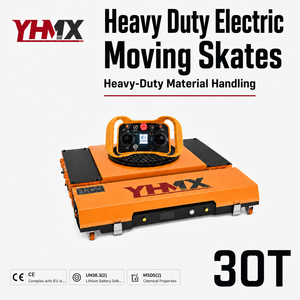
Tokyo’s space-constrained, highly automated 200mm and 300mm fabs increasingly utilize wireless remote-controlled electric heavy-duty AGV/AMR carriers. Cleanroom logistics manufacturers must deliver 30-Ton heavy transporters designed with non-marking conductive polyurethane wheels, zero-outgassing battery packs, and sealed ISO Class 3 drive units capable of navigating narrow fab cleanroom aisles.
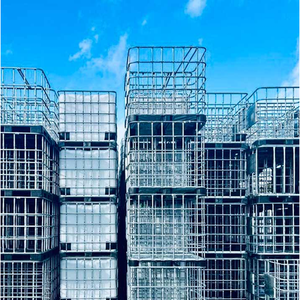
Escalating corporate ESG mandates across Japanese tech conglomerates (such as Tokyo Electron, Sony Semiconductor, and Canon) require a transition away from single-use plastics. Reusable, heavy-duty stainless steel and fluoropolymer-lined IBC containers with digital IoT tracking are replacing disposable totes for electronic-grade chemical supply chains throughout Tokyo.
Combining over two decades of international freight expertise, custom industrial manufacturing, and rigorous cleanroom compliance for the Tokyo market.
Full in-house CNC machining, orbital welding of high-purity piping, sheet metal fabrication, and Class 100 cleanroom assembly lines to build bespoke logistics containers adapted to your specific fab dimensions.
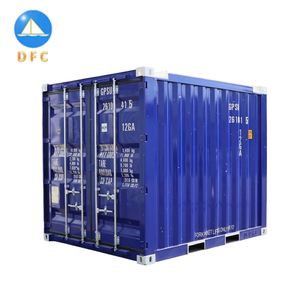
All cleanroom shippers and chemical carriers comply strictly with Japanese Industrial Standards (JIS Z 0200), High Pressure Gas Safety Act of Japan, UN Dangerous Goods Class 3/8/9, and DNV 2.7-1 offshore ratings.
Around-the-clock operational dispatch team based in the Tokyo time zone providing real-time telemetry monitoring of temperature, relative humidity, shock G-forces, and location status for every shipment.
Our company leverages integrated logistics assets—from air cargo door-to-door express pods and licensed customs clearance brokers to heavy-duty remote-controlled tank transporters—ensuring an unbroken cleanroom chain of custody from international component manufacturers directly to Tokyo fab unloading docks.
Answers to essential technical, regulatory, and logistics queries for procurement managers in Tokyo’s semiconductor sector.
Our custom manufactured cleanroom logistics containers and micro-environment pods are engineered and certified to meet ISO 14644-1 Class 1, Class 3, Class 5, and Class 100 specifications. We utilize ultra-low outgassing structural materials (electropolished 316L stainless steel, fluoropolymers, anodized aluminum) to prevent particle generation and airborne molecular contamination (AMC) during wafer, mask, and optical tool transit across Tokyo.
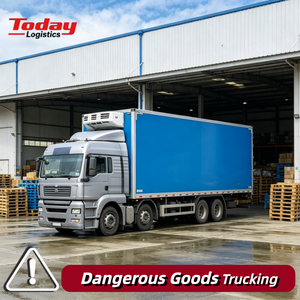
Our chemical transport equipment—including ultra-pure solvent carts and reusable chemical IBC containers—is designed in full alignment with the High Pressure Gas Safety Act of Japan, the Fire Service Act (Tokyo Fire Department hazmat storage rules), and UN Class 3 (flammable liquids), Class 8 (corrosives), and Class 9 (miscellaneous hazardous materials) standards. We provide certified secondary containment sumps, flame-arresting breathers, and grounding ESD lugs.
Yes. Tokyo fab facilities often have strict space constraints, specific cleanroom airlock dimensions, and custom overhead hoist transport (OHT) interfaces. As an OEM manufacturer, we design and build transport frames, AGV platforms, and FOUP pods to your exact CAD/3D geometric requirements, ensuring flawless integration with automated material handling systems (AMHS).
Our heavy-duty precision equipment shippers utilize multi-stage active and passive suspension mechanisms, including wire-rope isolators, air springs, and elastomer dampening blocks. These systems guarantee dynamic shock attenuation below 0.3G during road transport over Tokyo bridges, elevated expressways (Shuto Expressway), and airport cargo tarmac transitions.
Each cleanroom shipper can be configured with an autonomous IoT sensor array that logs and broadcasts data via cellular and satellite channels. Parameters monitored in real time include internal temperature, relative humidity, pressure differential (to verify N2 purge integrity), 3-axis shock/acceleration, ambient lighting (door open alert), and precise GPS coordinates.
Standard custom modifications to existing pod designs typically ship within 3 to 5 weeks. Fully customized OEM/ODM projects—involving custom structural tooling, specialized fluoropolymer lining, or integrated wireless AGV platforms—generally require 6 to 10 weeks from final CAD sign-off to cleanroom assembly, testing, and delivery in Tokyo.
Consult with our Senior Semiconductor Cleanroom Logistics Engineers today to request custom CAD proposals, outgassing test data, or competitive OEM manufacturing quotes.
Inquire Now