Precision-engineered rolling stock, specialized hazardous containers, and integrated rail logistics designed for the Italian and European rail transport networks.
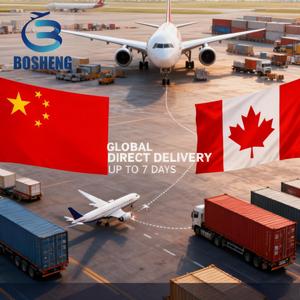
High-speed synchronized freight corridor linking Asian industrial hubs directly via express air cargo and European rail intermodal terminals into Northern Italy.
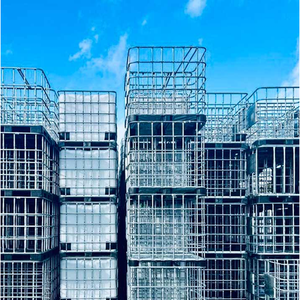
RID-compliant intermediate bulk containers optimized for safe hazardous chemical transport across Italian rail lines and reverse-logistics return leasing.
End-to-end heavy equipment transport using specialized flatbed rail wagons and ocean-rail multimodal corridors to Italian industrial sectors.
Integrated multimodal route connecting China manufacturing hubs with Italy’s key intermodal dry ports (Verona Quadrante Europa & Interporto Bologna).
Thermal-isolated and fire-suppression equipped intermodal containers specifically designed for EV battery shipments compliant with RID European rail codes.
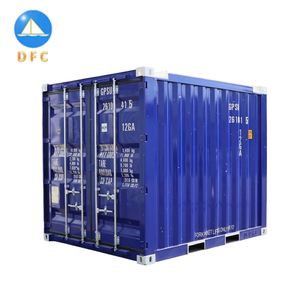
High-yield steel flat rack containers engineered for seamless transfer between feeder vessels, offshore platforms, and Italian intermodal rail wagons.
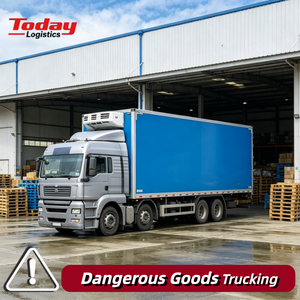
Customized chemical tank swap bodies engineered for door-to-door rail/road intermodal freight across the Trans-European Transport Network (TEN-T).
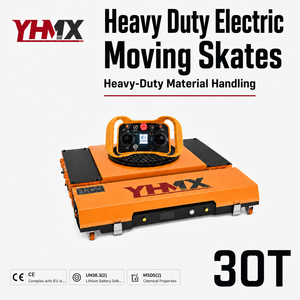
Heavy-duty motorized terminal transfer bogies designed for automated movement of intermodal ISO tank containers inside Italian rail freight yards.
Italy serves as the primary southern gateway for European international trade, positioned at the intersection of critical Trans-European Transport Network (TEN-T) corridors, including the Scandinavian-Mediterranean Corridor, the Baltic-Adriatic Corridor, and the Rhine-Alpine Corridor. As industrial manufacturing in Northern Italy (Piedmont, Lombardy, Veneto, and Emilia-Romagna) scales up sustainability requirements under the EU Green Deal, traditional road haulage faces mounting challenges: rising toll fees, acute driver shortages across Southern Europe, stringent EU ETS 2 emissions trading rules, and strict weight restrictions across Alpine crossings such as the Brenner Pass and Mont Blanc Tunnel.
Intermodal rail freight transport manufacturers and exporters play a decisive role in bridging international supply chains with local Italian rail networks. By manufacturing UIC-compliant pocket wagons, swap bodies (cassa mobile), and ISO tank container chassis optimized for RFI (Rete Ferroviaria Italiana) loading gauges—specifically the P400 (Codifica PC80/410) profiles—our solutions enable seamless transfer of cargo from ocean vessels at Port of Genoa and Port of Trieste directly onto rail shuttles destined for dry port logistics nodes such as Quadrante Europa in Verona and Interporto Bologna.
Information Gain Insight: Adopting P400 intermodal loading gauge equipment allows semi-trailers up to 4 meters in corner height to be transported across 92% of Italy’s electrified rail infrastructure without costly transshipment unpacks, cutting total transit costs from China and Northern Europe to Italian hubs by up to 24% per TEU-kilometer.
To operate seamlessly across Italy's national railway infrastructure managed by Rete Ferroviaria Italiana (RFI), intermodal rolling stock and container bodies must adhere strictly to European Technical Specifications for Interoperability (TSI). Our manufacturing facilities integrate high-tensile structural steel (S355J2+N / S460QL) and laser-robotics welding processes to deliver maximum payload capacity while respecting axle load limitations (22.5 tonnes Line Category C3/D4).
| Equipment Specification | P400 Pocket Wagons (Sdggmrss) | 7.82m Intermodal Swap Bodies | ISO Tank Chassis (20ft RID) | Heavy Flat Rack (40ft DNV) |
|---|---|---|---|---|
| Target Loading Gauge | RFI PC80/410 (P400) | UIC 596-6 Compliant | RID Rail Tank Standard | DNV 2.7-1 / EN 12079 |
| Tare Weight | 21.5 Tonnes (Double Pocket) | 3.8 Tonnes | 3.2 Tonnes | 5.8 Tonnes |
| Maximum Payload | 108.5 Tonnes (Combined) | 30.2 Tonnes | 32.0 Tonnes | 45.0 Tonnes |
| Braking System | K-blocks / Low-noise LL-blocks | N/A (Container Unit) | N/A (Container Unit) | N/A (Container Unit) |
| Applicable Italian Corridors | Tarvisio-Verona, Brenner-Bologna | Milan-Melzo, Rivalta Scrivia | Trieste-Monfalcone Chemical Belt | Genoa Voltri Port Shuttles |
Italy’s unique geography—dominated by the Apennine ridge and the Alpine northern border—requires rolling stock engineered for steep gradients (up to 27 per mille on Alpine feeder tracks) and sharp curvature radii. Our intermodal wagons feature advanced articulated bogies equipped with automatic load-proportional braking valves, preventing wheel wear and ensuring full compliance with ANSFISA (Agenzia Nazionale per la Sicurezza delle Ferrovie e delle Infrastrutture Stradali e Autostradali) safety protocols.
Different industrial basins in Italy present specialized intermodal logistics challenges. As a dedicated manufacturer and global exporter, our equipment is specifically tailored to the operational dynamics of Italy’s key economic regions:
Connecting automotive tier-1 suppliers in Turin and Brescia with machinery manufacturers in Modena. Swap bodies and P400 pocket wagons facilitate seamless high-frequency rail shuttles along the A4 corridor, avoiding severe highway congestion.
Direct port-of-entry rail loading for maritime containers arriving via Suez. Our heavy-duty flat racks and ISO chassis handle heavy industrial imports bound for Austria, Southern Germany, and Switzerland via Brenner and Tarvisio passes.
Serving Italy’s largest inland intermodal terminals. Optimized container stacking parameters allow high-throughput reach stacker and gantry crane handling without structural frame degradation during 24/7 terminal transshipments.
The Italian rail freight sector is undergoing an unprecedented modernization push driven by national policy and European legislation. Procurement directors and supply chain managers operating in Italy must navigate three critical framework shifts:
Italy’s national recovery plan has earmarked over €25 billion specifically for rail infrastructure upgrades, terminal expansions, and last-mile railway siding connections (raccordi ferroviari) for industrial plants. This funding guarantees that companies investing in UIC-standard intermodal wagon fleets and swap bodies receive substantial subsidies under national schemes like Ferrobonus and Marebonus, which incentivize modal shift from road to rail.
With Italian manufacturing heavily reliant on raw material imports (steel, aluminum, chemicals), reducing Scope 3 logistics emissions is no longer optional. Transitioning long-haul freight from diesel trucking to electrified intermodal rail lines cuts carbon intensity by up to 75% per metric ton, enabling Italian exporters to maintain competitiveness under strict EU CBAM reporting requirements.
Austrian transit caps through the Brenner Pass (including sectoral driving bans and night driving restrictions) have severely throttled pure road freight capacities. Intermodal rail transport represents the only scalable, legal, and uninterrupted freight mechanism capable of moving 44-ton gross weight loads across the Alps 365 days a year.
Building upon decades of logistics leadership (including comprehensive capabilities reflected across our global freight forwarding network), our manufacturing enterprise combines advanced rail vehicle engineering with end-to-end international trade execution:
Every rail container, flat rack, and tank swap body undergoes stringent non-destructive testing (NDT), finite element analysis (FEA), and DNV 2.7-1 certification to guarantee zero structural failure under high dynamic stress.
Specialized handling for Class 3 flammable liquids, Class 8 corrosives, and Class 9 lithium battery shipments, supported by licensed customs brokers and dangerous goods safety advisers (DGSA).
Full door-to-door execution—managing ocean freight, port drayage, customs clearance (Agenzia delle Dogane e dei Monopoli), T1 transit declarations, and final delivery to Italian siding tracks.
Direct technical and commercial answers for Italian fleet managers, logistics directors, and industrial procurement teams:
Speak with our senior intermodal rail engineers and export specialists to receive custom engineering drawings, UIC compliance reports, and competitive FOB/CIF Italy pricing within 24 hours.
