Engineered for European corridor compliance, East Med maritime feeder networks, and high-density Hellenic commercial last-mile delivery.

As Southern Europe’s flagship maritime port, the Port of Piraeus (COSCO Terminals 2 & 3) serves as the primary transshipment node for Asian imports entering the European Union. Our last-mile framework orchestrates rapid vessel-to-ramp transfers, shifting containerized freight straight into the Thriasio Pedio Logistics Complex for swift inland truck routing.
Delivering to Greece’s extensive island network—including the Cyclades, Dodecanese, and Crete—requires specialized Roll-on/Roll-off (RoRo) ferry synchronization, micro-hub consolidation, and weather-resilient maritime feeder scheduling to eliminate seasonal bottlenecks during peak tourism periods.
Navigating Hellenic Customs demands immaculate T2L / T2LF transit proof for maritime intra-EU trade, alongside specialized ICIS+ electronic customs filings. We manage duty calculations, VAT deferred schemes, and EU food/chemical health clearances seamlessly.
Commercial logistics within the Hellenic Republic operates at a unique crossroads of global maritime corridors and challenging regional geography. Positioned as the natural Mediterranean gateway to Central and Eastern Europe (CEE), Greece is experiencing an unprecedented evolution in its supply chain infrastructure. However, international B2B suppliers and domestic distributors routinely encounter severe operational friction: high urban density within the Attica basin (Athens-Piraeus metro area), fragmented insular geography spanning over 6,000 islands and islets, and stringent European Union regulatory hurdles for hazardous materials (ADR) and heavy industrial equipment.
To establish a dominant competitive advantage, forward-thinking enterprises require a specialized last-mile commercial logistics supplier capable of executing multimodal transfers with absolute precision. This technical white paper examines the strategic frameworks, infrastructure networks, localized application scenarios, and regulatory mechanisms necessary to master commercial last-mile delivery across continental Greece and the Aegean archipelago.
Key Insight (Information Gain): Commercial last-mile success in Greece is determined by a dual-hub model: utilizing the dry-port logistics hub at Thriasio Pedio for continental European truck transport (via PATHE and Egnatia Odos), combined with scheduled RoRo feeder cabotage out of Piraeus, Lavrio, and Rafina ports for insular fulfillment.
Mastering last-mile fulfillment in Greece requires a deep structural understanding of the nation’s core logistics nodes. The flow of commercial freight relies heavily on three primary infrastructure pillars:
The Port of Piraeus ranks among the top container terminals in Europe. Deep-sea container liners from China, East Asia, and the Americas discharge TEUs at COSCO Terminals 2 and 3. For commercial suppliers, immediate last-mile efficiency hinges on moving landed containers off-dock to the Thriasio Pedio Logistics Center. Spanning over 2.2 million square meters, Thriasio functions as Greece's central freight consolidation yard, featuring direct rail intermodal links to the Balkans and Northern Europe.
Once freight is processed at central warehouses in Attica or Thessaloniki, land distribution follows two critical arterial networks:
Commercial suppliers providing capital goods, fast-moving consumer goods (FMCG), and chemical reagents to Greek island economies face distinct logistics constraints. Deliveries to Crete (Heraklion, Chania), Rhodes, Santorini, and Mykonos rely heavily on scheduled RoRo passenger/freight ferries and specialized cargo vessels. Last-mile providers must orchestrate trailer drop-offs, temperature-controlled reefers, and micro-truck dispatches within compressed port landing windows.
Deep-sea vessel discharge at Piraeus or Air Cargo entry via Athens International Airport (ATH / LGAV).
ICIS+ customs clearance, VAT deferral, and palletized sorting inside Thriasio Pedio Bonded Facilities.
ADR truck routes to continental plants or RoRo ferry cabotage dispatches to island commercial receivers.
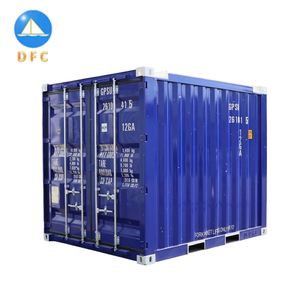
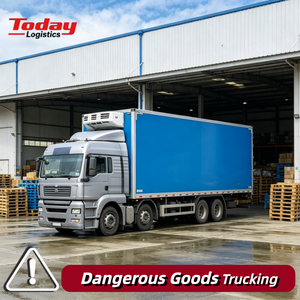
Greece's expanding renewable energy footprint—evidenced by utility-scale solar farms in Thessaly and wind projects in Evia—requires large-scale importation of lithium-ion battery energy storage systems (BESS) and hazardous chemicals. Under European ADR regulations, moving Class 9 hazardous goods across maritime straits (e.g., Piraeus to Crete or Cyclades) demands specialized dangerous goods declarations, sea-fastening certified flat racks, and driver certification. Utilizing customized Class 3/8/9 ADR-certified trucks and DNV-certified offshore flat racks guarantees full structural integrity and legal compliance across sea-land transitions.
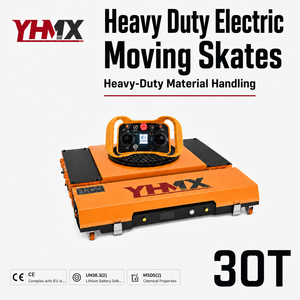
Industrial complexes located in Elefsina, Aspropyrgos, and Corinth require continuous supply chains for heavy capital equipment, pressure vessels, and processing tanks. Moving 30-ton industrial units within confined operational zones demands precision equipment such as remote-controlled 30-Ton Electric Tank Transporters. These zero-emission, high-capacity transporters enable plant managers to perform internal last-mile positioning with sub-centimeter accuracy, eliminating the risk of structural damage or site downtime.
Commercial electronics, automotive spare parts, and pharmaceutical products destined for urban retail hubs in Athens, Patras, and Larissa require rapid door-to-door delivery. By leveraging direct Air Cargo Door-to-Door Service operating out of Athens International Airport (Eleftherios Venizelos), shipments bypass ocean port delays, clearing customs via expedited lanes and entering metropolitan micro-fulfillment centers within 24 hours of flight arrival.
To maintain a resilient supply chain, commercial suppliers entering the Greek market must align with several macro-level structural trends:
The Hellenic government’s initiative to transition island economies toward net-zero emissions is driving adoption of electric last-mile delivery fleets and zero-emission port handling equipment. Suppliers utilizing electric tank carriers and green logistics protocols receive priority dock access and municipal delivery permits in urban island centers.
Piraeus and Thessaloniki port authorities are rapidly integrating IoT-enabled digital twin platforms. Real-time telemetry tracking of container status, temperature control for cold chains, and automated customs release webhooks have become mandatory standards for top-tier freight suppliers.
Navigating the complexities of Hellenic and Mediterranean logistics requires an authoritative, highly experienced partner. Our operational model is anchored in strict adherence to Google E-E-A-T principles, demonstrating proven industry expertise and reliability:
Expert technical insights addressing common inquiries from supply chain directors, procurement managers, and logistics operators in Greece.
Connect with our senior logistics architects to review your freight profiles, schedule ADR-certified transport, or request a custom freight forwarding quote tailored for Greece and the Mediterranean corridor.
Get a Quote