Engineered logistics hardware, certified offshore containers, hazardous cargo transport units, and heavy-lift machinery designed for Russia-bound oceanic and overland corridors.
Express door-to-door international air freight network for time-sensitive breakbulk spare parts, high-value components, and emergency replacement gear.
Get a Quote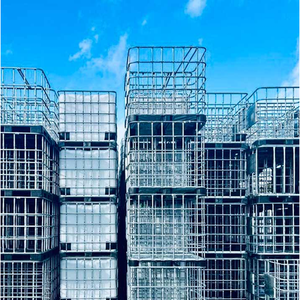
Heavy-duty reconditioned Intermediate Bulk Containers (IBC) for liquid chemical logistics, complete with return and purchasing frameworks.
Get a Quote
Full-scope freight forwarding covering dry bulk, heavy-lift ocean breakbulk, dangerous goods handling, and global charter management.
Get a Quote
Direct liner services, tramp ship chartering, and multi-port ocean shipping agents linking Asian hubs with Eurasian regional maritime trade lanes.
Get a Quote
Specialized logistics for industrial lithium-ion batteries and hazardous energy storage systems under strict Class 9 IMDG safety protocols.
Get a Quote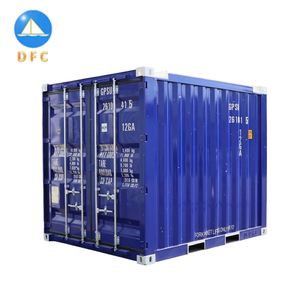
DNV 2.7-1 / EN 12079 certified offshore flat rack containers engineered for harsh marine environments, heavy oilfield equipment, and subsea gear.
Get a Quote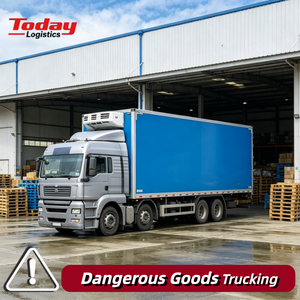
Specialized intermodal road drayage and heavy-trucking for flammable liquids (Class 3), corrosives (Class 8), and miscellaneous hazmat (Class 9).
Get a Quote
Wireless remote-controlled SPMT / heavy tank transporter for port handling, shipyard maneuvering, and intra-site industrial move of out-sized loads.
Get a QuoteAs global supply chains pivot toward resilient Eurasian corridors, manufacturers and exporters face severe technical challenges: cold-climate operational limitations, strict sanctions compliance screening, specialized heavy-lift crane availability, and stringent Gosstandart (GOST-R) certification requirements. This comprehensive strategic guide examines the engineering standards, port capabilities, regulatory frameworks, and operational strategies vital for successfully executing breakbulk cargo shipments into the Russian market.
Selecting the optimal sea route and receiving port is the foundational decision in Russian breakbulk planning. Transport vectors are categorized into three strategic sea corridors:
Primary Ports: Vladivostok Commercial Sea Port, Vostochny Port, Nakhodka.
Capabilities: Serving as the main entry point for Asian manufacturers, these ports provide direct rail ramps onto the Trans-Siberian Railway (TSR). They feature floating cranes capable of tandem lifts up to 300 metric tons and dedicated breakbulk berths with heavy floor loading capacity (up to 20 tons/m²).
Primary Ports: Novorossiysk Commercial Sea Port (NCSP), Tuapse.
Capabilities: Year-round ice-free operation connecting Mediterranean and Middle Eastern trade lanes. Novorossiysk possesses extensive open-storage yards for heavy mining equipment, refinery columns, and structural steel, with direct road connections to the industrial heartland of Southern Russia and the Volga region.
Primary Ports: Murmansk, Sabetta, Dudinka.
Capabilities: Essential for Siberian LNG, Arctic oilfield developments, and regional mining mega-projects. Demands ARC4 to ARC7 ice-class breakbulk vessels, specialized low-temperature lashing gear, and seasonal execution windows (July to November) supported by nuclear icebreaker escort services.
Successful breakbulk export demands selecting specialized marine equipment tailored to non-standard dimensions and weight profiles.
| Equipment Category | Technical Specifications | Primary Industrial Application | Target Russian Port / Corridor |
|---|---|---|---|
| DNV 2.7-1 Flat Racks | 10ft/20ft/40ft, Payload up to 45MT, EN 12079 certified, structural steel padeyes | Offshore oilfield equipment, subsea valves, modular pump skids | Murmansk, Sabetta, Sakhalin Island |
| Heavy Lift Multipurpose (MPP) Vessels | Combined crane capacity 120MT – 800MT, adjustable tweendecks, Ice Class Arc4 | Refinery hydrocrackers, power plant transformers, turbine rotors | Novorossiysk, Vladivostok |
| 30-Ton Wireless SPMTs | Hydraulic platform, multi-axle steering, radio remote, low ground pressure | Intra-port heavy movement, shipyard assembly, plant site positioning | Port of Vladivostok, Local Factory Sites |
| Class 3/8/9 Hazmat Transport | IMDG compliant tank containers, ADR/RID certified trucking, specialized IBC units | Industrial chemicals, lithium-ion battery banks, process reagents | St. Petersburg, Novorossiysk, Inland Rail Hubs |
| RoRo Heavy Deck Vessels | Stern ramp capacity up to 350MT, deck strength 15t/m², clear height 6.5m | Wheeled mining haulers, tracked excavators, SPMT trailer roll-ons | Vladivostok, Vostochny Port |
Exporting breakbulk cargo to northern and eastern Russian ports exposes vessel structures and securing gear to extreme sub-zero conditions (-40°C to -50°C). Standard cargo securing systems fail under extreme thermal contraction and brittle fracture.
All turnbuckles, D-rings, chain stoppers, and wire ropes must feature high-notch-toughness steel certified for low-temperature operation to prevent catastrophic structural failure during transit through ice-infested seas.
Naval architects calculate dynamic roll, pitch, and heave accelerations specific to winter sea state conditions in the Sea of Okhotsk, Bering Sea, and Barents Sea, ensuring sea-fastening welds pass non-destructive testing (NDT).
Heavy industrial machinery must be sealed with marine-grade shrink-wrap, vapor corrosion inhibitors (VCI), and heated cargo hold placement to eliminate sea-spray icing and salt-fog degradation.
Breakbulk logistics services tailored to the heavy industrial, extractive, and power generation capital projects driving Russia's domestic growth.
Cargo Profile: Distillation columns, gas fractionating modules, heat exchangers, compressor skids weighing 80 to 450 metric tons.
Logistics Route: Ocean breakbulk charter to Vladivostok or Novorossiysk, followed by heavy rail barge or multi-axle hydraulic trailer haulage directly to refinery sites in Tobolsk, Omsk, or Surgut.
Cargo Profile: SAG mills, heavy rock crushers, dragline excavator housings, and modular ore crushing units.
Logistics Route: Direct seasonal shipping via the Northern Sea Route into Murmansk or Dudinka, utilizing ice-class MPP vessels equipped with shipboard cranes (2x150MT tandem capacity) for offloading at un-rigged Arctic berths.
Cargo Profile: Hydro-electric turbine runners, 500kV step-up transformers, blast furnace shell segments, industrial rolling mill stands.
Logistics Route: Deep-sea heavy-lift vessel to Novorossiysk, barge transshipment via internal waterways (Volga-Don Canal system), and final precision positioning using 30-ton wireless SPMT transporters.
Cargo Profile: Ammonia synthesis converters, nitric acid absorption towers, hazardous chemical storage tanks, Class 3/8/9 fluid lines.
Logistics Route: Specialized ocean breakbulk combined with ISO tank container fleets and DNV flat-rack systems routed through Baltic and Far Eastern gateways with full IMDG compliance handling.
Navigating international regulatory frameworks and Russian customs administration requires absolute legal clarity, precise classification, and rigorous documentation.
All ocean breakbulk cargo entering Russia must undergo customs clearance adhering to the Technical Regulations of the Customs Union (TR CU). Key procedural milestones include:
Combining decades of specialized freight forwarding experience with dedicated heavy-lift engineering to deliver risk-free breakbulk supply chain management.
Our continuous operational tower monitors breakbulk sea transit, port vessel berthing, and heavy road haulage in real-time across all Eurasian time zones, keeping cargo owners constantly informed.
In-house licensed customs specialists manage EAEU tariff entries, EAC compliance, duty drawbacks, and port clearances, ensuring zero compliance delays at Russian maritime entry points.
Seamless transshipment from ocean breakbulk vessels onto specialized Trans-Siberian 8-axle rail flatcars (8-osnye platformy) and hydraulic SPMT trailers for final site delivery.
Complete fleet availability of DNV 2.7-1 certified offshore containers, IMDG Class 3/8/9 specialized chemical transport units, and 30-ton remote tank carriers ready for immediate deployment.
Expert answers to common technical, legal, and operational inquiries regarding breakbulk exports to Russia.
Consult with our heavy-lift naval engineers, vessel charterers, and Eurasian customs specialists today. Receive a comprehensive route survey, stowage analysis, and competitive freight quote for your project cargo.
