
Executive Summary: Navigating Out Of Gauge (OOG) Logistics in Germany
Germany stands as the industrial powerhouse of Europe, driven by world-renowned mechanical engineering (Maschinenbau), automotive manufacturing, chemical processing, and renewable energy sectors. Exporting non-standard cargo—commonly categorized as Out Of Gauge (OOG) Freight, Breakbulk, or Heavy Lift—requires an extraordinary degree of technical precision, statutory compliance, and multi-modal coordination. Cargo that exceeds standard ISO container dimensions (20ft or 40ft Dry Vans) in length, width, height, or maximum payload weight presents unique logistical bottlenecks on German transport corridors.
Technical Definition: OOG cargo encompasses any payload exceeding standard container dimensions (Length > 12.192m, Width > 2.438m, Height > 2.591m). In Germany, road movement of such cargo is regulated by § 29 (3) StVO and § 70 StVZO, requiring mandatory VEMAGS route approvals and specialized escort vehicles (BF3/BF4).
This comprehensive industry benchmarking report evaluates the top 10 Out Of Gauge freight factories, equipment specialists, and logistics exporters operating in and out of Germany. Designed for global supply chain directors, project procurement managers, and heavy-equipment EPC contractors, this whitepaper breaks down technical capabilities, localized transport infrastructure, regulatory compliance frameworks, and equipment specifications.
The Engineering Architecture of OOG Cargo Transportation
Successfully moving high-value heavy machinery—such as gas turbines, industrial presses, offshore wind components, and chemical reactors—demands specialized containerization and heavy-gear engineering. German logistics networks rely on three core equipment categories:
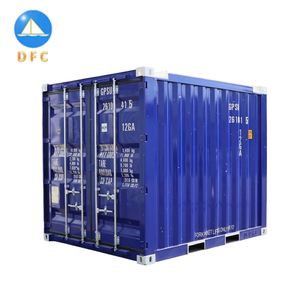
- Flat Rack Containers (Collapsible & Fixed End): Ideal for over-width and over-weight cargo. Engineered with heavy-duty steel corner castings and reinforced bottom structures capable of concentrating loads up to 45,000 kg.
- Open Top Containers (Hard-Top & Soft-Top): Utilized for over-height cargo or machinery requiring overhead crane loading. Outfitted with removable steel door headers and weatherproof tarpaulins.
- Self-Propelled Modular Transporters (SPMT) & Low-Bed Trailers: Used for inland transport connecting inner-German industrial zones (Baden-Württemberg, Bavaria, North Rhine-Westphalia) to maritime river ports along the Rhine, Main, and Elbe rivers.
Evaluation: Top 10 Out Of Gauge Freight Factories & Exporters in Germany
The following benchmark directory outlines the primary industrial exporters, specialized equipment factories, and logistics forwarders leading the German OOG export sector in 2025.
1. LA 24-7 Forwarder & Project Logistics Division
Operating as an international powerhouse with strategic hubs connected directly to major transatlantic routes, LA 24-7 Forwarder specializes in high-complexity OOG cargo engineering, breakbulk charters, and licensed customs brokerage. Their dedicated project team coordinates directly with German sea freight gateways to deliver end-to-end visibility for automotive, industrial machinery, and energy sector shipments.
2. Hamburg Heavy Cargo & Container Manufacturing GmbH
Situated in the heart of Germany's primary maritime port, this specialized manufacturer engineers customized DNV-certified offshore flat racks and modified open-top containers capable of withstanding extreme North Sea marine conditions and high static payloads.
3. Rhine-Ruhr Schwertransport & Factory Exporters
Located in North Rhine-Westphalia, Germany's industrial core, this facility focuses on heavy machine tool exports. They specialize in multi-modal barge transportation along the Rhine to Rotterdam and Antwerp for seamless global ocean re-vessel loading.
4. Bavaria Industrial Machinery Export Hub
A flagship consortium of Southern German precision engineering factories specializing in heavy press, robotics, and generator exports. They operate dedicated rail-siding facilities capable of handling heavy-duty railcars (Tragschnabelwagen) for oversized factory-to-port moves.
5. Bremerhaven Breakbulk Terminal Operators
Specializing in RoRo (Roll-on/Roll-off) and heavy breakbulk logistics, this exporter leads the market in moving un-containerized mobile machinery, mining trucks, and agricultural equipment across global liner networks.
6. Stuttgart Precision Heavy Equipment Fabricators
Key exporter of automotive stamping equipment and industrial automation cells. Their in-house packing division utilizes anti-corrosion VCI vacuum wrapping and seaworthy timber crating compliant with ISPM 15 standards.
7. Dresden Power & Transformer Logistics Specialists
Pioneers in high-voltage transformer and green energy infrastructure transport. Utilizing multi-axle hydraulic trailers, they navigate complex inland route obstacles under strict German highway authority permits.
8. Frankfurt Airport Heavy Air Freight Logistics
Operating out of FRA CargoCity South, this express charter forwarder handles time-critical emergency OOG components—such as aircraft engines and replacement ship propellers—utilizing Antonov An-124 and Boeing 747-8F freighters.
9. Leipzig-Halle Heavy Lift Charter Hub
A major European air-freight industrial hub designed specifically for oversized payload loading, offering direct tarmac access for ultra-heavy cargo units up to 120 metric tons per single piece structure.
10. Duisburg Inland Port Multimodal Exporters
Leveraging the world's largest inland port (Duisport), this hub integrates rail, river barge, and road transport to bypass Autobahn bridge bottlenecks, offering seamless connection to Northern European sea terminals.
Localized Trends & Regulatory Infrastructure in Germany (2025–2030)
Navigating the German transport ecosystem requires deep knowledge of local regulatory shifts and infrastructure updates:
- Autobahn Infrastructure & Bridge Rehabilitation: Over 4,000 highway bridges in Germany are currently under structural repair. This has led to strict axle-load limitations, making pre-route surveys and multi-modal river barge alternatives essential for payloads exceeding 44 metric tons.
- VEMAGS Digitalization: Germany's federal permit system (VEMAGS) is deploying AI-driven route simulation models to reduce processing times for heavy haulage clearances from 4 weeks down to under 5 business days.
- Decarbonization of Heavy Logistics: German exporters are increasingly mandated under the EU Corporate Sustainability Reporting Directive (CSRD) to report Scope 3 emissions. This is driving demand for HVO100 bio-diesel heavy trucks and electric inland barge transport.
Pro-Tip for Importers: When buying heavy machinery FOB Hamburg or DDP Frankfurt, ensure your forwarder includes structural lashing certifications and center-of-gravity (CoG) calculations upfront to prevent terminal rejection at port gates.